
Tumor profiling flags hard-to-treat B-cell lymphoma subgroup
Researchers say combined genetic and protein analysis could help identify DLBCL patients unlikely to benefit from standard therapy.
By Tom Brennan · Health & Medicine Correspondent
3 min read
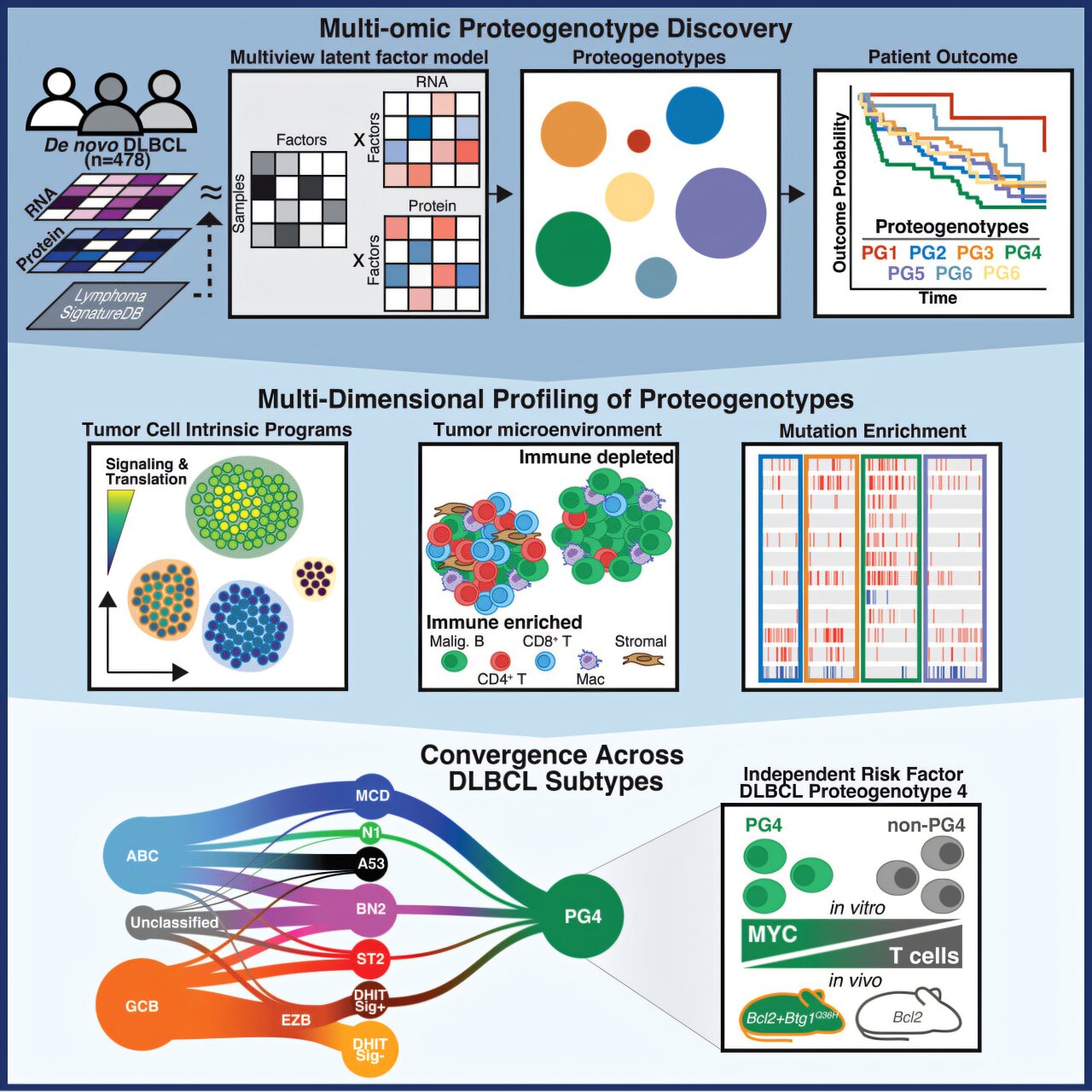
Researchers in Frankfurt and their collaborators have identified molecular features that may mark a high-risk form of diffuse large B-cell lymphoma, the most common aggressive lymphoma. The findings could help doctors spot patients for whom standard first-line treatment is less likely to work, according to Goethe University Frankfurt.
The study, published in Cancer Cell, used genetic, gene-expression and protein data from tumor samples to sort patients into biologically distinct groups. The team was led by Universitätsmedizin Frankfurt and Goethe University Frankfurt, with partners including the German Cancer Consortium and the Frankfurt Cancer Institute.
Diffuse large B-cell lymphoma, or DLBCL, accounts for more than 150,000 new cases globally each year, according to Goethe University Frankfurt. Patients are typically treated after diagnosis with a regimen that combines an antibody drug with chemotherapy, known as R-CHOP or Pola-R-CHP.
Nearly two-thirds of patients have a good chance of cure with those treatments, Goethe University Frankfurt said. More than one-third relapse or have tumors that do not respond, leaving them in need of other options such as CAR T-cell therapy.
Beyond genetic subtypes
DLBCL has already been studied extensively through its genetic mutations and gene-expression patterns. Those efforts have produced classification systems that divide the disease into subtypes, but the Frankfurt-led team said those tools do not fully explain why treatment outcomes differ.
For the new study, the researchers analyzed tumor material from 478 patients. They examined tumor mutations, measured the activity of each gene and assessed which proteins tumor cells produced and in what amounts, a method known as proteomic analysis.
The team then used artificial intelligence models to find links across those data sets. Professor Florian Büttner of Goethe University Frankfurt’s Faculty of Medicine and Institute of Computer Science said the model connected mutation and protein patterns with treatment outcomes through interpretable machine learning.
The resulting classification grouped patients in ways that reflected both tumor biology and possible treatment vulnerabilities, according to the university. The researchers also checked their findings with high-resolution single-cell tumor analyses.
MYC-linked tumors and weak immune activity
One group, called proteogenotype 4, or PG4, stood out as high risk. Dr. Julius Enssle, a physician-scientist at Universitätsmedizin Frankfurt and the U.S. National Institutes of Health, said the work helps clarify tumor features tied to prognosis beyond established risk factors.
According to Enssle, PG4 tumors are organized around the gene MYC, which promotes tumor cell growth and division. He also said these tumors contain few immune cells in their surrounding microenvironment and show suppressed cytotoxic T-cell function, meaning the immune cells that can recognize and kill tumor cells are less active.
The researchers reported that different genetic mutations can produce similar tumor-cell characteristics in DLBCL. That point is especially relevant for high-risk patients, Enssle said, because it suggests tumors may be grouped by shared biological behavior as well as by individual mutations.
In laboratory experiments, the team said it was able to block MYC-related molecular programs in cultured PG4 lymphoma cells. That approach selectively killed the lymphoma cells, according to Goethe University Frankfurt, offering early clues to possible diagnostic and treatment targets.
Professor Thomas Oellerich, director of the Department of Medicine 2 at Universitätsmedizin Frankfurt and a lead investigator on the study, said the work is a step toward more personalized treatment for aggressive lymphoma. He said the findings may eventually support earlier identification of high-risk patients and more precise therapy selection based on tumor biology.
The publication is titled “Pathogenesis of diffuse large B cell lymphoma proteogenotypes” and carries the DOI 10.1016/j.ccell.2026.05.008.
This story draws on original reporting from Medical Xpress.