
Tiny protein change may help coronaviruses adapt from bats to humans
A Cell Host & Microbe study links one amino acid difference to altered immune responses in bat and human lung cells.
By Tom Brennan · Health & Medicine Correspondent
2 min read
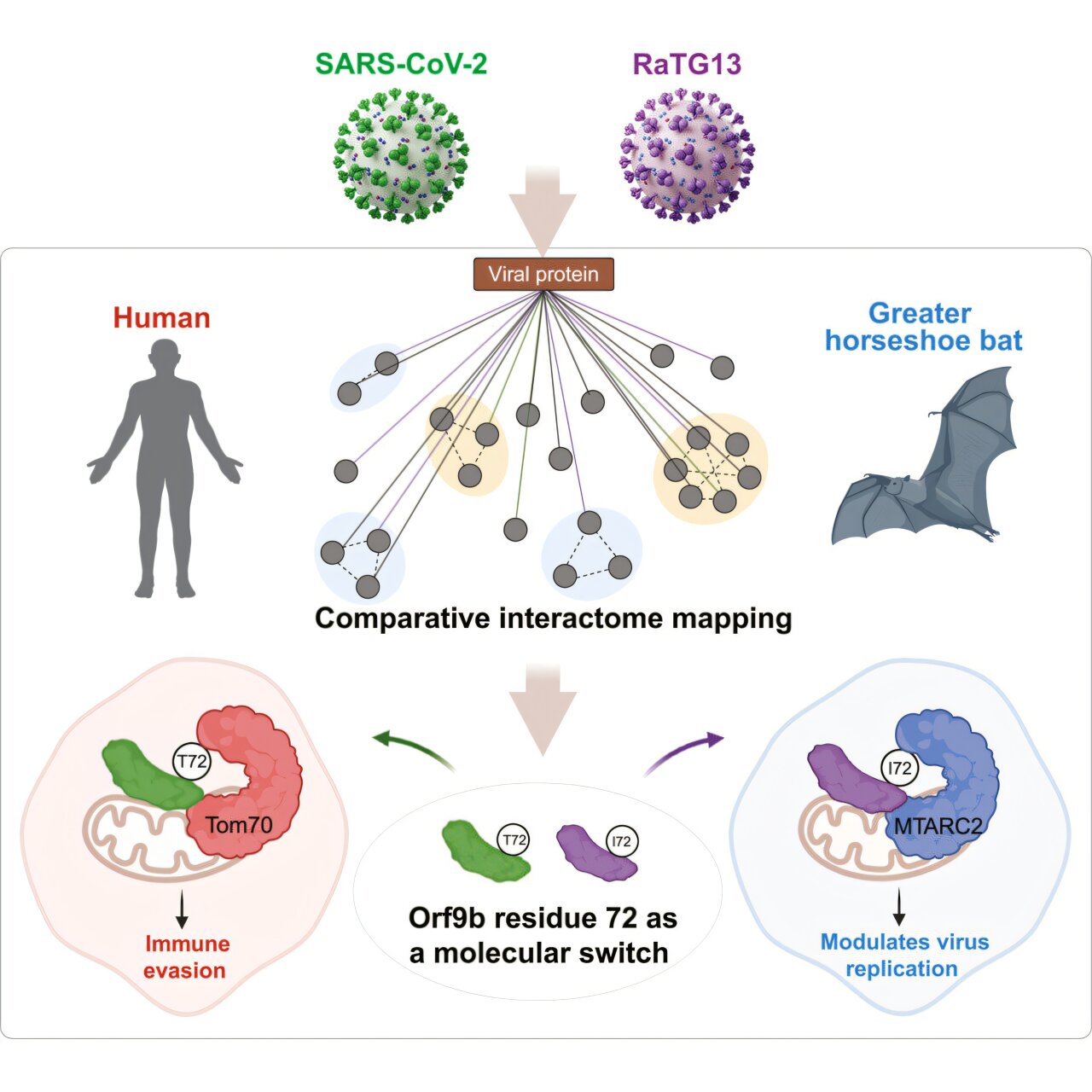
A single building-block change in a coronavirus protein can alter how the virus interacts with immune defenses in bat and human lung cells, researchers reported. The finding may help scientists assess which animal viruses have features that could raise spillover risk.
The work, published in Cell Host & Microbe, came from teams at the UCSF Quantitative Biosciences Institute, the Icahn School of Medicine at Mount Sinai, Institut Pasteur and Fred Hutchinson Cancer Center, according to the University of California, San Francisco.
UCSF said the researchers compared SARS-CoV-2, the virus that causes COVID-19, with RaTG13, a related coronavirus that infects bats. They tested how both viruses interacted with immune proteins in lung cells from humans and bats.
The study used the first laboratory-grown lung cell line from the greater horseshoe bat, according to UCSF. That model allowed the researchers to compare viral behavior across two species rather than studying human cells alone.
The team focused on a viral protein called OrfB9. UCSF said the SARS-CoV-2 and RaTG13 forms of that protein differ by one amino acid among roughly 100 amino acids, yet that small difference changed immune signaling in the experiments.
In human cells, the SARS-CoV-2 version of OrfB9 blocked an immune alarm system, which allowed the virus to replicate, according to UCSF. In bat cells, the RaTG13 version of the protein triggered an immune protein that helped restrict the virus.
The researchers said the results show how small genetic changes can shift a virus’s relationship with a host’s immune system. UCSF said the work helps explain how viruses that circulate in animals without major disease can gain traits that make them more dangerous in people.
Nevan J. Krogan, director of the UCSF Quantitative Biosciences Institute and senior author of the study, said the difference between a virus remaining in bats and one causing severe disease in humans can rest on very small genetic changes. He said mapping protein-level interactions across viruses and species could help identify molecular signs linked to spillover risk.
UCSF noted that animal-to-human transmission is a common starting point for pandemics and remains a leading explanation for the origin of COVID-19. The study does not report a new outbreak; it identifies a mechanism that may help researchers judge how coronaviruses adapt to different hosts.
The paper is titled “Coronavirus protein interaction mapping in bat and human cells reveals network rewiring governing immune evasion and zoonotic potential.” Its authors include Jyoti Batra and colleagues, and UCSF listed the DOI as 10.1016/j.chom.2026.04.015.
This story draws on original reporting from Medical Xpress.