
TEX264 cancer drug resistance target found in DNA repair study
NTU-led researchers found that TEX264 helps some tumors survive PARP inhibitors, pointing to a possible target for combination cancer therapy.
By Priya Raghavan · Science Reporter
3 min read
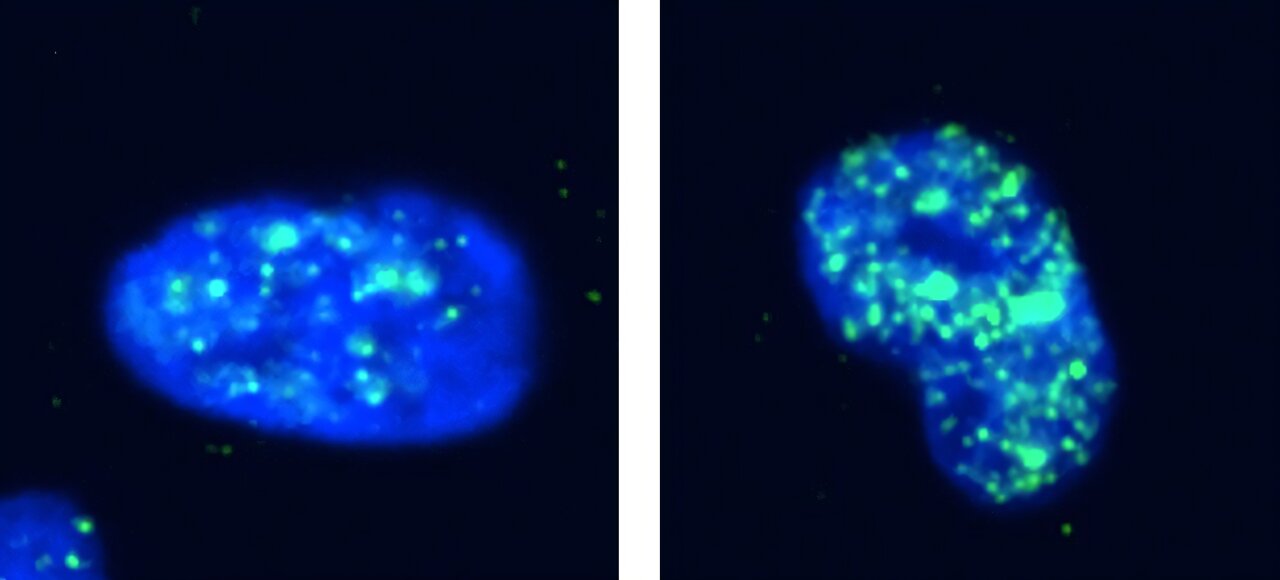
Researchers led by Nanyang Technological University, Singapore, have identified TEX264 cancer drug resistance as a possible weak point in aggressive tumors that evade a major class of DNA-repair drugs. The finding matters because resistance to PARP inhibitors can limit treatment options for patients with breast, ovarian, prostate and pancreatic cancers whose tumors already have impaired DNA repair.
The study, published in Nature Cell Biology, focused on how cancer cells survive drugs designed to make DNA damage lethal. NTU said the work points to a resistance pathway that may be easier to block than some previously known mechanisms.
What is TEX264 in cancer drug resistance?
TEX264 is a protein involved in autophagy, a cellular clean-up process that removes unwanted or damaging material. In this study, the NTU-led team found that cancer cells can use TEX264 to remove PARP1 enzymes trapped on damaged DNA, helping the cells avoid the full effect of PARP inhibitors.
PARP inhibitors work by interfering with PARP1, an enzyme that helps coordinate DNA repair. When PARP1 remains stuck on DNA after treatment, the blockage can trigger additional DNA damage and push cancer cells toward death.
According to NTU, the newly described process allows tumor cells to clear those blockages. Professor Kristijan Ramadan of NTU’s Lee Kong Chian School of Medicine and colleagues described the pathway as “autophagy of DNA lesions,” or “nucleophagy.”
What the experiments found
In laboratory experiments, blocking TEX264 made cancer cells treated with PARP inhibitors accumulate more DNA damage. NTU said the increase ranged from 40% to 110% across different markers of DNA damage, and statistical analysis showed the cells were more likely to die.
The researchers also reported that PARP inhibitor treatment increased TEX264 binding to PARP1 by 40%. In separate experiments that blocked autophagy, about 70% more PARP1 was found stuck on cancer-cell DNA, supporting the idea that the clean-up pathway removes trapped PARP1.
The study examined clinical data from the Sweden Cancerome Analysis Network–Breast study involving 700 patients with triple-negative breast cancer. NTU said patients with lower TEX264 levels had a 28% higher chance of survival over 10 years than patients with higher TEX264 levels.
Sara Tribble, a University of Oxford doctoral student and study co-author, said the findings suggest TEX264 may help predict survival in triple-negative breast cancer with DNA repair deficiency and could help guide more tailored treatment decisions.
Why PARP inhibitor resistance is a problem
PARP inhibitors are approved for some patients with breast, prostate, pancreatic or ovarian cancer whose tumors have lost a key ability to repair severe DNA damage. NTU said about 40% to 70% of ovarian and breast cancer patients develop resistance to these drugs.
Clinical Assistant Professor Tira J. Tan of the National Cancer Centre Singapore, who was not involved in the study, said PARP inhibitor resistance is one of the major challenges in cancer treatment. NTU reported that she viewed the study as significant because it identifies a different route by which tumor cells can clear drug-induced damage.
The findings may be especially relevant in Singapore. NTU cited earlier studies showing Singaporeans have about three times the occurrence of defects in DNA repair genes compared with other populations worldwide, and that about 1 in 150 Singaporeans carries mutations in DNA repair genes linked to breast and ovarian cancers, compared with about 1 in 400 to 500 people globally.
What comes next?
NTU said clinical studies are needed to test whether the finding applies in patients. One possible approach would pair PARP inhibitors with drugs that block TEX264-dependent autophagy of DNA damage.
The university identified chloroquine and hydroxychloroquine, both approved autophagy inhibitors, as examples of drugs that could be studied in combination with PARP inhibitors. Ramadan said the team is seeking clinical partners, donors and investors to help move the discovery toward clinical testing.
This story draws on original reporting from Medical Xpress.