
Researchers map T cell movement inside tumors with new computational tool
UT Southwestern-led scientists say ReMiTT uses spatial gene data to trace immune-cell paths through tumor tissue.
By Tom Brennan · Health & Medicine Correspondent
2 min read
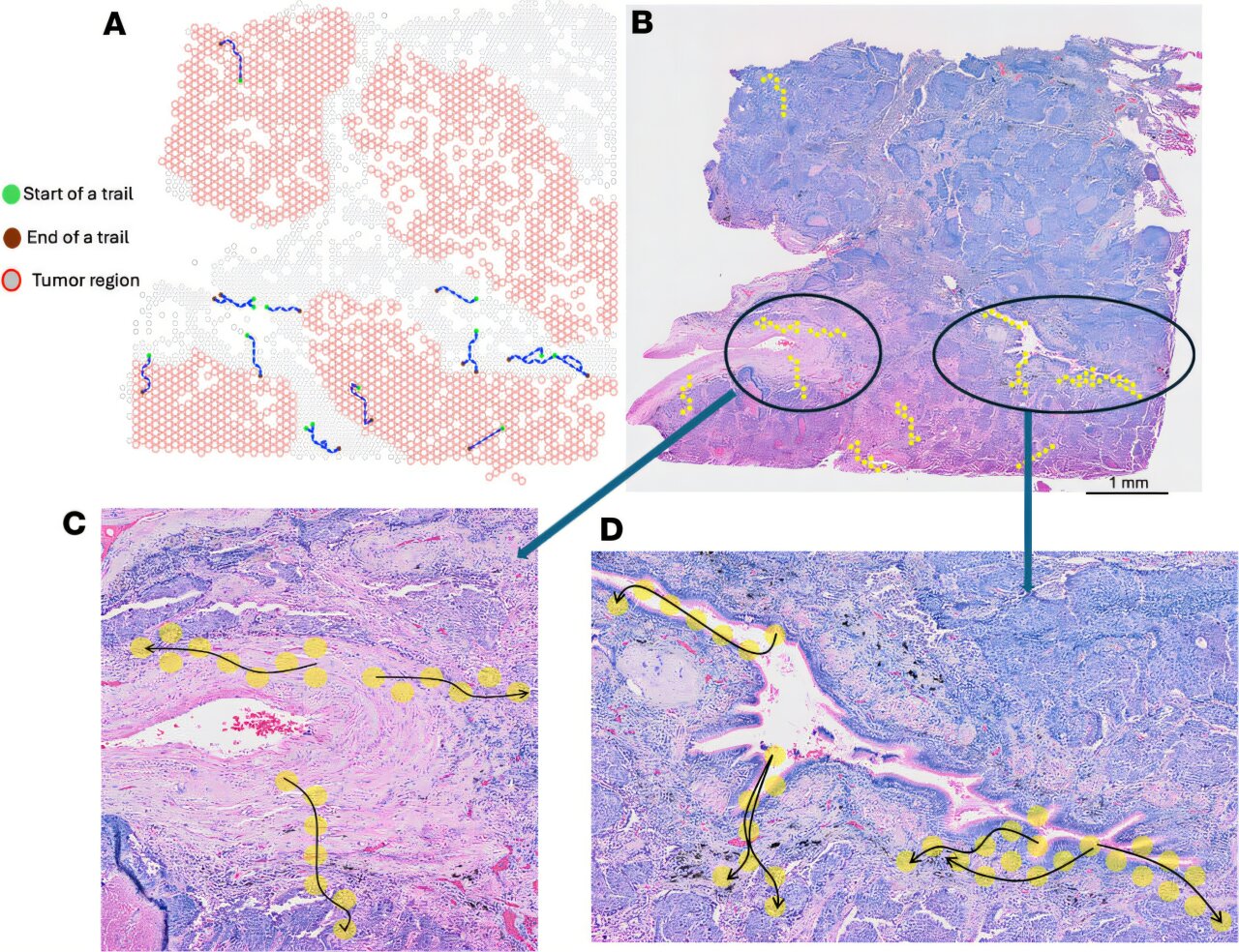
Researchers led by UT Southwestern Medical Center have developed a computational method to show where T cells appear to move inside tumors. The work matters because many cancers can restrict the immune cells that help the body fight them, limiting the impact of immune defenses and potentially of immunotherapy.
The tool, called ReMiTT, was described in a study published in JCI Insight. According to UT Southwestern, ReMiTT uses spatial gene data to identify “migration trails” in tumor tissue, marking routes associated with T cell movement.
T cells are central to the immune system’s response to cancer, but tumors can create physical and biological barriers that keep them from entering or working effectively, UT Southwestern said. By mapping where T cells travel, the researchers aimed to learn more about how immune cells interact with the tumor environment.
The study reported that certain signaling molecules increased along the identified migration paths. The researchers said that pattern suggests those molecules may help direct T cells as they enter and move through tumors.
ReMiTT also pointed to genes and biological processes tied to cell movement, adhesion and tissue remodeling, according to UT Southwestern. Those factors appeared to be associated with immune-cell activity in the tumor setting.
The publication, titled “Computational identification of migrating T cells in spatial transcriptomics data,” lists Lin Zhong and colleagues as authors. The paper includes analysis of spatial transcriptomics data, a method that links gene activity to specific locations within tissue.
An image associated with the study shows migration trails identified in a human lung cancer sample and projected onto a pathology slide, according to the journal credit. The report did not describe clinical testing of the tool in patients or present it as a treatment.
UT Southwestern said the findings offer a way to study how tumors avoid immune attack. The researchers also said the approach could help guide future strategies to improve immunotherapy by supporting T cell movement and function within tumors.
The study was published in 2026 in JCI Insight under DOI 10.1172/jci.insight.192718.
This story draws on original reporting from Medical Xpress.