
Silk patch reads newborn health signals without wires or needles
Researchers reported a coin-size neonatal patch that uses color changes and AI to track temperature, pH, sodium and glucose through the skin.
By Tom Brennan · Health & Medicine Correspondent
3 min read
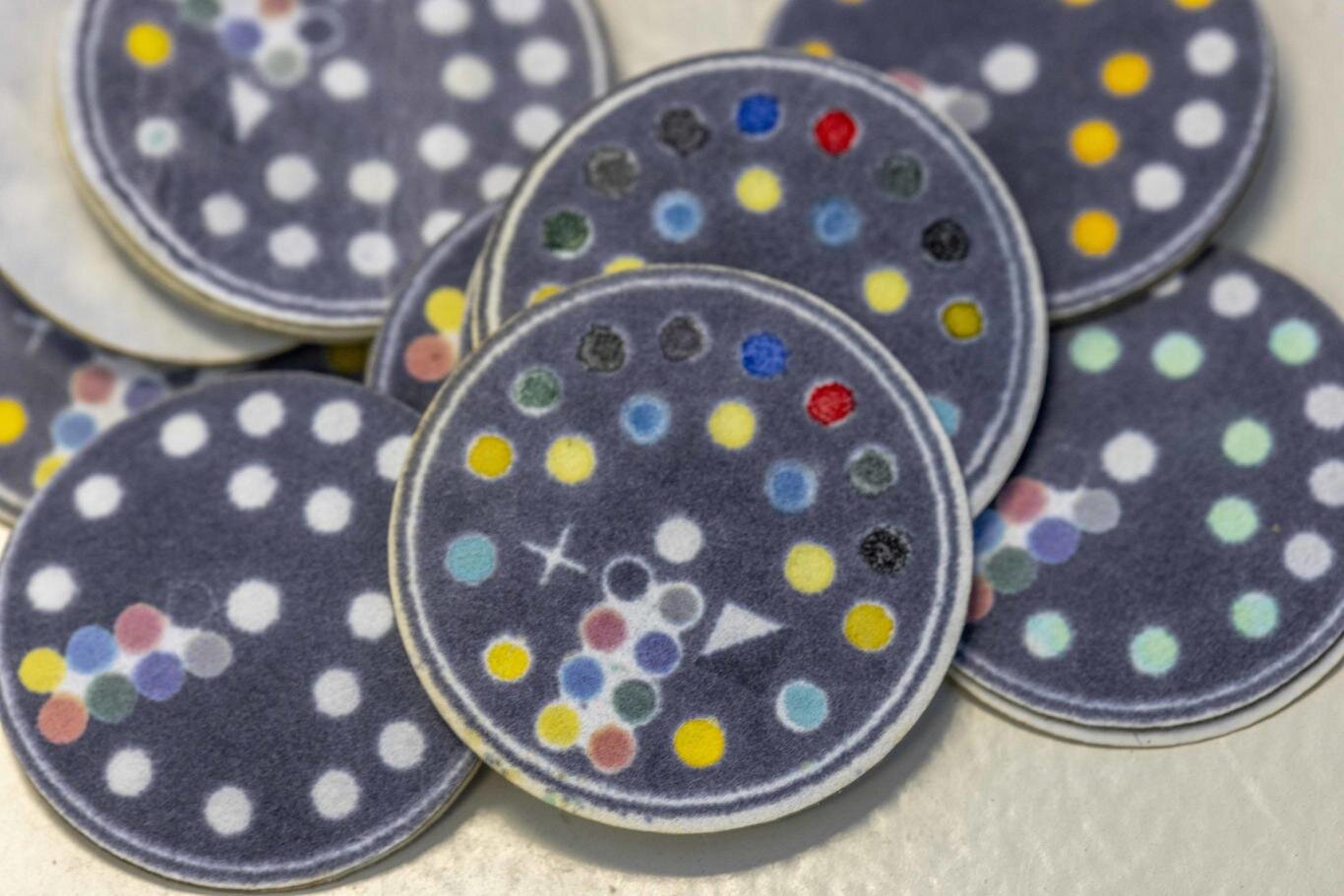
Researchers have developed a small silk-based patch that can monitor several health signals in premature newborns without wires, needles or powered electronics. The approach could reduce some invasive checks in neonatal intensive care units, where fragile infants often need frequent blood tests and skin-contact sensors, according to Tufts University.
The work, reported in ACS Sensors, comes from Tufts University’s Silklab, Helmholtz Munich, Ludwig Maximilian University Munich and the Technical University of Munich. The device is smaller than a coin and reads temperature, pH, sodium and glucose from tiny amounts of fluid that pass through a premature baby’s still-developing skin, the researchers said.
The patch uses color-changing dots rather than electronic readouts. A standard camera can capture those color shifts, and an artificial intelligence system converts them into measurements, including in the dim, humid conditions of an incubator, according to the research team.
Fiorenzo Omenetto, director of the Silklab, said the researchers aimed to give clinicians a view of how several measurements change together, rather than treating each sign in isolation. He said multiple variables can provide more clinical context than a single number.
How the patch works
The sensor is built from several thin layers. Tufts University said the base is made from silk fibroin, a material derived from silk moth cocoons that can help stabilize sensitive biological components, including enzymes that usually require refrigeration.
A wax-printed paper layer draws in microscopic fluid volumes and directs them to the sensing areas. A waterproof medical adhesive seals the patch in humid incubator conditions and allows it to move with a baby’s skin, according to the researchers.
The device takes advantage of a feature of premature infants’ skin. Because their skin barrier has not fully developed, preterm babies lose interstitial fluid through the skin at higher rates, creating a continuous sample that can be collected without a needle, the team said.
When sweat or interstitial fluid reaches the sensing dots, the dyes change color. The researchers gave examples including a shift from yellow to deep red for glucose and from blue to purple for sodium.
Color-based medical readings can be affected by lighting, camera angle and movement. To address that, Benjamin Schubert’s computational health group at Helmholtz Munich built a deep-learning model that corrects the image data and turns the patch colors into numeric values, according to Tufts University.
The researchers reported accuracy above 91% for critical vital signs and more than 98% for low blood sugar detection. Anne Hilgendorff, a neonatologist and researcher affiliated with Helmholtz Munich, LMU Munich and Carl von Ossietzky University Oldenburg, said the device was designed to avoid needles, wires and materials that pull or irritate newborn skin.
Next steps
The team described the current work as a proof of principle. Next studies are expected to test the patch in larger neonatal-unit settings, compare its readings with standard blood samples and expand the AI training data across more conditions.
The researchers said the same platform may later be adapted to track oxygen saturation, carbon dioxide and other measures. Because the patch is inexpensive to make and needs no power, wires or refrigeration, the team said it could also be useful in lower-resource settings where advanced neonatal monitoring is harder to obtain.
The study is titled “Artificial Intelligence-Supported Colorimetric Multibiomarker Sensor to Enable Critical Neonatal Monitoring.” Alejandra Castelblanco and colleagues are listed as authors in ACS Sensors.
This story draws on original reporting from Medical Xpress.