
Ancient plate boundaries tied to copper, zinc and lead deposits
University of Sydney researchers linked major mineral deposits on craton edges to deep mantle effects from ancient subduction zones.
By Lucas Ferreira · Science & Environment Writer
3 min read
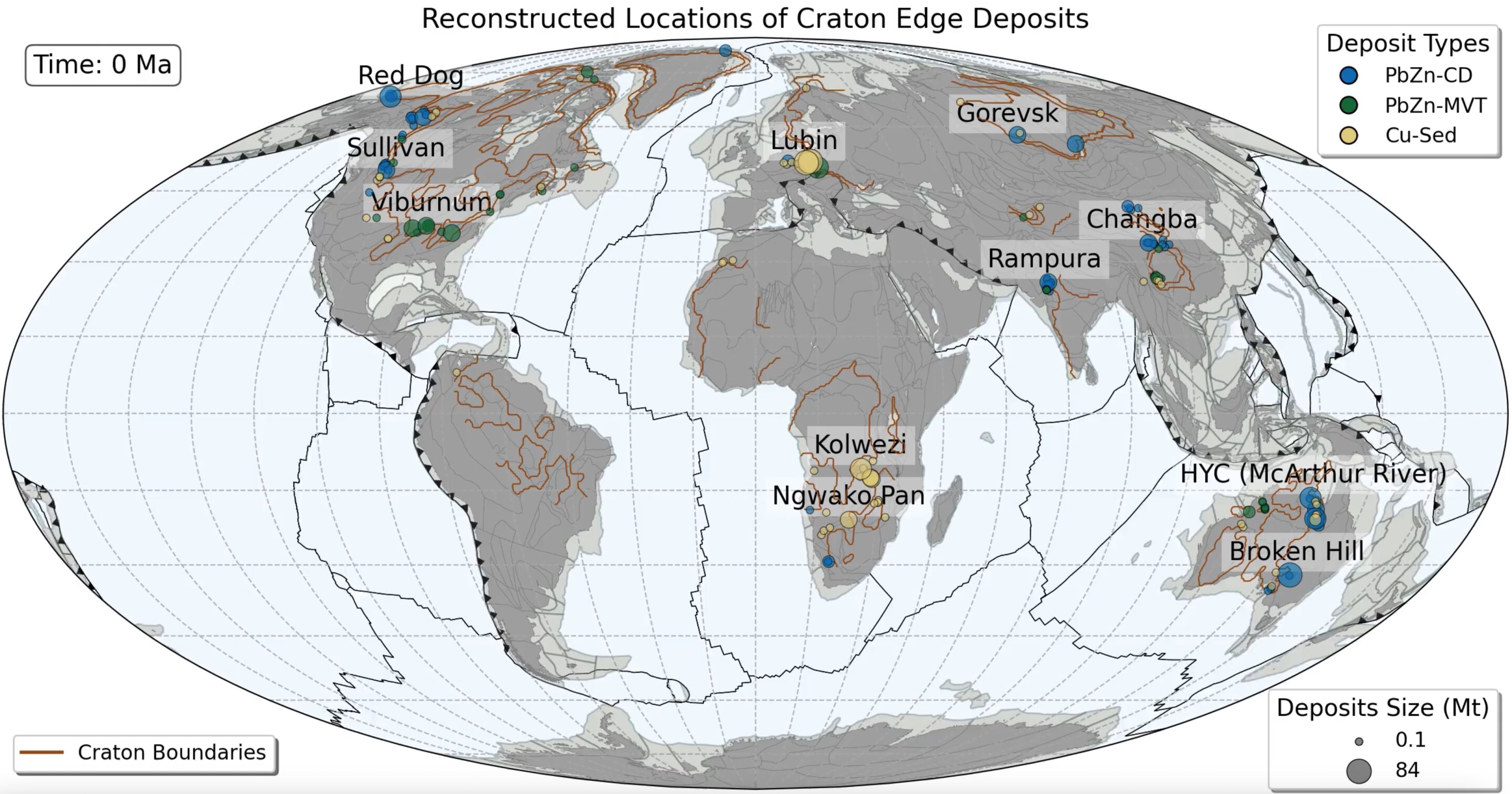
A University of Sydney-led study has connected major copper, zinc and lead deposits to ancient subduction zones, offering a new explanation for why some old continental edges became rich in ore. The findings matter because those metals are used in infrastructure, manufacturing and clean-energy technologies, and the researchers say the work could reduce uncertainty in mineral exploration.
The study, published in Nature Communications, was led by Ph.D. student Hojat Shirmard and Professor Dietmar Müller from the university’s School of Geosciences. According to the research team, the work used a dynamic model of Earth reaching back 1.8 billion years to examine where sediment-hosted mineral deposits formed and why apparently similar places did not produce the same results.
Geologists have known that many of these deposits sit along the edges of cratons, the ancient and stable cores of continents, the University of Sydney said. The new work, according to the researchers, narrows that broad pattern by linking the most productive craton margins to the long-term movement of tectonic plates and the circulation of hot rock in Earth’s mantle.
Mineral deposits clustered at a distance
The team found that mineral-rich craton edges often formed 800 to 1,800 kilometers from ancient subduction zones, where one tectonic plate sinks beneath another, according to the study. The researchers reported that the median distance between analyzed deposits and an ancient trench was about 1,200 kilometers.
More than 90% of the total metal content studied was located within 2,200 kilometers of ancient subduction zones, according to the paper. The research team said those deposits were closer to old subduction zones than would be expected from random points along craton margins.
Shirmard said many deposits formed well inside continents rather than at active plate boundaries, but the modeling showed a connection to subduction. “Deep mantle flow can transmit stress thousands of kilometers into a continent, helping to weaken craton edges and create the conditions needed for mineralization,” Shirmard said.
Mineralization occurs when magma and hot fluids move through the crust and leave solid ores in faults, rifts or other openings as temperature, pressure or chemistry changes, according to the University of Sydney. Craton margins can provide long-lived weak zones, including faults and rifts, that allow such fluids to move, the researchers said.
A deeper cause for uneven ore formation
The paper says earlier explanations for sediment-hosted deposits focused mainly on basin-scale conditions, including metal sources, fluid movement and chemical traps. According to the University of Sydney team, those local factors did not fully explain why some craton edges became unusually mineral-rich while others with similar geology remained comparatively poor.
To test the deeper connection, the researchers reconstructed the changing positions of craton boundaries, mineral deposits and subduction zones over 1.8 billion years. The study combined global plate-motion modeling with seismic tomography, geodynamic simulations and a database of more than 2,000 mineral deposits.
The simulations showed that subduction can generate broad return-flow cells in the lower mantle extending thousands of kilometers from a trench, according to the study. The team said those flows can concentrate stress and strain near craton edges, weaken the lithosphere, reactivate old structures and encourage rifting and permeability over geological time.
The models found the strongest strain when craton edges were about 1,300 kilometers from a subduction trench, close to the observed median distance of about 1,200 kilometers for the mineral deposits, according to the paper. Müller said the work shows mineral deposits are tied not only to local geology but also to larger systems linking subduction, mantle flow, continental deformation and the long-term development of Earth’s resources.
The study used plate reconstruction workflows built around GPlates, pyGPlates and GPlately, according to the University of Sydney. Müller said those tools help researchers reconstruct Earth’s deep-time evolution and apply the results to Australia’s minerals sector.
This story draws on original reporting from Phys.org.