
Researchers urge routine screening for neglected genital parasite disease
A Lancet Microbe paper says female genital schistosomiasis should be built into HIV, HPV and sexual health services.
By Tom Brennan · Health & Medicine Correspondent
3 min read
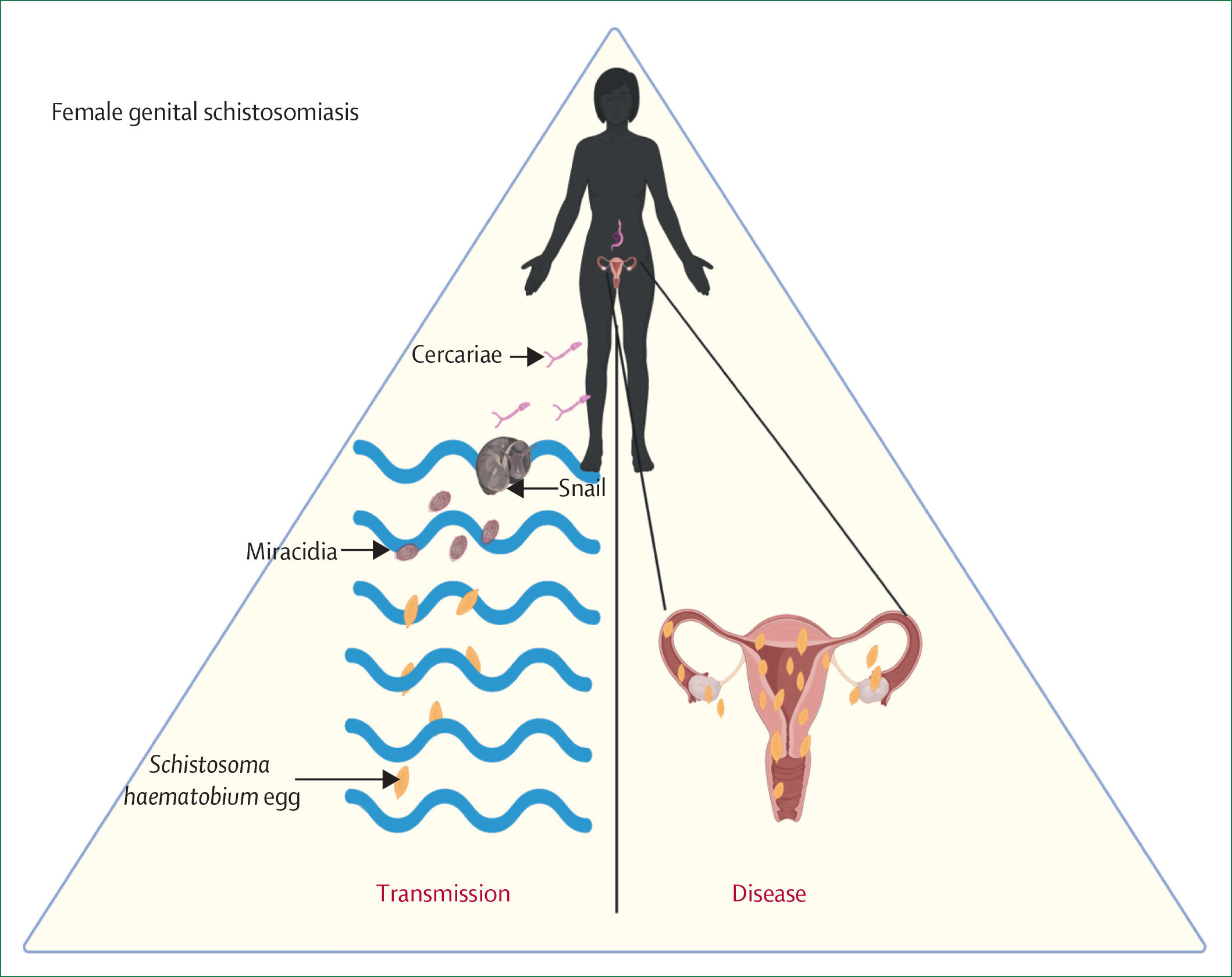
Researchers are calling for wider screening for female genital schistosomiasis, a parasitic disease they say is being missed in routine reproductive health care. The concern is that undiagnosed infections may leave women and girls at greater risk of chronic gynecological illness, HIV and cervical cancer.
The call comes from researchers at the Liverpool School of Tropical Medicine, the Malawi-Liverpool-Wellcome Programme and the London School of Hygiene & Tropical Medicine. In a paper published in The Lancet Microbe, they argue that testing for the condition should be added to sexual and reproductive health services, including programs focused on HIV and cervical cancer.
Female genital schistosomiasis, or FGS, is caused by infection with the parasitic worm Schistosoma haematobium, according to the researchers. People become infected through contact with freshwater carrying the parasite. Eggs can lodge in reproductive tissue, where they can cause inflammation, lesions and scarring.
The paper says the disease affects at least 40 million women worldwide, with the burden falling mainly in sub-Saharan Africa. Despite that scale, the authors say FGS is still largely absent from reproductive health services and from many neglected tropical disease programs.
The researchers examined the relationship between FGS and other gynecological infections. They reported evidence that long-term inflammation and tissue injury linked to FGS may increase susceptibility to infections including HIV and human papillomavirus, or HPV, which is the leading cause of cervical cancer.
The authors say existing health programs could be used to find more cases. Their proposed steps include testing for HPV and FGS from the same genital sample, training health workers to recognize the disease, and using newer molecular and AI-supported diagnostic tools.
Professor Amaya Bustinduy of the London School of Hygiene & Tropical Medicine, senior author of the paper, said the condition remains among the most neglected gynecological diseases affecting women and girls in Africa. She said it is still often missed in both neglected disease work and broader sexual and reproductive health care.
Professor Russell Stothard of the Liverpool School of Tropical Medicine, a co-author, said the paper points to the need for care models that address overlapping conditions rather than treating FGS, HIV, HPV and other reproductive health problems in separate silos.
The paper also draws on the Hybridisation in Urogenital Schistosomiasis study in Malawi. According to the authors, that work found high levels of co-infection involving FGS and other genital infections.
The researchers also flagged the role of zoonotic and hybrid schistosome species. The paper says some parasites usually linked to livestock have been found in genital samples from women with FGS, raising questions about diagnosis, treatment effectiveness and control efforts.
Stothard said those findings support a One Health approach that considers human, animal and environmental health together. The authors warn that disease-specific programs that remain disconnected from each other are failing women in endemic areas and could weaken wider global health efforts.
This story draws on original reporting from Medical Xpress.