
Radiotherapy alters immune signals in rare skin lymphoma
Northwestern Medicine researchers found immune changes that may help flag relapse risk in cutaneous T-cell lymphoma after radiation treatment.
By Priya Raghavan · Science Reporter
3 min read
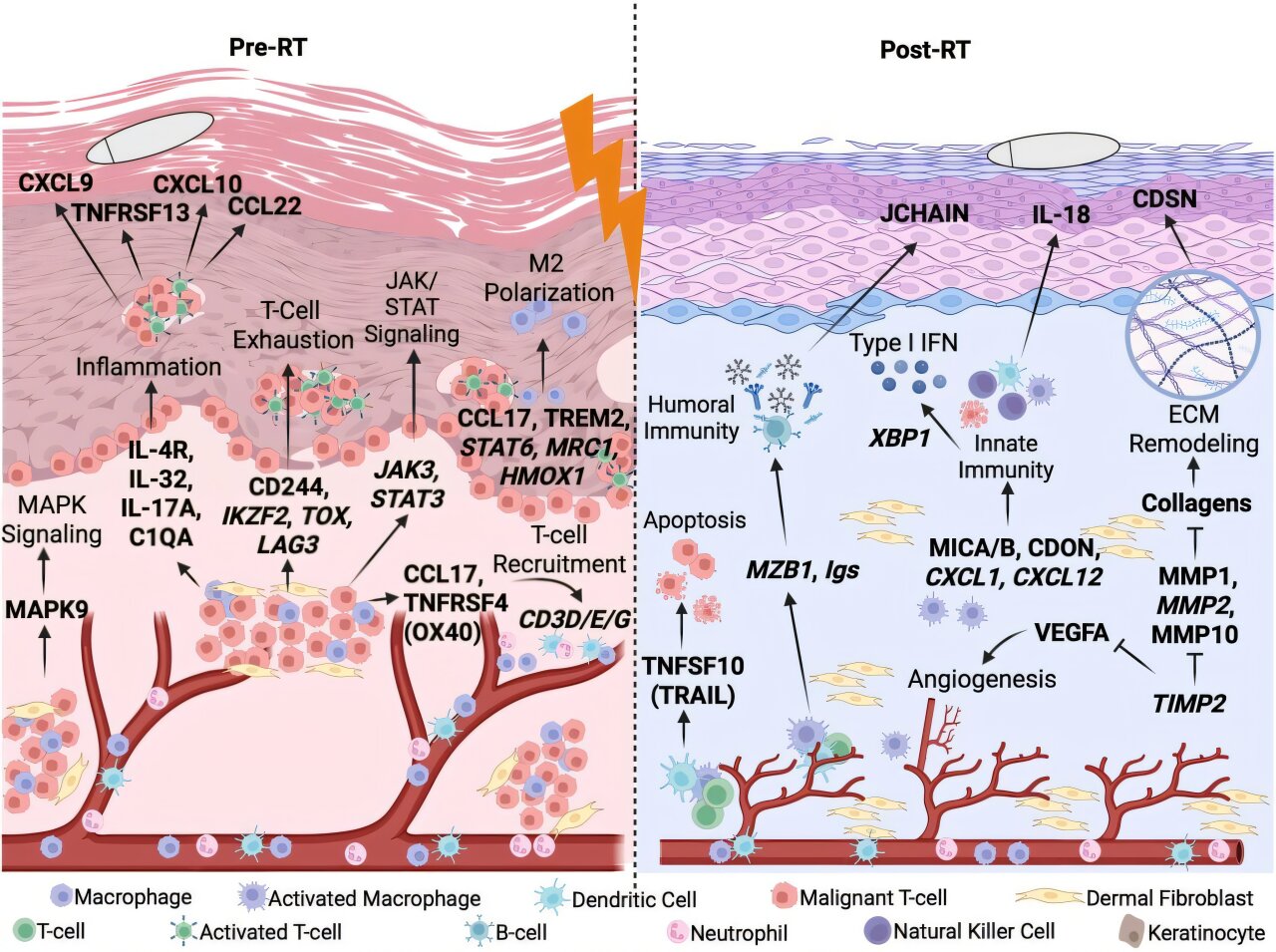
Radiotherapy appears to reshape the immune environment inside tumors in cutaneous T-cell lymphoma, a rare skin cancer, according to a Northwestern Medicine study. The findings may help researchers identify which tumors are more likely to stay in remission after treatment and which may return.
The study, published in the Journal of the American Academy of Dermatology, examined molecular changes in CTCL tumors before and after radiotherapy. Northwestern University said the work points to biological markers tied to longer treatment response and recurrence.
CTCL is a lymphoma involving lymphocytes that primarily affects the skin, Northwestern said. It is most often diagnosed in people older than 50.
Radiotherapy is among the strongest treatments used for CTCL, according to Northwestern Medicine. Many tumors remain controlled after radiation, but some return even after showing an initial response.
How the study tracked tumor changes
The research team studied paired skin biopsy samples collected from patients with CTCL before and after radiotherapy, Northwestern said. The scientists also tested a noninvasive sampling method using skin tape strips.
Researchers used spatial transcriptomics to assess gene activity within the tumor microenvironment, Northwestern reported. They also used high-dimensional proteomics to measure proteins released from the skin.
The tape-strip method involved pressing a specialized round tape onto tumor lesions multiple times, according to Northwestern. The tape captured protein biomarkers from the skin surface, offering a way to follow disease-related changes without repeated biopsies.
Alan Zhou, co-senior author of the study, associate professor of dermatology and chief of Northwestern’s Division of Medical Dermatology, said the findings show radiation affects more than lymphoma cells. Northwestern quoted Zhou as saying the immune changes could help predict durable responses and point toward treatment strategies that improve radiation’s long-term effect.
Signals tied to remission and recurrence
Before radiotherapy, the tumors showed molecular features associated with CTCL, including inflammatory signaling, exhausted T cells and macrophages linked to tumor growth, according to the study team. After treatment, the researchers found reduced tumor-associated inflammatory pathways, more wound-healing activity and activation of innate immune responses.
The scientists also observed activation of humoral immune pathways involving antibody-producing immune cells. Zhou, who is also a member of the Robert H. Lurie Comprehensive Cancer Center of Northwestern University, said the results suggest antibody-mediated immunity may have a larger role in antitumor response than previously recognized.
The researchers found differences between tumors that remained in remission and tumors that returned within one year, Northwestern said. Recurrent tumors showed higher expression of genes associated with radiation resistance and ongoing inflammation, while tumors that stayed in remission had stronger interferon signaling and sustained humoral immune activation after radiotherapy.
Zhou said those molecular markers could help identify CTCL tumors with higher recurrence risk earlier. Northwestern said the study also supports the feasibility of using tape strips to track molecular changes over time, reducing the need for repeated skin biopsies in some monitoring.
The paper was authored by JoJo Holm and colleagues under the title “Cutaneous T-cell lymphoma tumors undergoing radiotherapy demonstrate immune shifts from malignant inflammation to wound healing and suggest markers of treatment durability.” Northwestern said the findings may support future combination therapies aimed at strengthening antitumor immunity while using molecular profiling to guide CTCL care.
This story draws on original reporting from Medical Xpress.