
Pulsing blood flow tied to lung vessel health in children with heart defects
A UT Southwestern-led study suggests restoring rhythmic blood flow may help protect lung arteries after some congenital heart surgeries.
By Tom Brennan · Health & Medicine Correspondent
2 min read
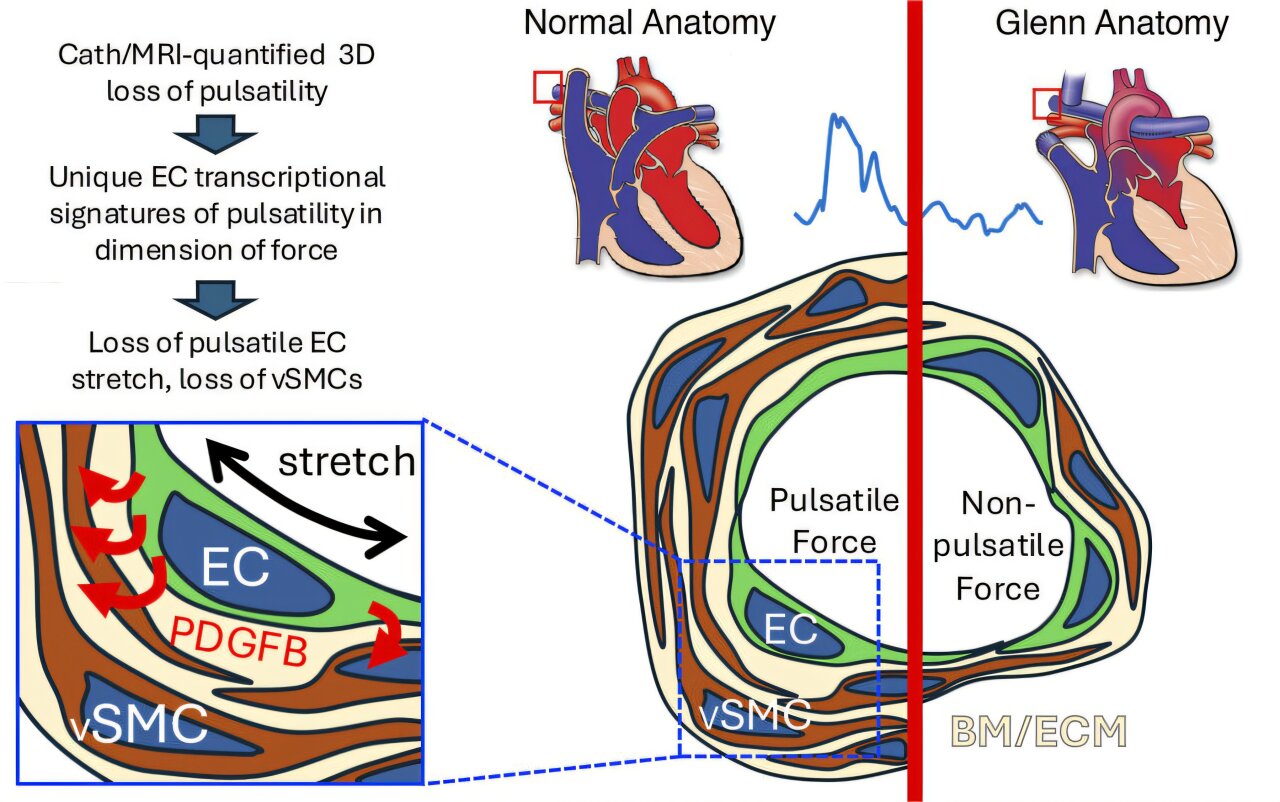
A UT Southwestern Medical Center-led study reports that the pulse in blood flow helps keep lung arteries healthy in children affected by certain complex congenital heart defects. The finding points to a possible way to reduce long-term lung complications after surgeries that alter how blood reaches the lungs, according to the researchers.
The work, published in JCI Insight, examined children born with single-ventricle congenital heart disease, a condition in which patients often undergo the Glenn procedure. UT Southwestern said the operation can save lives by rerouting blood flow to the lungs, but it also removes the normal rhythmic pulsing of blood through the pulmonary circulation.
Clinicians have long seen that many patients who have this altered circulation later develop abnormalities in blood vessels in the lungs, according to UT Southwestern. The new study links that problem to the loss of pulsatile flow, rather than treating the pulsing as a minor feature of normal circulation.
Study connects flow pattern to vessel structure
Investigators combined patient data with experiments using lab-grown cells and animal models, according to the report. Across those lines of evidence, the researchers found that pulsatile flow activates signals that help maintain the structure and strength of pulmonary artery walls.
When the pulsing force was absent, key molecular signals fell, the researchers reported. UT Southwestern said the change was associated with thinner vessel walls and weaker communication among cells in the blood vessel tissue.
The study identifies pulsatility as an active part of vessel maintenance in the lung arteries, according to Stephen B. Spurgin and colleagues, who authored the paper, “Pulsatile flow dynamics maintain pulmonary artery architecture.” The journal publication lists the DOI as 10.1172/jci.insight.201797.
Potential target after Glenn surgery
UT Southwestern said the results suggest that restoring or imitating pulsing blood flow could help protect pulmonary blood vessels in children with congenital heart disease. The researchers framed that idea as a possible strategy to reduce complications and improve long-term outcomes, rather than as a proven treatment.
The study does not present a clinical therapy ready for routine care. It adds evidence for why patients with single-ventricle disease may face later lung vessel problems after blood flow is surgically changed, and it gives researchers a target to test in future work.
According to UT Southwestern, the findings shed light on a mechanism behind lung complications in this group of children: the loss of rhythmic force within pulmonary arteries. If later studies show that pulsatile flow can be safely restored or mimicked, the approach could become part of efforts to preserve lung vascular health after congenital heart surgery.
This story draws on original reporting from Medical Xpress.