
Parkinson medication patch tracks levodopa in fingertip sweat
UC San Diego researchers built a sweat-powered fingertip patch that monitored levodopa levels about as well as standard blood tests.
By Tom Brennan · Health & Medicine Correspondent
3 min read
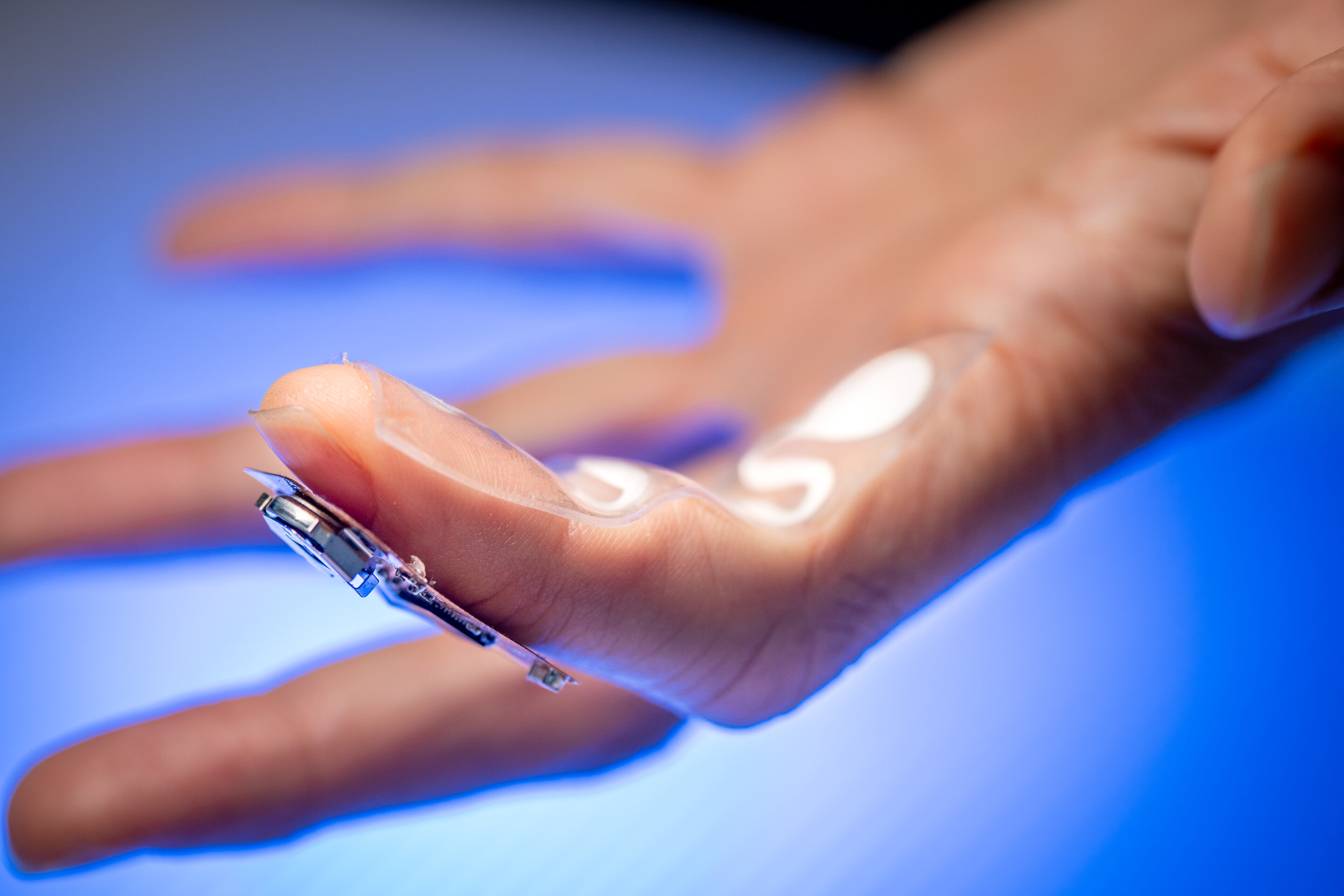
UC San Diego researchers have developed a Parkinson medication patch that measures levodopa levels in fingertip sweat and runs without batteries. The team said the wearable could help doctors adjust daily drug schedules more precisely for people whose symptoms can change quickly as medication levels rise and fall.
The device was described in a peer-reviewed paper in Proceedings of the National Academy of Sciences. According to UC San Diego, tests in healthy volunteers and people with Parkinson’s disease produced readings comparable to standard laboratory blood tests.
The patch targets levodopa, which UC San Diego described as the gold-standard medicine for managing the motor-control problems caused by Parkinson’s disease. Getting the dose right is difficult: the university said too little levodopa can leave patients unable to move, while too much can cause severe involuntary jerking movements.
UC San Diego said the drug’s benefit can last for several hours early in the disease. As Parkinson’s progresses, the useful dosing window can shrink to about two hours, making timing more difficult for patients and clinicians.
How does the Parkinson medication patch work?
The patch is worn on a fingertip, an area with many sweat glands, according to the research team. It contains an absorbent gel with concentrated salts and benign solvents that pull sweat from the skin, along with a sensor that detects levodopa.
When levodopa in sweat reaches enzymes built into the patch, it sets off a chemical reaction that creates a small voltage, UC San Diego said. That reaction helps power the device, and the size of the voltage serves as the medication signal: lower voltage indicates lower levodopa levels, while higher voltage indicates higher levels.
The wearable includes a flexible printed circuit board connected to the patch, which houses the sweat-collecting gel, levodopa sensor and a paper fluidic channel, according to UC San Diego. The university said the design avoids the need for exercise or an external power source to generate sweat for testing.
Why levodopa monitoring is hard
Clinicians now often use patient diaries to help adjust levodopa treatment, according to UC San Diego. The researchers said those diaries are subjective and can miss dosing gaps that may put patients at risk of sudden symptom worsening.
Standard blood tests can measure drug levels, but UC San Diego said laboratory results can take days to return. A continuous wearable monitor could give doctors and patients a clearer view of how levodopa changes during ordinary daily use, if further development supports clinical use.
The research was led by co-first author Tamoghna Saha, a postdoctoral researcher in the lab of Joseph Wang at the UC San Diego Jacobs School of Engineering, according to the university. The engineering team worked with the lab of Irene Litvan, a professor in the Department of Neurosciences at the UC San Diego School of Medicine.
In the clinical testing reported by UC San Diego, people with Parkinson’s cleared levodopa from their bodies significantly faster than healthy volunteers. The researchers said that finding helps explain why Parkinson’s symptoms can worsen suddenly in some patients.
UC San Diego said the work could support a future closed-loop system in which a levodopa monitor communicates with a pump that delivers precise doses when needed. The reported work establishes the monitoring approach, but the university described that automated drug-delivery system as a future direction.
This story draws on original reporting from Medical Xpress.