
New York cannabis users miss key label details, study finds
A University at Buffalo-led survey found gaps in how New York cannabis consumers understand product labels, dosing and state-required symbols.
By Tom Brennan · Health & Medicine Correspondent
3 min read
Many New Yorkers use cannabis, but a University at Buffalo-led study found that far fewer understand the labels meant to tell them what is in the products they buy. The findings matter because New York requires packaging details on THC, CBD, serving size and lab testing that researchers say can help consumers avoid unsafe or unexpectedly strong products.
About 2 million adults in New York state reported using some form of cannabis in 2023, according to the University at Buffalo. Daniel J. Kruger, a research associate professor of community health and health behavior at UB’s School of Public Health and Health Professions, led the study, which was published in Psychoactives.
Kruger and colleagues surveyed nearly 200 adult cannabis users in New York last fall, according to UB. The participants were recruited through dispensaries and social media, and the researchers used the online survey to test how well consumers recognized and interpreted labeling required for cannabis products sold under New York rules.
The study found that respondents used cannabis for both recreational and therapeutic reasons, according to the researchers. Almost 40% said they used cannabis to address medical conditions or to reduce their use of pharmaceuticals or other substances.
New York-regulated cannabis products must display a universal cannabis symbol on the main panel of the package, according to UB. The symbol is a bright yellow equilateral triangle with a black cannabis leaf and the letters “THC!” indicating the presence of tetrahydrocannabinol, the psychoactive compound in cannabis.
State rules also require labels to list total THC and cannabidiol, or CBD, per serving and per package, along with the number of servings and the product’s net weight or volume, according to UB. Packages must include a QR code that links to a Certificate of Analysis, a laboratory document showing the product’s contents.
Kruger, who is also a research scientist with UB’s Clinical and Research Institute on Addictions, said the certificate is intended to help verify that a product has been tested. He cited an industry-commissioned study finding that gray-market products sold by unregulated stores contained contaminants including mold, heavy metals and industrial solvents.
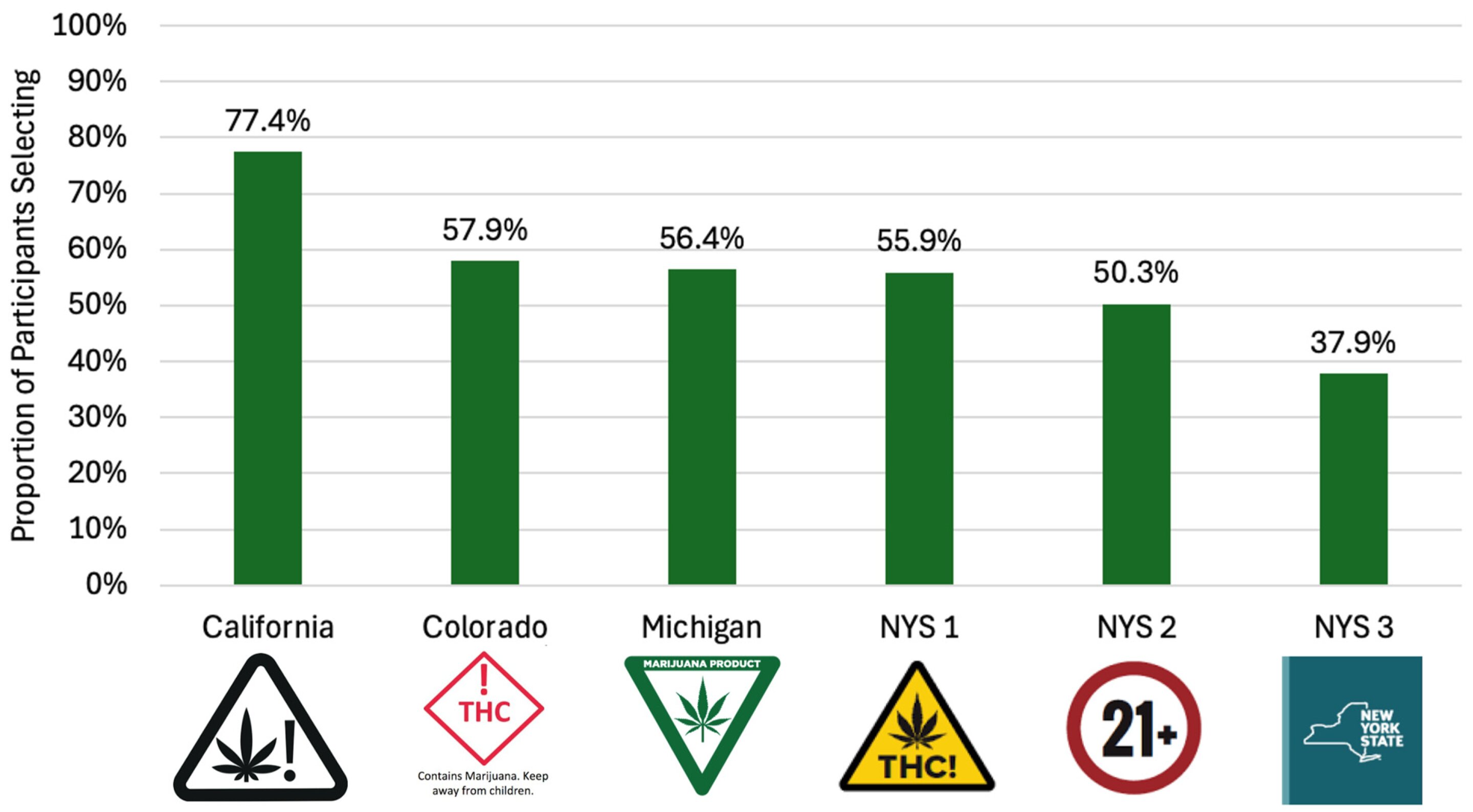
The survey also showed confusion over symbols used on legal products, according to the study. New York products must carry a “21+” symbol in a red circle and an outline of the state with the words “New York State,” in addition to the THC symbol.
But three-quarters of survey participants chose California’s required symbol when asked which labels were required on New York-regulated cannabis products, according to UB. Kruger said that result may indicate that consumers are still buying cannabis from the black market, including products shipped from California or illicit products made to resemble California items.
The researchers also found gaps in consumer awareness of potency and dosing risks. Kruger said cannabis products can differ widely in THC content and effect, and edibles can be especially difficult for some consumers because effects may take an hour or longer to appear.
New York legalized recreational cannabis use for adults in March 2021, and the state’s first dispensary opened at the end of 2022, according to UB. Kruger said the spread of legal cannabis, now allowed for medical use in 40 states and adult recreational use in 24 states, may lead some consumers to underestimate risks, particularly when products are sold in professional-looking packaging.
The study concludes that labels alone are not enough to protect consumers, according to the researchers. Kruger said states with legal medical and adult-use cannabis should consider public education efforts so consumers can recognize required labeling and understand what Certificate of Analysis results mean.
This story draws on original reporting from Medical Xpress.