
Hydrogel wound healing study targets deep wounds without antibiotics
IIT Gandhinagar researchers report an injectable hydrogel that reduced healing barriers in preclinical wound tests.
By Tom Brennan · Health & Medicine Correspondent
3 min read
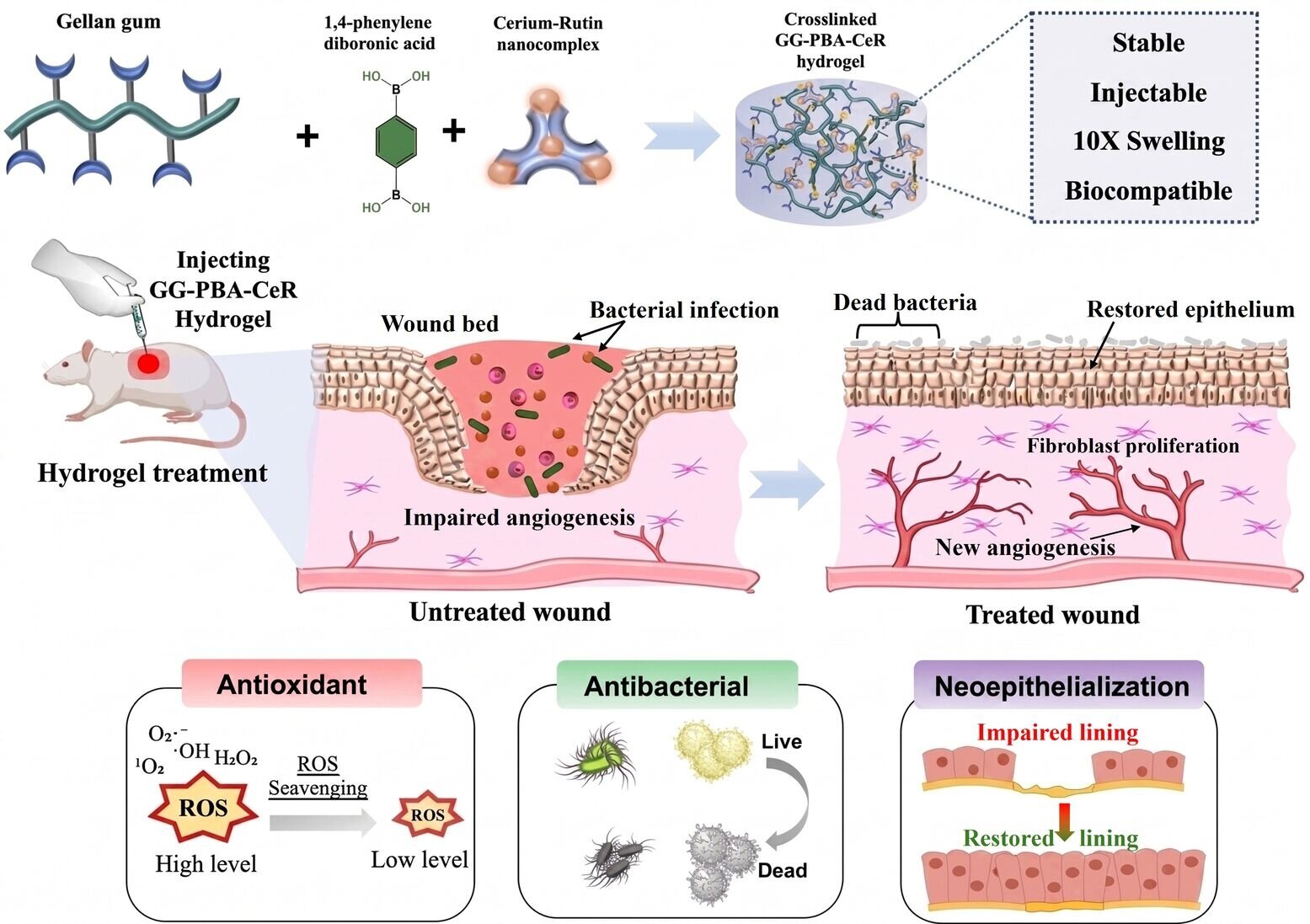
Researchers at the Indian Institute of Technology Gandhinagar have developed an antibiotic-free material for hydrogel wound healing that is designed for deep and hard-to-heal injuries, according to the institute. The injectable hydrogel is meant to address two major reasons deep wounds recover slowly: bacterial infection and excess reactive oxygen species, which can damage cells and interfere with repair.
The work was published in ACS Applied Bio Materials in a study titled “Nanocomplex-Integrated Multifunctional Hydrogel for Fast-Tracked Wound Repair Application: A Preclinical Evaluation.” IIT Gandhinagar said the technology has been patented and is still at a preclinical stage.
How does the injectable hydrogel help wounds heal?
The hydrogel is built around a metal-phenolic network, a biomaterial structure formed when metal ions interact with plant-derived polyphenols, according to IIT Gandhinagar. The institute said such networks can combine several therapeutic functions in one material.
In this case, the research team used a cerium-rutin nanocomplex, which IIT Gandhinagar described as the first reported use of that pairing for wound healing. Cerium can act like antioxidant enzymes in the body and help remove excess reactive oxygen species, while rutin is a natural antioxidant associated with antibacterial and anti-inflammatory activity, the institute said.
Reactive oxygen species are chemically reactive molecules that can harm cells when they build up beyond normal levels. In wounds, IIT Gandhinagar said that buildup can slow repair and raise the chance of complications, especially when infection risk is also present.
Professor Mukesh Dhanka, corresponding author of the study and an assistant professor in IIT Gandhinagar’s Department of Biological Sciences and Engineering, said the project reflects a need for wound-care materials that do more than cover an injury. He said the design aims to address key obstacles that delay healing and could support further work in regenerative medicine.
What did the preclinical tests show?
The team tested the hydrogel in laboratory experiments and preclinical animal studies, according to IIT Gandhinagar. The institute said the material was compatible with blood and nearby tissue, which is a basic safety requirement for wound-care products.
After injection at the wound site, the hydrogel released therapeutic agents in a controlled and sustained way, according to the study summary from IIT Gandhinagar. The institute said that prolonged release supported continuing antioxidant and antibacterial activity and produced faster wound closure than untreated wounds in the preclinical tests.
The material also absorbed wound fluid, or exudate, at up to 10 times its own weight, according to IIT Gandhinagar. Some moisture supports healing, but the institute said excess fluid can delay recovery, encourage infection and weaken surrounding healthy tissue.
Shreyash Apotikar, the study’s first author and an IIT Gandhinagar MTech graduate, said deep wounds often face several biological barriers at once. He said that understanding led the team to design a material whose components work together rather than relying on one healing mechanism.
IIT Gandhinagar said more research is needed before the hydrogel can be used clinically. The team is seeking industry partners for large-animal studies, clinical translation, commercialization and technology licensing, with possible uses in both human and veterinary wound care.
This story draws on original reporting from Medical Xpress.