
Glucose ketone smart ring tracks multiple sweat biomarkers
UC San Diego engineers reported a prototype smart ring that continuously measures up to four sweat biomarkers and sends results to a phone.
By Tom Brennan · Health & Medicine Correspondent
3 min read
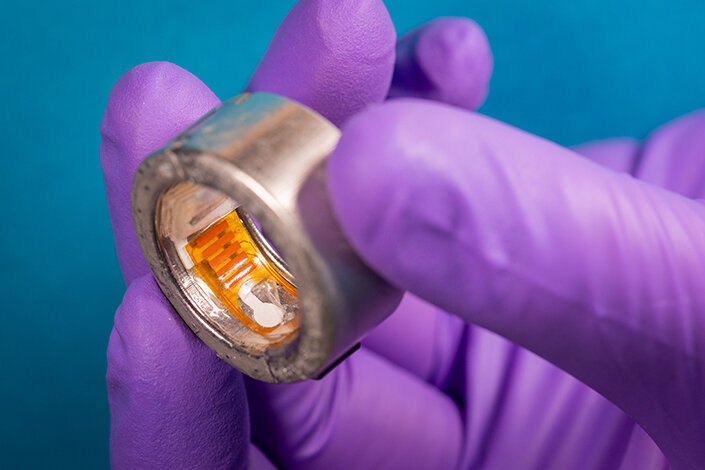
A glucose ketone smart ring developed by University of California San Diego engineers can continuously measure several chemical markers in sweat at the same time, according to a study published in Nature Communications. The work matters because the prototype adds molecular tracking to a device category better known for heart rate, sleep and other physical measurements.
The UC San Diego team said the ring can monitor up to four biomarkers at once from finger sweat. The set of measurable markers includes glucose, ketones, vitamin C, uric acid, lactate and alcohol, according to the researchers.
The study came from the lab of Joseph Wang, a professor in the Aiiso Yufeng Li Family Department of Chemical and Nano Engineering at the UC San Diego Jacobs School of Engineering. The team described the device as what it believes is the first fully integrated smart ring designed for daily biochemical monitoring.
How does the smart ring measure sweat biomarkers?
The ring uses an osmotic hydrogel, a soft polymer that pulls sweat through the skin by creating a pressure gradient, according to UC San Diego. The researchers said the method does not require exercise or other exertion because it draws fluid passively from the finger.
Once the sweat enters the device, an electrochemical sensor array analyzes it. The team said repeated measurements allow subject-specific calibration factors to translate electrical current responses into concentration values, giving a more personalized view of biomarker trends.
The prototype includes the sensing array, sweat-collection components, fluidic channel, low-power electronics and a flexible battery, according to the university. It sends biomarker data wirelessly to a smartphone app.
What the researchers found in early testing
In trials involving healthy volunteers and people with type 1 diabetes, the ring’s glucose measurements closely followed readings from commercial continuous glucose monitors, according to the UC San Diego team. Its ketone measurements also closely tracked readings from commercial blood meters.
Wang said continuous tracking of both glucose and ketones could help with insulin dosing decisions for diabetes management. The researchers also pointed to nutrition tracking as another possible use for simultaneous biochemical monitoring.
Study first author Tamoghna Saha, a postdoctoral researcher in Wang’s lab, said commercial smart rings provide biophysical information but do not capture the biochemical markers that can offer a closer look at health status. The UC San Diego team’s device is aimed at filling that gap with real-time molecular data from sweat.
What is inside the prototype ring?
The ring is powered by a flexible zinc-silver oxide rechargeable battery that can run for up to 12 hours between charges, according to the researchers. UC San Diego said the electronic board is smaller than a U.S. quarter, and the outer shell is made from a 3D-printed polymer.
The paper, “A fully integrated smart ring for daily biochemical monitoring,” lists Tamoghna Saha and colleagues as authors and was published in Nature Communications. The university reported the study as peer-reviewed.
This story draws on original reporting from Medical Xpress.