
Forest Service allows N95 use for wildland firefighters
The agency will encourage, but not require, respirators and launch decontamination steps to reduce smoke and soot exposure.
By Tom Brennan · Health & Medicine Correspondent
3 min read
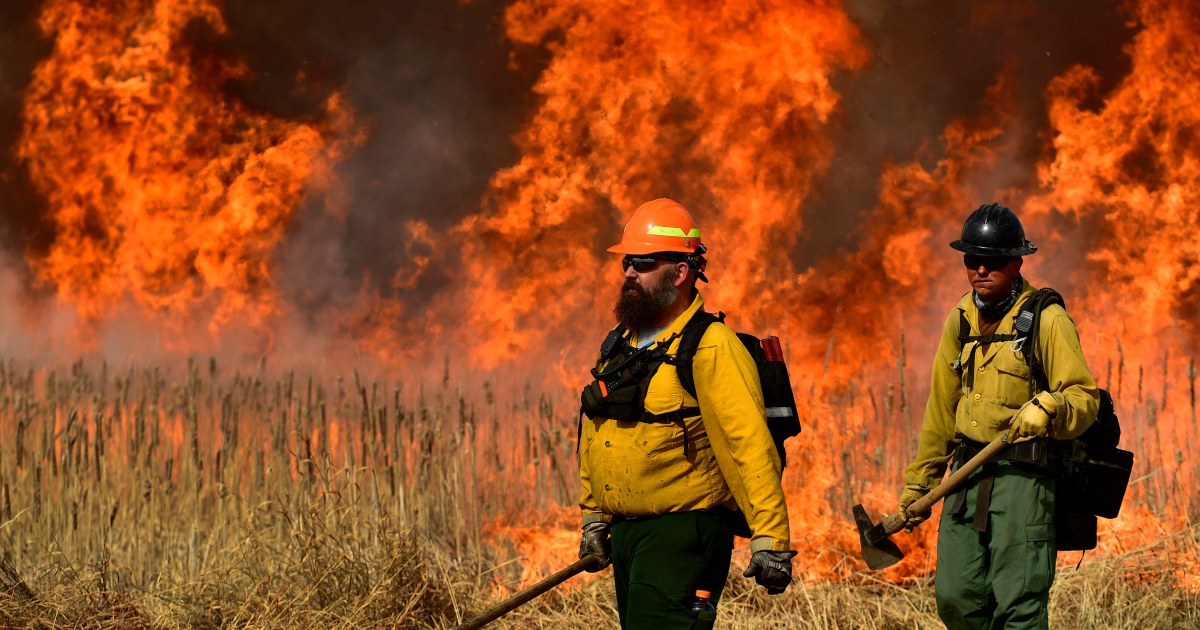
The U.S. Forest Service will allow federal wildland firefighters to wear N95 respirators on fire lines, reversing a long-running policy that kept the masks out of wildfire operations. The change matters because research cited by NBC News has linked wildfire smoke exposure among firefighters to higher risks of lung cancer and cardiovascular disease.
The agency announced the policy Wednesday, saying firefighters may use N95s after taking part in training, NBC News reported. Evan Burks, a Forest Service spokesperson, told NBC News the move is voluntary, but the agency is allowing and encouraging use while it develops a broader respiratory protection program.
Burks said the agency sees N95s as a practical interim measure that can offer some protection, with firefighters able to remove them if heat becomes a problem. The Forest Service described the policy as a temporary step while it works toward a program that meets Occupational Safety and Health Administration requirements, according to NBC News.
George Broyles, a longtime Forest Service firefighter who has studied smoke exposure risks, told NBC News the decision was overdue. Broyles said the change signals that the agency recognizes wildfire smoke as toxic and should reduce hazards for its workers.
Wildfire smoke can carry fine particles and gases into the lungs and bloodstream, NBC News reported. In the general U.S. population, smoke exposure has been associated with asthma, lung cancer, chronic lung disease, preterm birth and pregnancy loss; studies cited by NBC News also suggest wildland firefighters face elevated risks of lung cancer and heart disease.
A 2019 study co-authored by Broyles estimated career wildland firefighters were 8% to 43% more likely to die of lung cancer and 16% to 30% more likely to die of cardiovascular disease, depending on career length and exposure days. NBC News also cited research finding higher rates of hypertension and irregular heartbeats among wildland firefighters.
The Forest Service also said it will begin a decontamination effort aimed at limiting skin contact with toxins in ash and soot, NBC News reported. Under that program, firefighters will be paid for time spent showering, washing clothes and cleaning vehicles after working a fire.
Steve Gutierrez, a representative of the National Federation of Federal Employees, told NBC News that N95 access, cleanup protocols and training can reduce exposure to smoke and contaminants. He said the union wants further measures, including long-term respiratory protection, cancer screening, medical monitoring and improved facilities such as washing machines to keep contaminated clothing from going home with firefighters.
The masks have limits. NBC News reported that N95s can be uncomfortable in heat and can make breathing harder during intense work; they also filter particles but do not protect against carbon monoxide, formaldehyde and other fire-related gases.
According to a Forest Service fact sheet cited by NBC News, the respirators are not intended for use in steep terrain, rapidly changing fire conditions or situations where firefighters could have direct flame contact. Riva Duncan, president of Grassroots Wildland Firefighters, told NBC News that no existing device fully fits the job and described N95s as a short-term fix.
Broyles told NBC News that a more complete OSHA-compliant respirator system could still be years away. Gutierrez and Broyles both said some firefighters may decide not to wear the masks, with Gutierrez calling adoption a cultural change.
The policy arrives during an active fire year. The National Interagency Fire Center says more than 34,000 wildfires have burned at least 2.7 million acres this year, both above the 10-year average, according to NBC News. NIFC forecast maps cited by NBC News show above-average wildfire potential across large areas through September and no areas with below-normal potential.
This story draws on original reporting from NBC News.