
Cyclospora outbreak in Michigan shows signs of slowing after lettuce recall
Michigan officials say cyclosporiasis trends are improving, but the outbreak tied in part to iceberg lettuce is not over.
By Tom Brennan · Health & Medicine Correspondent
4 min read
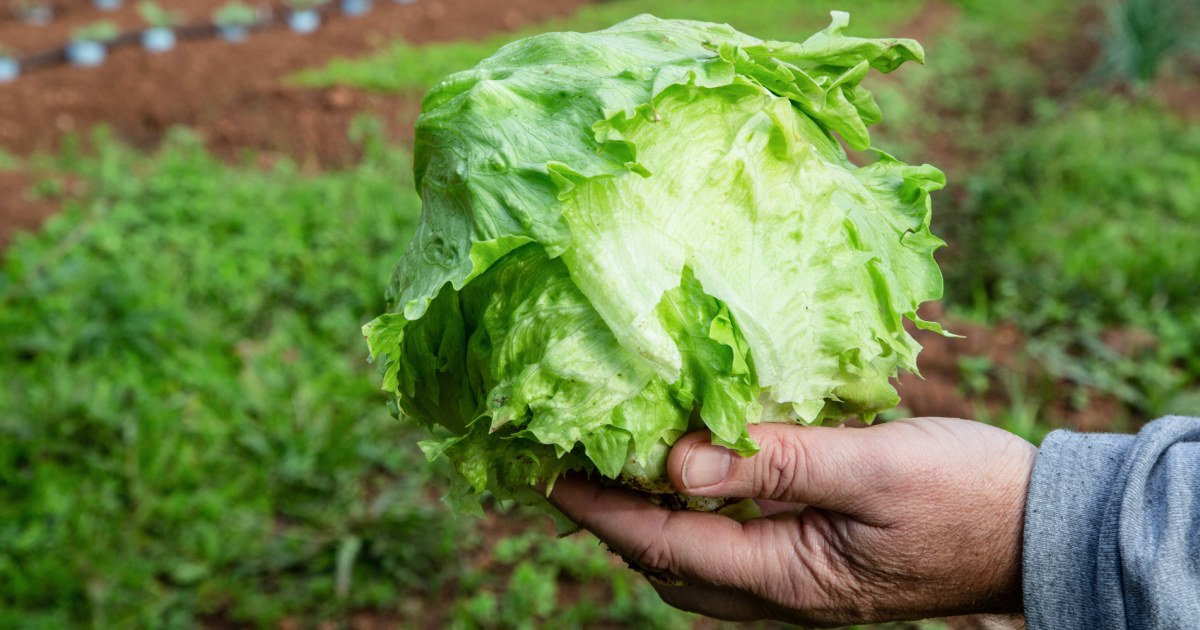
The cyclospora outbreak in Michigan may be easing after a major lettuce recall, state health officials said, but investigators have not declared the outbreak over. The distinction matters because thousands of illnesses have already been reported in Michigan, and federal officials are still working to determine whether more foods are involved.
The Centers for Disease Control and Prevention reported Tuesday that the U.S. has more than 18,000 confirmed or suspected cyclosporiasis cases. The illness is caused by a parasite associated with human feces.
In nine states, health officials have linked many cases to shredded iceberg lettuce from Taylor Farms de Mexico. Other clusters, including in New York and North Carolina, have not been tied to that lettuce and remain under investigation.
Has the cyclospora outbreak in Michigan peaked?
Dr. Natasha Bagdasarian, Michigan’s chief medical executive, said the state is seeing encouraging signs, though she stopped short of saying the outbreak has ended. The Michigan Department of Health and Human Services said more than 9,500 people in the state have been sickened in the past two months, with about 160 hospitalizations.
Bagdasarian said about 475 cases reported since Friday were largely tied to a reporting delay at one health care system, rather than a clear surge of new infections. She also said the share of emergency department visits involving diarrhea as the main complaint has been declining.
Those signals come with limits. Bagdasarian said some health systems have scaled back testing because of laboratory backlogs and shortages of testing supplies, reserving tests for people who are very ill or immunocompromised. That means milder cases may be missed.
What food has been linked to the outbreak?
Taylor Farms voluntarily recalled iceberg lettuce more than a week ago from some Taco Bell restaurants, grocery outlets and food service suppliers, according to the Food and Drug Administration. Bagdasarian said she could not say whether the recall alone explains the slowing trends in Michigan.
She also credited public health advice urging people to peel, cook and remove outer layers from produce. Still, she said some Michigan patients did not report eating lettuce or visiting a specific fast-food restaurant, which leaves open the possibility that other foods are contributing.
Health officials have also looked at cilantro and parsley in separate clusters this season. New York officials investigated an April cluster linked to cilantro served at a Brooklyn restaurant, though they did not definitively confirm cilantro as the source. North Carolina officials, who have reported 561 cyclospora cases, have said preliminary findings point to cilantro and parsley; those cases have not been linked to Taylor Farms lettuce.
Why is the source hard to trace?
Bagdasarian said federal health agencies are responsible for tracing and testing suspect foods, using patient interviews and other data. Health officials do not have real-time genetic sequencing for cyclospora, which makes it harder to connect a specific food item to a specific illness.
Jennifer McEntire, founder of the consulting firm Food Safety Strategy, said pinpointing a source is complicated because produce can pass through many distribution centers, brokers and handlers before reaching consumers.
Dr. Stephen Ostroff, a former acting FDA commissioner, said some cases could involve lettuce grown in the same region as Taylor Farms de Mexico and later served in the U.S. Frank Yiannas, a former FDA deputy commissioner for food policy and response, said the available information indicates that more than one product is likely causing illnesses.
Michigan has seen two waves of illness, according to Bagdasarian: one peaking between June 21 and June 28, and another between July 5 and July 12. Barbara Kowalcyk, director of the Institute for Food Safety and Nutrition Security at George Washington University, said that pattern could fit contamination in more than one batch of product.
Kowalcyk said contaminated irrigation or processing water could affect multiple crops or batches. She said the investigation underscores the need for stronger laboratory tools to detect cyclospora in the environment and more public health capacity to respond to outbreaks.
This story draws on original reporting from NBC News.