
Cyclospora lettuce outbreak shakes trust in restaurants and salads
Federal officials say the outbreak is under control, but recalls, mixed test results and social media anxiety are hitting restaurants.
By Priya Raghavan · Science Reporter
3 min read
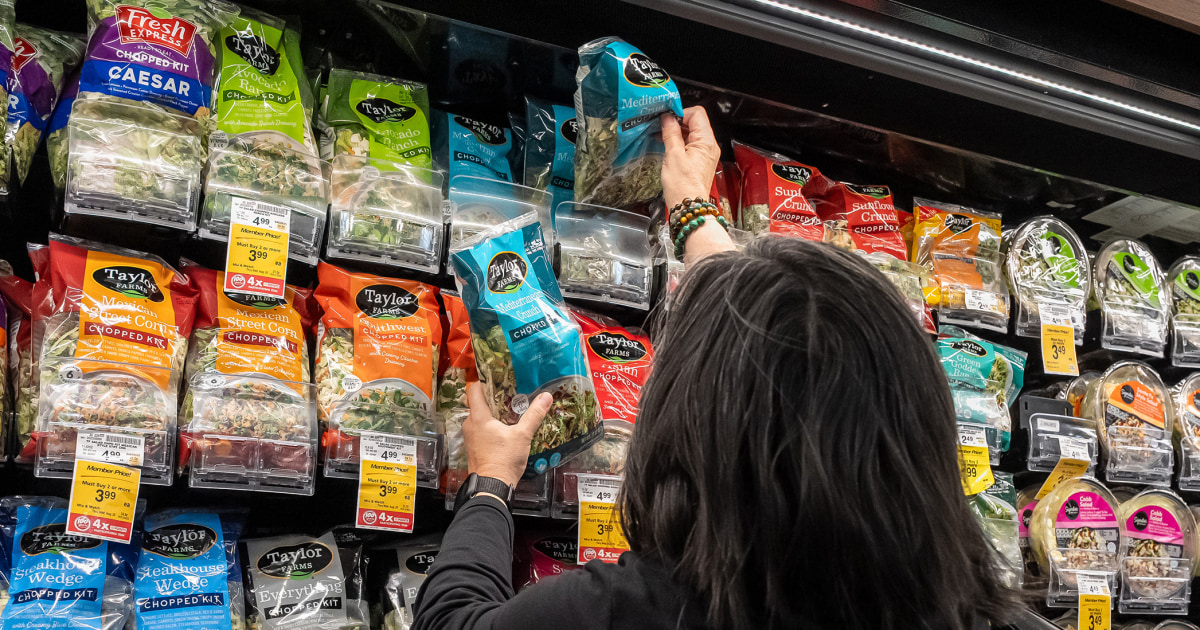
The cyclospora lettuce outbreak has become a consumer-confidence problem for restaurants and salad sellers, even as federal officials say they are making progress. Health and Human Services Secretary Robert F. Kennedy Jr. said this week that the outbreak is “under control,” NBC News reported, but many diners are still avoiding lettuce and salad orders.
Federal officials are still looking for the source of the illness, which they say can cause severe diarrhea. NBC News reported that at least 4,173 cases have been confirmed across 41 states.
The uncertainty has been amplified by changing messages from regulators and companies. Crisis communications expert Molly McPherson told NBC News that confusion over both the science and regulation has shaped public reaction to the outbreak.
Is lettuce safe after the cyclospora outbreak?
Federal officials have not identified a single final source of the outbreak, according to NBC News. For consumers, that means official updates, recalls and restaurant notices remain the clearest guidance on what specific products or chains are affected.
On July 17, Taylor Farms voluntarily recalled iceberg lettuce after federal investigators linked it to the multistate outbreak, NBC News reported. The company, described by NBC News as the world’s largest producer of salads and fresh-cut vegetables, remains under investigation and has said it is working closely with regulators.
The recall quickly drew attention to Taco Bell. The Food and Drug Administration found that Taco Bell had used lettuce from Taylor Farms de Mexico, and by July 13 at least 1,644 people had reported eating at Taco Bell before getting sick, according to the FDA.
Taco Bell said it removed all Taylor Farms lettuce from its restaurants nationwide. Placer.ai, a foot-traffic analytics firm, said visits to Taco Bell on July 17 fell nearly 31% below the chain’s average Friday traffic during the first half of the year, the largest one-day drop among the restaurant chains it reviewed.
Why did the Taylor Farms test result add confusion?
On July 18, the FDA said a Taylor Farms iceberg lettuce sample had tested positive for cyclospora. A day later, the agency said that result was a false positive, according to NBC News.
Dr. Mansour Samadpour, chief executive of food safety group IEH Laboratories, told NBC News that false positives can occur in food testing and said correcting the record was important. IEH Laboratories was hired by Chipotle after its 2015 E. coli outbreak, NBC News reported.
Restaurants have tried to reassure customers, with mixed results. Four days after Taco Bell first said it was removing Taylor Farms lettuce, the chain introduced a $1 “lettuce-free” stuffed tortilla, NBC News reported.
Chipotle and Sweetgreen have also sought to separate themselves from the concern. NBC News reported that both companies told customers online or through loyalty apps that they do not serve iceberg lettuce.
The effect has reached smaller businesses as well. Sean Alexander, owner of Build-A-Salad in Chattanooga, Tennessee, told NBC affiliate Local 3 News that his self-serve salad restaurant dropped from roughly 150 to 200 customers a day to about 10 a day.
Jonathan Maze, a restaurant industry analyst and editor-in-chief of Restaurant Business magazine, told NBC News that the damage for chains depends on who customers blame, how serious the outbreak becomes and how widely it spreads on social media. Maze said brands need to communicate clearly about the steps they are taking, pointing to McDonald’s public response to its 2024 E. coli outbreak as an example.
This story draws on original reporting from NBC News.