
Catheter-delivered CAR T cells shrink bladder tumors in mouse study
A preclinical study found engineered immune cells controlled bladder tumors in mice when placed directly into the bladder, suggesting a possible bladder-sparing route.
By Priya Raghavan · Science Reporter
3 min read
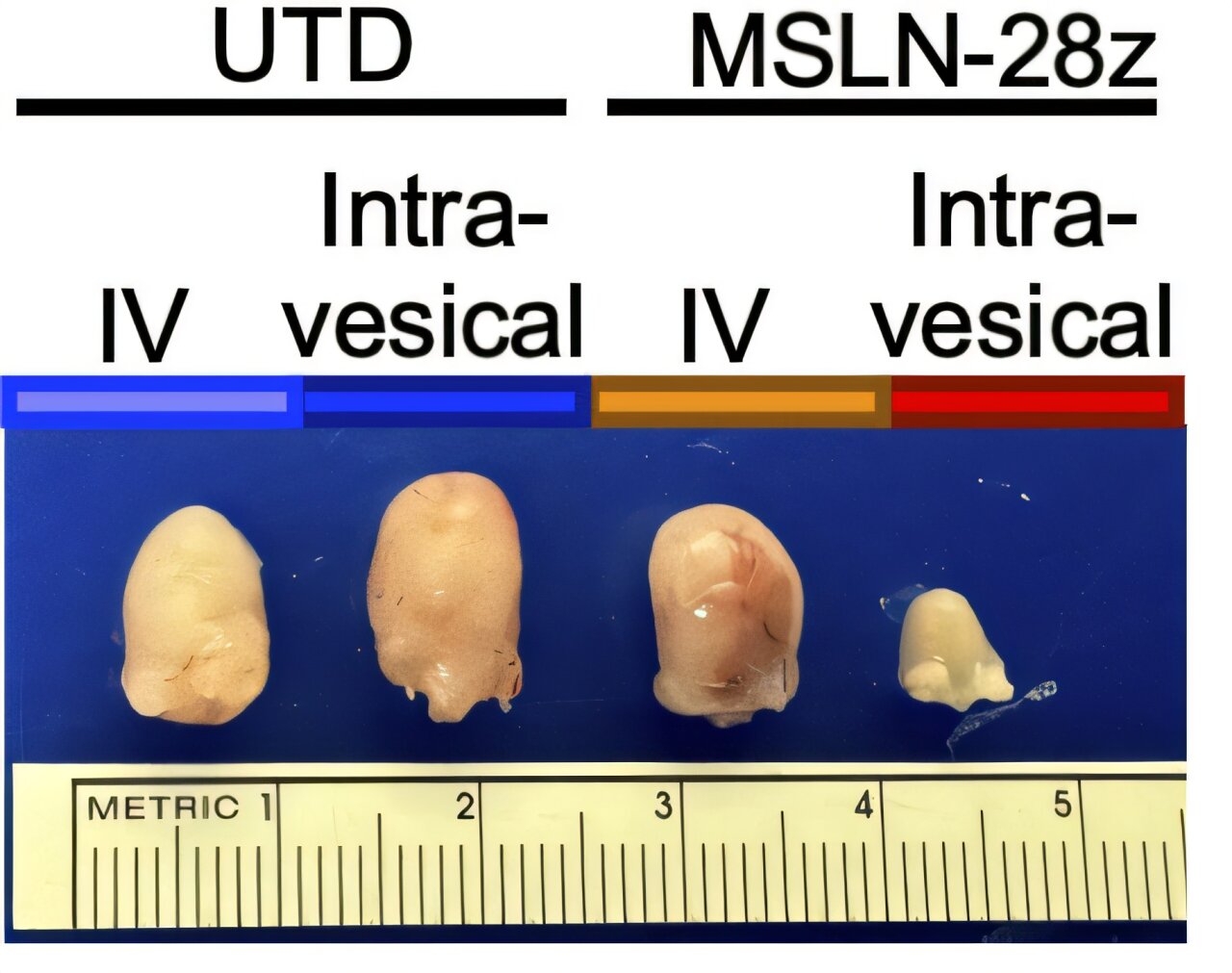
Researchers have reported a preclinical CAR T cell strategy that reduced bladder tumor growth in mice when the treatment was delivered directly into the bladder. The findings matter because many patients with high-risk bladder cancer face repeated treatment and, in some cases, removal of the bladder.
The work, published in the Journal of Experimental Medicine, was led by scientists at Weill Cornell Medicine, Cedars-Sinai Medical Center and Roswell Park Comprehensive Cancer Center, according to Rockefeller University Press. The team engineered immune cells to recognize MUC16, a protein found on many bladder cancer cells.
Bladder cancer is diagnosed in about 600,000 people worldwide each year, including roughly 80,000 people in the United States, according to Rockefeller University Press. Standard care often includes surgical tumor removal followed by chemotherapy or immunotherapy, but recurrence and disease progression remain common enough that some patients ultimately need their bladder removed.
Parwiz Abrahimi, the study’s first author and a urologic oncologist at Cedars-Sinai, said patients with high-risk bladder cancer have long faced treatment choices that can be highly morbid and life-changing. He said that has renewed interest in approaches that could preserve the bladder.
Why the delivery route mattered
CAR T cells are immune cells altered in the lab to carry a receptor that helps them identify and attack cancer cells. Rockefeller University Press said the treatments have worked against several blood cancers, while success against solid tumors has been harder because engineered cells may struggle to reach tumors and may harm healthy tissue.
The researchers tried to address both problems by choosing a bladder cancer target and placing the cells directly where tumors were growing. The method, called intravesical delivery, uses a catheter to introduce treatment into the bladder, a route already used in urology.
The engineered cells targeted MUC16, which Rockefeller University Press described as highly expressed on the surface of many bladder cancer cells, including some resistant to current therapies. The protein was described as largely absent from normal bladder cells and other healthy tissues.
In laboratory tests, the CAR T cells killed MUC16-positive tumors grown from patient-derived bladder cancer cells, according to the study summary. The team then tested the approach in mice implanted with human bladder cancer cells.
Mouse results point to a possible clinical path
The cells did not work when given intravenously, Rockefeller University Press said. When delivered directly into the bladder, however, they reduced tumor growth and prolonged survival in the mouse model.
The researchers also found that the cells stayed confined to the bladder after intravesical treatment, limiting spread through the body. That confinement could reduce the risk of side effects in other tissues, according to the study summary.
Jedd Wolchok of Weill Cornell Medicine, a co-leader of the study, said engineered T cell therapies for solid tumors have been difficult partly because possible targets can also appear in normal tissue. He said a compartment-focused delivery system may help address that barrier for bladder cancer and other common solid tumors.
Taha Merghoub of Weill Cornell Medicine, another co-leader, said the findings support MUC16 as a relevant target for CAR T therapy in bladder cancer and identify intravesical delivery as a feasible strategy for transferring the cells. He said the approach could be explored both for initial treatment and for tumors that resist existing therapies, particularly for patients with few options short of bladder removal.
The study was co-led by Merghoub, Wolchok and Renier J. Brentjens of Roswell Park Comprehensive Cancer Center. The paper is titled “Intravesical mesothelin-based CAR T cells targeting MUC16 effectively control bladder cancer in preclinical models,” with DOI 10.1084/jem.20250699.
This story draws on original reporting from Medical Xpress.