
Antibody pair protects animals from deadly Nipah after infection starts
Mount Sinai-led researchers say a two-antibody cocktail fully protected hamsters from lethal Nipah exposure in preclinical testing.
By Priya Raghavan · Science Reporter
3 min read
A two-antibody treatment protected hamsters from lethal Nipah virus exposure even after infection had begun, according to a Mount Sinai-led research team. The finding matters because Nipah and the related Hendra virus can cause severe disease, and no vaccines or treatments are approved for infected people.
The study, published in Science Translational Medicine, describes what the researchers call the first fully human monoclonal antibody cocktail shown to give complete protection against lethal Nipah and Hendra virus infection in preclinical work. The project was led by investigators in the Department of Microbiology at the Icahn School of Medicine at Mount Sinai, with collaborators from Fred Hutchinson Cancer Center, the University of Oxford, the University of Texas Medical Branch and other institutions.
Rare outbreaks, high stakes
Nipah and Hendra are henipaviruses, pathogens that can move from animals to people, Mount Sinai said. They can cause serious respiratory and neurological illness, and outbreaks, though uncommon, have reported fatality rates from 40% to more than 75%.
Mount Sinai said research on treatments has been slowed by the rarity of samples from human survivors. To avoid that bottleneck, the team used transgenic humanized mice designed to produce fully human antibodies, allowing researchers to identify antibody candidates without later converting animal antibodies for human use.
The team focused on two viral proteins that henipaviruses use to enter cells, according to the study. One protein helps the virus attach to cells, while the other enables fusion and entry. Earlier approaches that targeted only one step could leave room for the virus to develop escape mutations, the researchers said.
Two targets in one cocktail
The antibody called 8G3 blocks the virus’s receptor-binding protein, according to the study. Researchers reported that the targeted region appears difficult for the virus to alter, because evading the antibody would likely require several genetic changes at the same time.
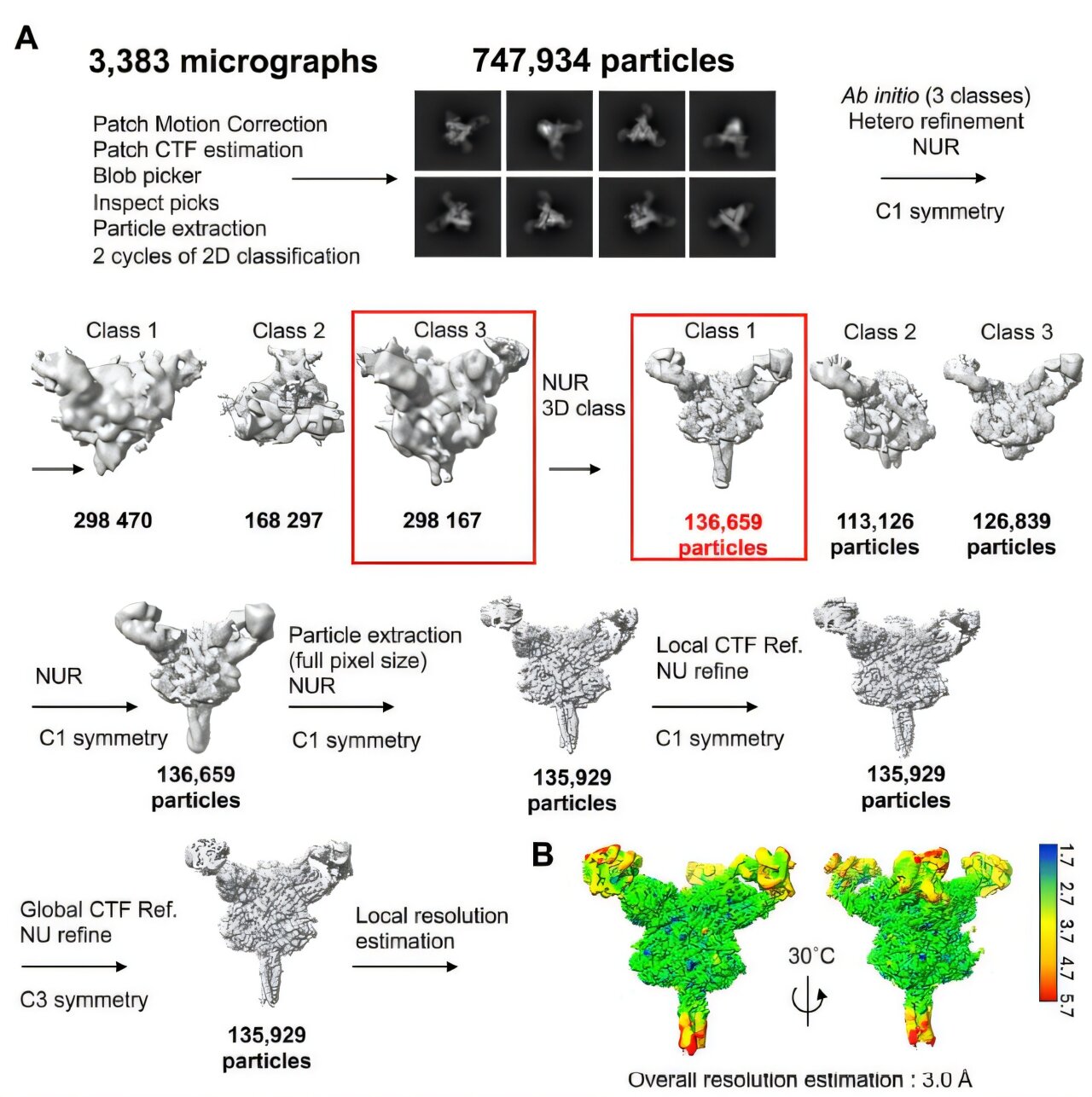
The second antibody, 2A1, acts on the fusion protein, the researchers said. Using high-resolution structural imaging, the team found that 2A1 neutralizes the virus by stabilizing a sugar-containing structure on that protein, rather than pushing it aside as expected.
Benhur Lee, senior author of the study and Ward-Coleman Chair in Microbiology at Icahn Mount Sinai, said in Mount Sinai’s release that the result points to a treatment strategy based on stabilizing a viral protein, not only disrupting it. The researchers said the two antibodies work through separate mechanisms, creating more than one barrier to infection.
Still before human trials
In hamster experiments, the antibody combination fully protected animals exposed to otherwise lethal Nipah virus doses, according to the study. Mount Sinai said the protection held when treatment was given after infection was already established, a key issue for a fast-moving disease.
The treatment remains preclinical. Mount Sinai said the next steps include testing in nonhuman primates, long-term safety studies and work to optimize the antibodies for possible clinical use.
The team also is studying next-generation antibody formats, including single molecules that could target multiple viral proteins, according to Mount Sinai. Researchers said the same dual-targeting approach may apply to other high-priority viruses that use more than one protein to infect cells.
This story draws on original reporting from Medical Xpress.