
Study finds brain updates familiar route maps without erasing them
Mouse research suggests the hippocampus can add unexpected events to existing spatial maps while preserving the map’s core layout.
By Tom Brennan · Health & Medicine Correspondent
3 min read
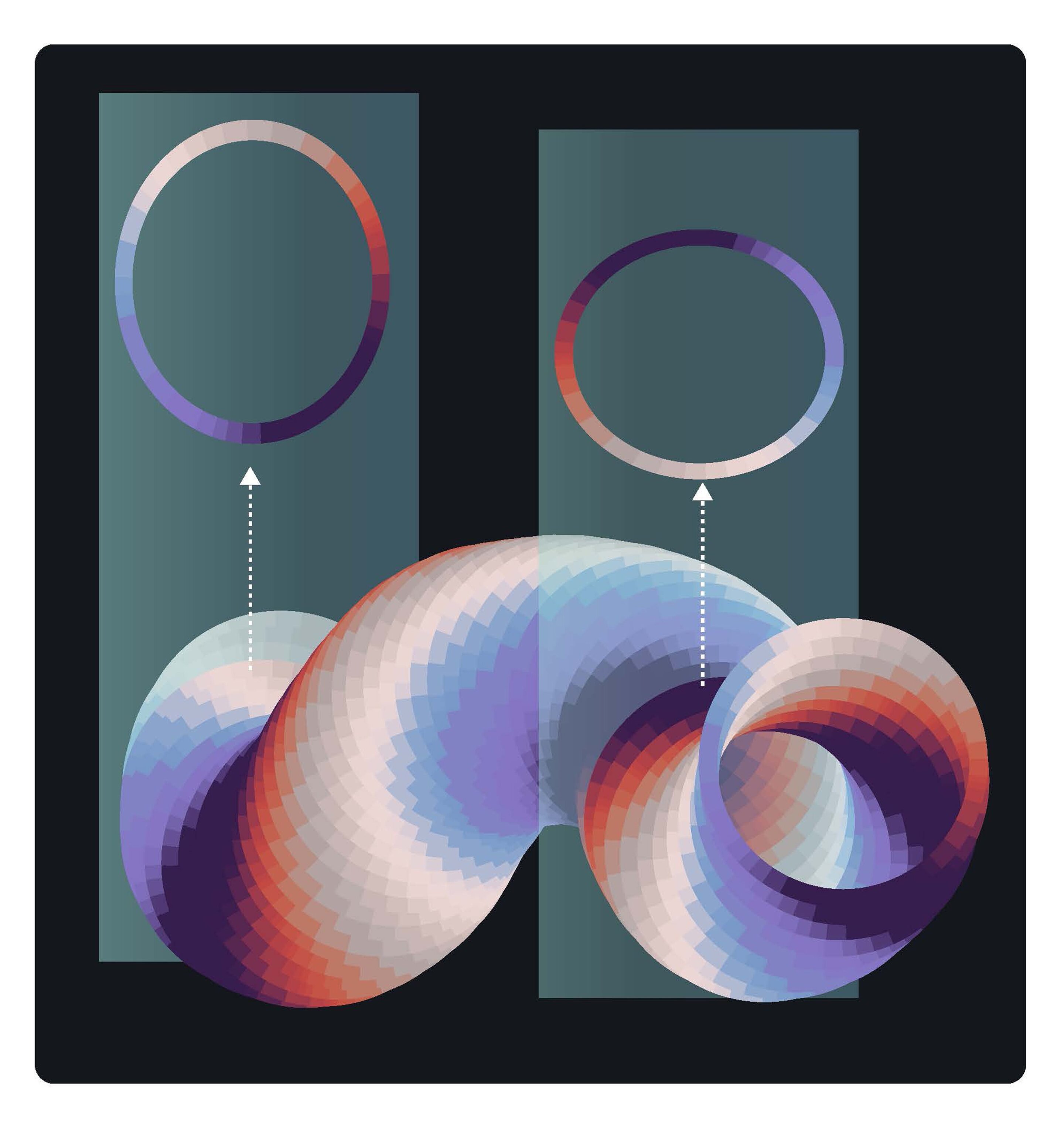
The hippocampus appears to add new experiences to familiar routes without rebuilding its internal map, according to researchers at University Hospital Bonn and the University of Bonn. The finding, reported in a mouse study published in the Proceedings of the National Academy of Sciences, could help explain how the brain balances stable memories with new information.
The research focused on CA3 circuits in the hippocampus, a brain region involved in memory and orientation. According to the Bonn team, these circuits kept a stable representation of a known route while also marking the place and timing of an unexpected event.
In the experiment, mice ran along a familiar straight track while scientists recorded activity in CA3 axons. At a fixed spot on the route, the researchers delivered a mild, harmless air puff and measured how the hippocampal network changed before, during and after the event.
The team found that the route representation stayed in place. At the same time, the air puff produced a measurable change in the shared activity patterns of the cell population, marking the event without replacing the spatial information, according to the study.
Event information sat on top of the map
Heinz Beck, a co-senior author from the Institute for Experimental Epileptology and Cognitive Sciences at University Hospital Bonn, said the result showed that the spatial map itself remained intact while the network added a new layer of information. Beck is also affiliated with the University of Bonn’s ImmunoSensation Cluster of Excellence3 and its Transdisciplinary Research Area Life & Health.
First author Albert Miguel-López said the air puff caused systematic changes in the geometry of population activity that identified where and when the event occurred. According to Miguel-López, the spatial map and the event marker could be read separately from the same neural activity.
The study examined two types of CA3 axons connecting the dorsal hippocampus in one hemisphere to the dorsal hippocampus in the other. The dorsal hippocampus is associated with memory recall and orientation, according to the Bonn researchers.
Both circuits changed their activity in similar ways after the air puff. The update was spread across place cells, which are tied to orientation in space, and non-place cells, according to the study.
Network-wide update
The researchers said that distribution suggests the hippocampus does not rely on a small subset of specialist neurons to record changes on a known route. Instead, the update appears to be shared across the broader network, which may help integrate new information while keeping the original map stable.
Tatjana Tchumatchenko, a co-senior author at University Hospital Bonn, said the work shows hippocampal maps can change in gradual ways while preserving the basic geometry of the environment. Tchumatchenko is a spokesperson for the University of Bonn’s Transdisciplinary Research Area Life & Health and a member of its Transdisciplinary Research Area Modeling.
The authors said the mathematical separation between the spatial map and the added event information points to a mechanism for storing different kinds of information together without one overwriting the other. The paper, by Miguel-López and colleagues, is titled “Transformations of the spatial activity manifold convey aversive information in CA3.”
This story draws on original reporting from Medical Xpress.