
One-dose FGF21 gene therapy extends health span in aging mice
UAB researchers report that a single muscle injection improved metabolism, organ function and survival measures in old mice.
By Priya Raghavan · Science Reporter
3 min read
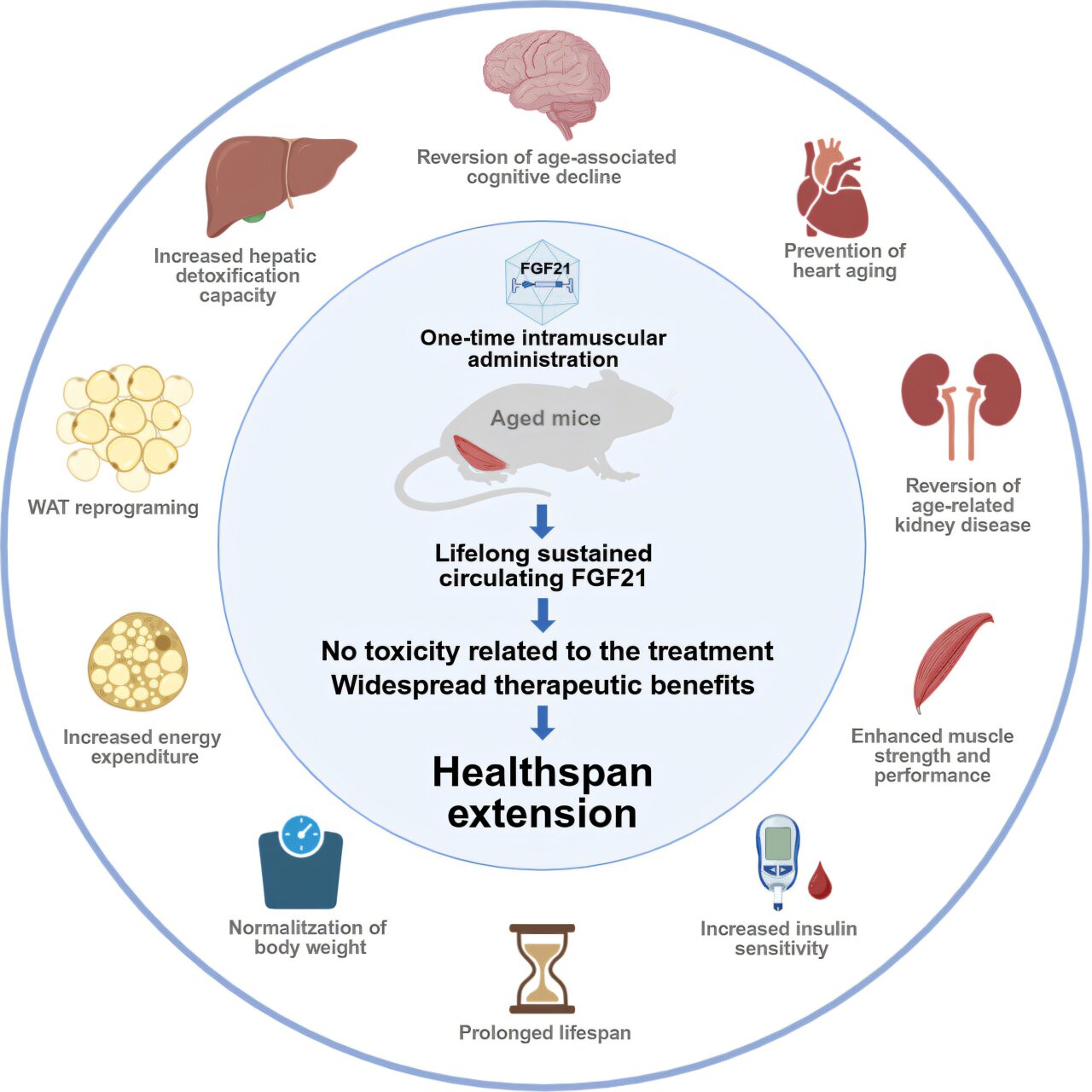
A single dose of an experimental gene therapy extended healthy life in old mice and helped preserve several organs during aging, researchers at the Universitat Autònoma de Barcelona reported. The findings matter because the work tests whether long-lasting production of the metabolic factor FGF21 can affect age-related decline across the body, rather than only one disease pathway.
The 27-month pharmacology study was published in Molecular Therapy. UAB said the work was carried out at its Center for Animal Biotechnology and Gene Therapy and led by Professor Fatima Bosch.
The team used an adeno-associated viral vector, or AAV, designed to make skeletal muscle produce and release native fibroblast growth factor 21, known as FGF21. The therapy was given to elderly male and female mice through one intramuscular injection, according to UAB.
Researchers reported that treated animals had longer life expectancy and more time free of disease. UAB said life expectancy rose by 20.54% in the mice that received the gene therapy.
Metabolic and organ effects
According to UAB, the treatment produced broad metabolic changes tied to aging. The university said it helped normalize body weight and fat buildup, improved insulin sensitivity and glucose control, and raised energy expenditure.
The reported effects extended across several tissues. In fat tissue, UAB said researchers saw less adiposity and inflammation, along with stronger mitochondrial function. In the liver, the therapy preserved detoxification capacity and prevented age-linked changes including amyloidosis, according to the university.
Kidney findings also pointed to protection in treated animals. UAB said markers of renal injury were reversed and researchers did not find signs of age-related kidney disease. In the heart, the university reported that fibrosis and amyloidosis were avoided, helping maintain structure and function.
The researchers also assessed movement and cognition. UAB said treated mice kept better physical performance, with improvements in coordination, strength and muscular endurance, while memory and learning improved to levels comparable with young animals.
Cellular changes reported
The study included transcriptomic and tissue analyses to examine how the therapy affected organs at the cellular level. According to UAB, the results showed tissue-specific adaptations linked to better energy balance and cell function.
The university said mitochondrial pathways involved in energy production increased after treatment. The therapy also restored proteostasis by activating protein synthesis, and researchers detected higher liver detoxification capacity tied to regulation of key enzymes, according to UAB.
Bosch said the findings support FGF21-based gene therapy as a potential strategy for promoting healthy aging, UAB reported. The university said the study is the first to show that gene therapy causing native FGF21 expression in old and geriatric animals can extend health span while delaying age-associated deterioration in multiple organs.
The same UAB group previously reported that AAV-FGF21 gene therapy reversed metabolic dysfunction-associated steatohepatitis, or MASH, in mouse models. UAB said the Food and Drug Administration has allowed a clinical trial of the therapy for MASH patients to proceed, with the trial scheduled to begin in 2026.
The paper, by Veronica Jimenez and colleagues, is titled “AAV-mediated FGF21 gene therapy promotes healthspan extension by whole-body tissue-specific adaptations.” Its DOI is 10.1016/j.ymthe.2026.05.025.
This story draws on original reporting from Medical Xpress.