
Fiber prebiotic tied to liver benefits in small fatty liver trial
Researchers in Finland report that XOS supplementation may help some people with fatty liver, depending on their gut microbiota profile.
By Priya Raghavan · Science Reporter
3 min read
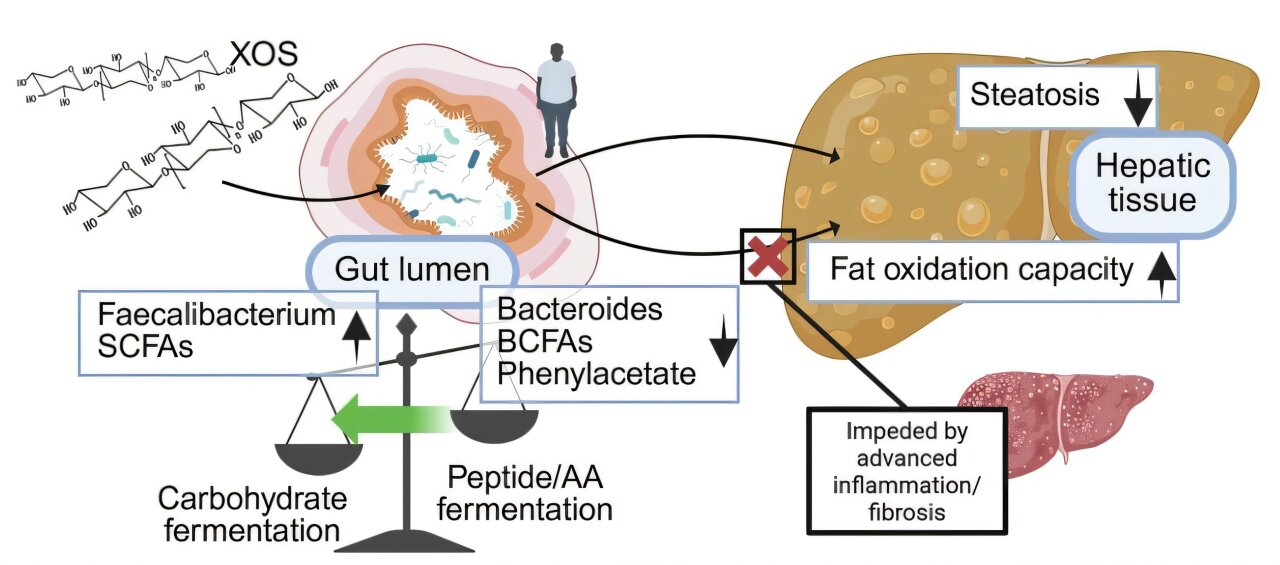
A four-month trial in overweight adults found that a dietary fiber prebiotic may improve markers tied to fatty liver disease, researchers from the University of Jyväskylä and the University of Eastern Finland reported. The results point to gut microbiota as a possible factor in who benefits, which could matter for future targeted treatments.
The study, published in npj Gut and Liver, tested xylo-oligosaccharides, or XOS, a prebiotic fiber that human enzymes do not digest. The researchers said the fiber reaches the colon, where it can affect gut microbial balance.
Metabolic dysfunction-associated steatotic liver disease, known as MASLD, commonly occurs alongside overweight and obesity, according to the University of Eastern Finland. The university said the condition affects about 75% of people with excess weight and can progress to cirrhosis or liver cancer if it is not treated.
Lifestyle change remains the main treatment approach, the university said, but long-term adherence can be difficult. That has led researchers to study complementary approaches, including dietary fibers that may alter microbial activity in the gut.
Trial tested XOS for four months
The clinical trial included 42 overweight adults who took 2.8 grams of XOS each day for four months, according to the researchers. Liver fat was measured with magnetic resonance imaging before and after the intervention.
The researchers reported that XOS lowered certain gut metabolites derived from amino acids. Those metabolites have previously been associated with fat buildup in the liver, according to the study team.
Jukka Hintikka, the study’s first author and a postdoctoral researcher at the University of Eastern Finland, said the findings suggest XOS may help when used in the right group of patients. “Our findings suggest that, when applied to the right target group, XOS can restore gut fermentation balance, reduce the production of harmful metabolites and thereby benefit liver health,” Hintikka said.
Gut profile appeared to shape response
The researchers said the prebiotic seemed to have the strongest effect in participants who began the trial with signs of an imbalanced gut microbiota. In those participants, microbial activity suggested more protein fermentation relative to carbohydrate fermentation.
After XOS supplementation, the study team reported a shift toward a more balanced microbial composition in that subgroup. The researchers also observed a reduction in visceral fat among those participants.
The response was weaker or absent in participants whose blood markers suggested more advanced fatty liver disease, according to the researchers. The study did not establish XOS as a treatment for all people with MASLD.
The authors said this was the first clinical trial in humans to examine XOS prebiotics for liver fat. They said the findings align with earlier animal research in which XOS reduced fatty liver in rats.
Hintikka said the work could support more personalized approaches to fatty liver disease. “However, larger and more targeted studies are still needed to confirm these results,” he said.
This story draws on original reporting from Medical Xpress.