
Bowel cancer relapse risk AI tool validated in stage 2 patients
La Trobe researchers say SÉMIL can help identify stage 2 bowel cancer patients more likely to relapse using routine pathology slides.
By Tom Brennan · Health & Medicine Correspondent
3 min read
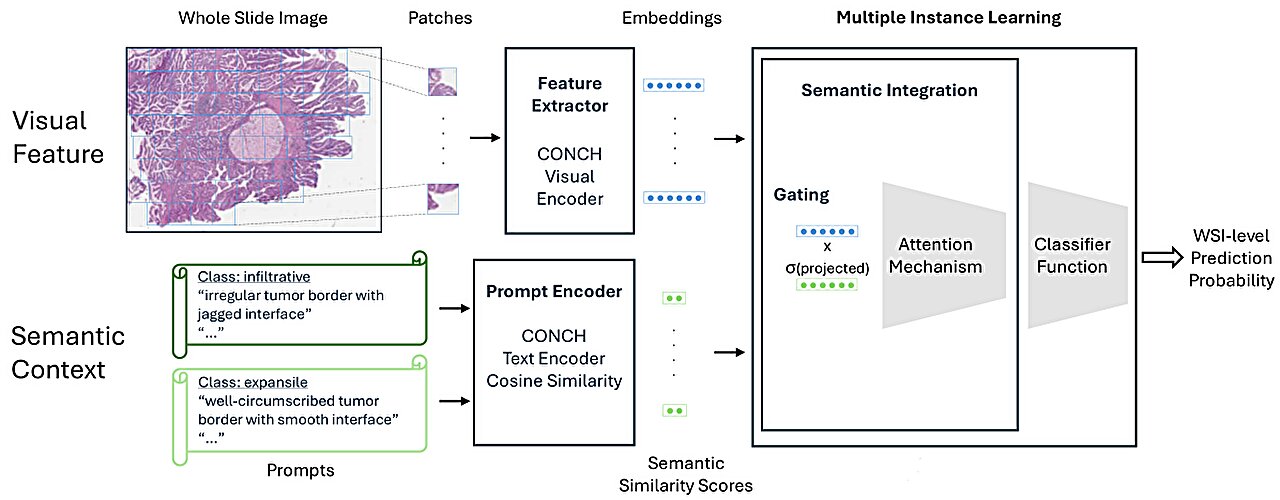
La Trobe University researchers have developed an artificial intelligence tool aimed at improving bowel cancer relapse risk assessment for people with stage 2 disease. The finding matters because Australian guidelines reserve chemotherapy after surgery for patients judged to be at high risk, making accurate risk calls central to treatment decisions.
The work, published in Gastroenterology, describes an algorithm called SÉMIL, short for Semantically-Enhanced Multiple Instance Learning. According to La Trobe University, the system analyzes routine pathology slides using both images and written descriptions to help identify patients at higher risk of recurrent bowel cancer.
La Trobe said bowel cancer is Australia’s fourth most commonly diagnosed cancer and its second leading cause of cancer death. Globally, the university said, it ranks as the third most common cancer.
How does the SÉMIL AI tool predict bowel cancer relapse risk?
The SÉMIL algorithm looks at features in standard pathology material, including the growth pattern of a tumor at its invasive front, according to lead author Francis Magisson, a Ph.D. candidate in La Trobe’s School of Computing, Engineering and Mathematical Sciences. Magisson said that feature has prognostic value but can be hard for pathologists to classify consistently.
La Trobe said the tool places tumors into higher-risk or lower-risk categories. Magisson said the information could help pathologists and clinicians decide which stage 2 patients may need closer follow-up or added treatment, including chemotherapy.
The researchers examined more than 1,600 pathology slides, according to La Trobe. They then validated the findings in 1,220 patients with stage 2 bowel cancer across three independent groups and multiple Australian institutions.
The study also found that risk assessment was most accurate when the AI result and a pathologist’s evaluation agreed, La Trobe said. That finding frames the tool as a support for existing pathology work rather than a standalone replacement.
Why stage 2 bowel cancer decisions are difficult
Stage 2 bowel cancer can present a treatment dilemma because some patients are cured with surgery while others face a higher chance of relapse. Under current Australian clinical guidance, La Trobe said, chemotherapy after surgery is recommended only for high-risk stage 2 patients.
Associate Professor David Williams, an anatomical pathologist at Austin Health and the Olivia Newton-John Cancer Research Institute, said the challenge is identifying which higher-risk patients should receive treatment while balancing possible chemotherapy benefits against side effects. He said the study shows AI-based assessment may give pathologists extra information that can help clinicians weigh next treatment options.
Associate Professor Zhen He, who leads La Trobe’s Digital Biology program at the Institute for Molecular Science, the School of Computing, Engineering and Mathematical Sciences and the Australian Center for Artificial Intelligence in Medical Innovation, said SÉMIL could fit into digital pathology workflows already in use. He said the approach would not require costly new tests or additional tissue samples.
He also said future AI-based pathology assessments could be combined with emerging biomarkers to improve risk stratification and treatment planning. The study was published as “AI-Assisted Risk Stratification in Stage II Colorectal Cancer: Multi-Institutional Validation of Semantically-Enhanced Deep Learning” in Gastroenterology.
This story draws on original reporting from Medical Xpress.