
Alzheimer's protein misfolding blood marker tops P-tau 217 in early prediction
A 17-year study found an amyloid beta misfolding marker better predicted future Alzheimer’s before symptoms than P-tau 217.
By Priya Raghavan · Science Reporter
3 min read
An Alzheimer's protein misfolding blood marker predicted future dementia earlier than P-tau 217 in a long-running German study, according to Ruhr University Bochum. The finding could shape how researchers screen people for Alzheimer’s risk before memory problems or other symptoms appear.
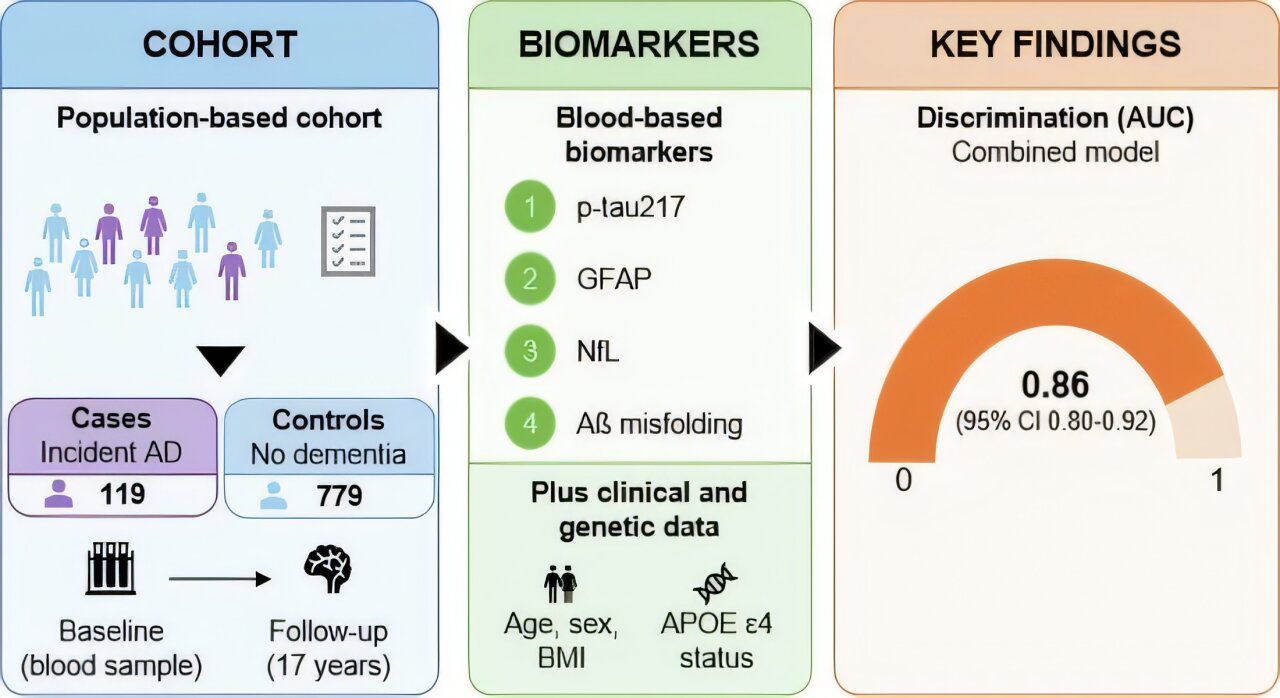
The study, led by Professor Klaus Gerwert at Ruhr University Bochum’s PRODI center, examined blood samples from 779 people followed for 17 years in the ESTHER cohort at the German Cancer Research Center, or DKFZ. The work was published July 16 in EMBO Molecular Medicine.
The researchers compared several blood-based biomarkers across the course of Alzheimer’s disease. Their main finding was that amyloid beta protein misfolding gave the strongest blood-based signal in people who had no clinical symptoms but later developed Alzheimer’s dementia.
What did the Alzheimer’s blood marker study find?
Ruhr University Bochum said P-tau 217 performed very well once Alzheimer’s disease had reached the clinical stage. Gerwert said its diagnostic effectiveness at that point was comparable to established measures such as the Aβ42/40 ratio in cerebrospinal fluid and amyloid PET imaging.
Its value was weaker earlier in the disease process. In people in the preclinical, symptom-free stage, P-tau 217 had an AUC of 0.67, while the amyloid beta misfolding marker reached 0.79 in cognitively normal participants, according to the study.
AUC, or area under the curve, is a common way to judge how well a test separates people who will have an outcome from those who will not. The Ruhr University Bochum report said values around 0.8 or higher are considered highly significant.
The team also tested a broader panel built around protein misfolding. When demographic, genetic and other blood markers were added, the panel reached an AUC of 0.87 for predicting a later Alzheimer’s diagnosis before symptoms were present, according to the researchers.
Why does early Alzheimer’s prediction matter?
Early prediction is becoming more relevant because disease-modifying anti-amyloid therapies have been approved, Ruhr University Bochum said. Those treatments can slow disease progression, but current approval criteria call for use in early clinical stages, such as mild cognitive impairment or mild Alzheimer’s dementia.
The treatments also carry risks. The university noted that anti-amyloid therapies can cause amyloid-related imaging abnormalities, known as ARIA, involving swelling and microbleeds in the brain. Because of those risks and diagnostic requirements, treatment is currently limited to a subset of patients.
Gerwert said the study shows protein misfolding is the earliest measurable blood-based marker for Alzheimer’s disease, while P-tau 217 is strongest after clinical disease has appeared. He said identifying people at elevated risk many years before symptoms emerge is where the misfolding marker provides the most predictive information.
The authors said protein misfolding could serve as the basis for future blood-based screening strategies. They said such screening could help find at-risk people earlier, select participants for prevention studies and preventive treatments more precisely, and support more affordable population-wide testing programs.
This story draws on original reporting from Medical Xpress.