
AI-guided method points to new CAR T target across cancer models
Penn researchers used large language models and expert review to identify GPNMB as a candidate CAR T target, then tested it in preclinical cancer models.
By Tom Brennan · Health & Medicine Correspondent
3 min read
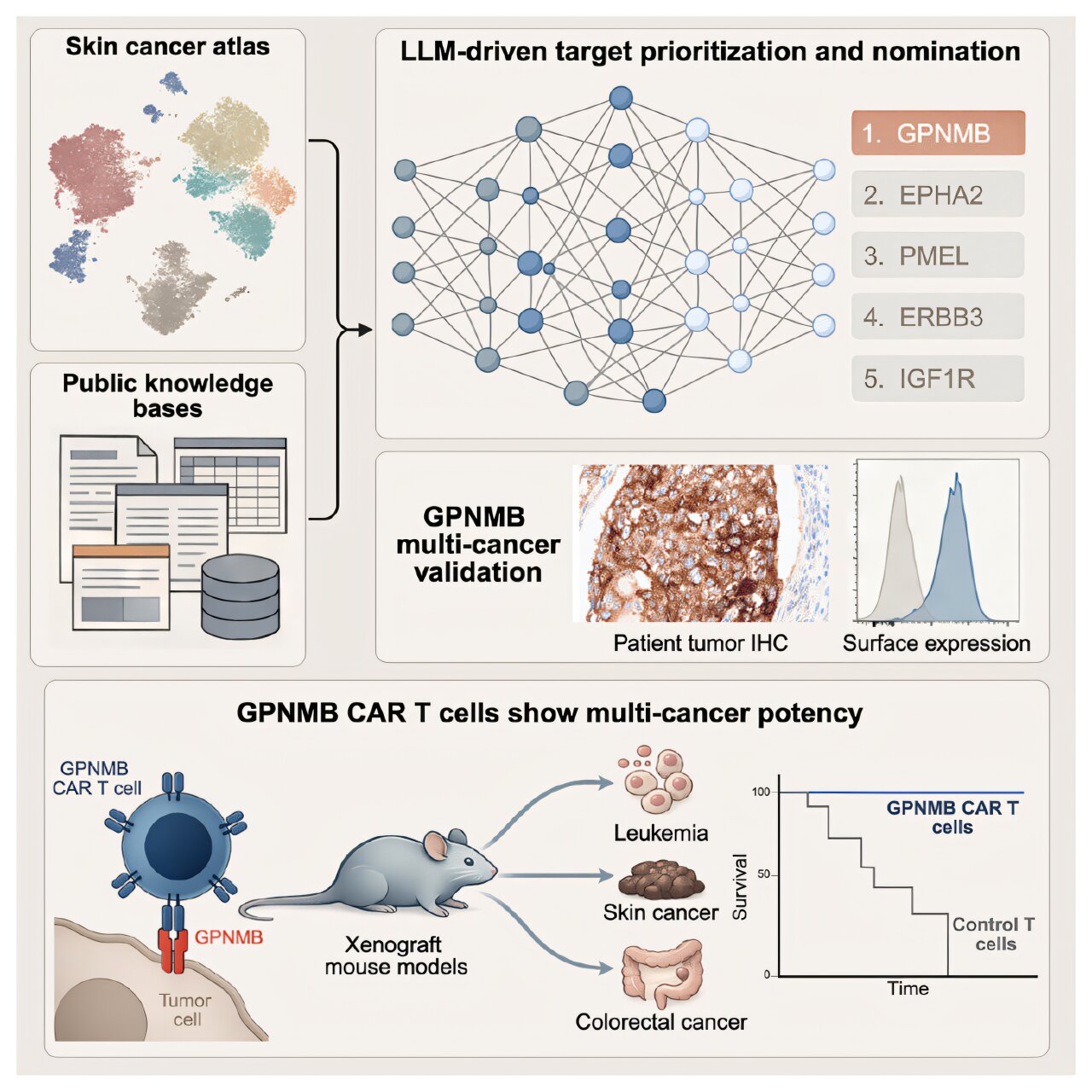
Researchers at the University of Pennsylvania say they have built an artificial intelligence framework to help identify targets for CAR T cell therapy, a bottleneck that has slowed efforts to move the treatment beyond blood cancers. In a study published in Cell, the team reported that the system nominated GPNMB as a leading target and that a CAR T therapy aimed at it killed tumors in preclinical models.
The work was led by scientists at Penn’s Perelman School of Medicine and Abramson Cancer Center, according to Penn Medicine. The group described the approach as human-in-the-loop AI: large language models screened broad biological data, while scientists reviewed and validated the resulting candidates.
CAR T cell therapy, which engineers a patient’s immune cells to attack cells carrying a selected surface marker, has changed treatment for several blood cancers, Penn said. Existing FDA-approved CAR T therapies target antigens commonly found in blood cancers, but Penn researchers said suitable surface targets have been harder to pin down for solid tumors and other diseases.
How the framework worked
To develop and test the framework, the team focused on skin cancer, according to the study. Penn said melanoma was chosen because other immune-based treatments, including checkpoint inhibitors and tumor-infiltrating lymphocyte therapy, have shown benefit in the disease, suggesting another immune approach could be useful if the right CAR target were found.
The researchers combined four public single-cell RNA sequencing data sets from skin cancer with information from public databases, Penn said. They then applied criteria tied to CAR T target selection to rank more than 10,000 possible targets before asking several large language models to nominate the strongest candidates.
According to Penn, the simulations were run independently 1,000 times to reduce known AI problems, including hallucinated outputs. The results were merged into a shorter list for expert assessment and laboratory testing.
Daniel Baker, the study’s lead author, said the framework was designed to pair the breadth of large language models with the depth of human scientific judgment, according to Penn. Baker completed the work under the mentorship of Carl June and Zoltan Arany at Penn.
GPNMB moves into preclinical testing
The AI-aided process put glycoprotein non-metastatic melanoma protein B, or GPNMB, at the top of the candidate list, Penn said. The researchers confirmed in lab tests that selected targets appeared on the surface of cancer cells, then built a CAR T therapy directed at GPNMB.
In preclinical testing, the GPNMB-targeted CAR T cells showed tumor-killing activity in mouse models of multiple cancer types, according to Penn. The team reported activity in melanoma models and also in laboratory models of leukemia and colorectal cancer.
Penn said the full target-discovery process, once the framework had been built, took less than a few weeks. The institution contrasted that with manual target discovery work, which it said can take months to years and can be costly and labor-intensive.
June, a Penn immunotherapy professor and CAR T researcher, said the study was among the first uses of large language models in cell and gene therapy, including CAR T therapy, according to Penn. Arany said the work showed how AI could help researchers use expanding bioinformatics data in a more systematic way.
The framework was designed to be modular and not limited to one disease or one AI model, Penn said. The researchers included the framework in the paper’s methods section so other scientists can use or adapt it, and Penn said the team plans to test the approach in other cancers and diseases while refining the GPNMB CAR T therapy for possible future clinical trials.
Sikander Hayat of the Icahn School of Medicine at Mount Sinai and RWTH Aachen University was a co-corresponding author with Baker, June and Arany, according to the publication.
This story draws on original reporting from Medical Xpress.