
AI eye-video system shows promise for anemia screening without needles
Researchers used short videos of conjunctival blood vessels to estimate hemoglobin and red blood cell counts in a proof-of-concept study.
By Priya Raghavan · Science Reporter
3 min read
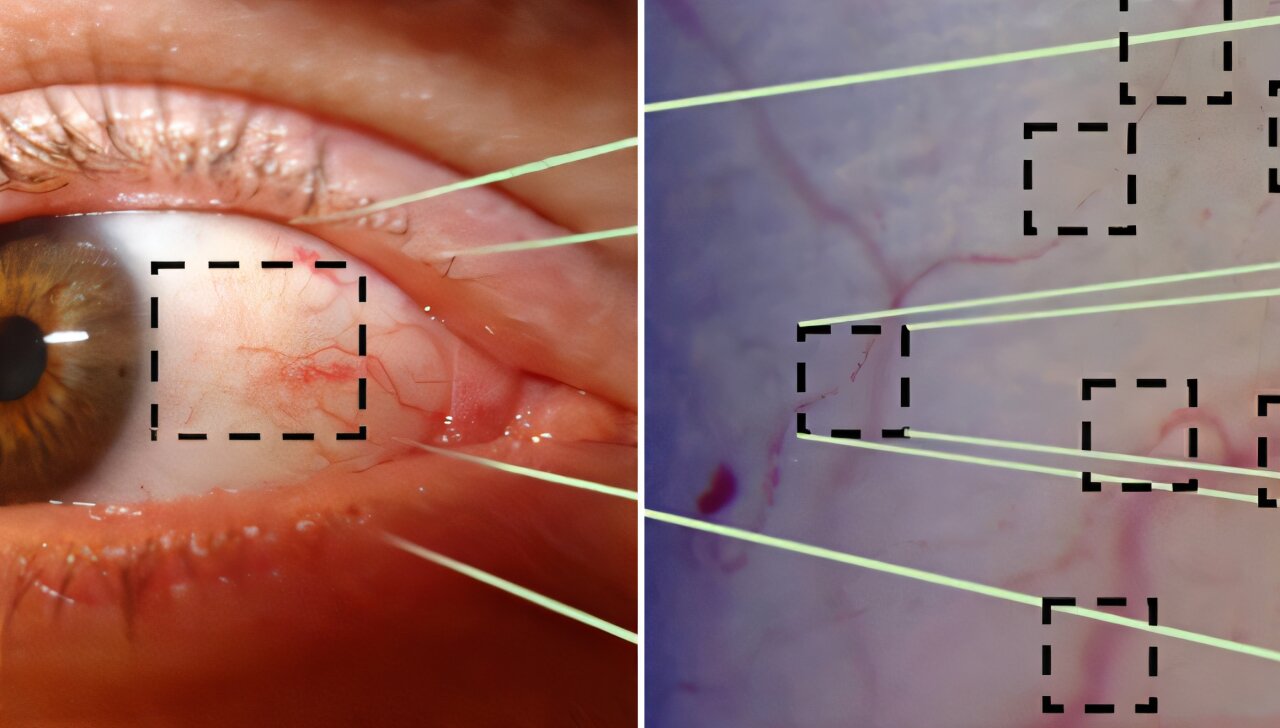
An artificial intelligence system estimated anemia-related blood markers from short videos of tiny vessels on the eye’s surface, according to researchers at Tel Aviv University and Sheba Medical Center. The approach could point toward blood screening that does not require a finger prick or blood draw, though the team said larger studies are needed before clinical use.
The work, published in npj Digital Medicine, focused on the conjunctiva, the clear membrane over the white of the eye. The researchers said vessels in that area can reveal blood flow patterns, allowing software to compare video features with standard laboratory results.
The study was led by Tamir Denis of Tel Aviv University, with research groups headed by Prof. Haim Suchowski of the School of Physics and Astronomy and Prof. Lior Wolf of the Blavatnik School of Computer Science and AI. Sheba Medical Center researchers included Prof. Ygal Rotenstreich, head of the Electrophysiology Clinic and Retinal Research Laboratory, and Dr. Ifat Sher-Rosenthal, research director and head of the Restorative Retinal Lab.
How the system works
The team called its method Video-to-Vessels. According to the study, the system turns high-magnification eye videos into a digital description of vessel structure and blood movement, then uses AI to estimate hemoglobin levels and red blood cell counts.
The researchers enrolled 224 participants who had standard blood tests and conjunctiva imaging. Each participant had 10-second videos taken from both eyes using a 50-times magnification RGB camera, according to the study.
The system detected anemia with 82.8% accuracy, the researchers reported. They also found a strong relationship between the AI estimates and laboratory measurements for hemoglobin and red blood cell counts.
Small vessels gave stronger signals
The researchers said the thinnest vessels provided the clearest information for predicting hemoglobin. In very narrow vessels, blood cells move one after another, which the team said makes flow patterns easier to link with hemoglobin concentration.
Models trained only on those small vessels performed better than models based on larger vessels, according to the study. The researchers also found that video processing affected the results: correcting eye motion and reducing digital noise improved performance.
When the team removed those processing steps, the correlation with laboratory hemoglobin values fell by 38%, according to the study. The correlation with red blood cell counts dropped by 19%.
Possible screening use
The researchers framed the work as an early demonstration rather than a finished medical test. They said future studies must include broader and more varied populations before the technology could be used in routine care.
The team said the approach may eventually support a compact handheld device for first-line screening in clinics, community health settings or homes. The researchers noted that anemia affects about 30% of the world’s population, making easier screening a public health goal, especially where access to laboratories is limited.
Denis said the conjunctiva offers researchers a way to observe blood vessels and, in some cases, blood flow itself. Rotenstreich said the results suggest that optics, physics and AI may be combined to build less invasive medical tests, while stressing that the work remains at an early stage.
This story draws on original reporting from Medical Xpress.