
SoftBank chief rejects Musk’s space data center bet for faster AI buildout
Masayoshi Son said SoftBank will prioritize Earth-based AI infrastructure, arguing orbital data centers would take too long and cost too much.
By Hana Yoshida · Markets Reporter
3 min read
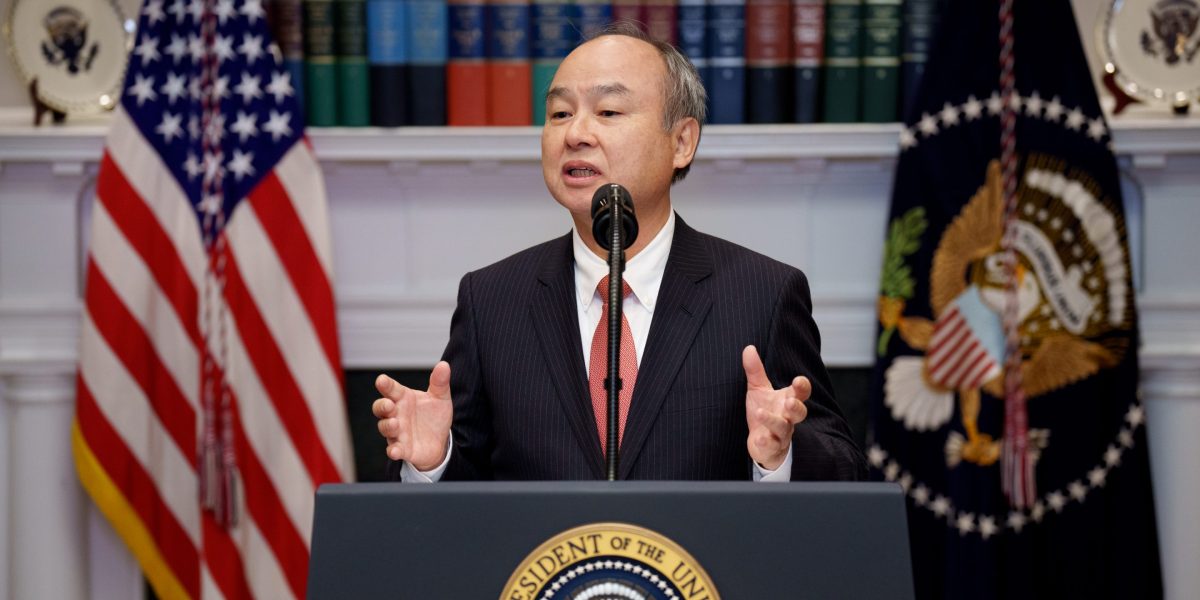
SoftBank CEO Masayoshi Son pushed back on Elon Musk’s plan to put AI data centers in orbit, saying the nearer-term race will be won by companies that build infrastructure on Earth first. Bloomberg reported that Son made the comments Tuesday at the annual shareholder meeting for SoftBank’s wireless and broadband division.
Son said the next several years matter more to the AI competition than projects that may arrive a decade from now, according to Bloomberg. He summed up his view by saying, “He who strikes first wins.”
Son praised Musk as a “remarkable agent of change,” Bloomberg reported, but said orbital data centers would require too much time and capital. He argued that electricity costs are small compared with the expense of chips and hardware in data center operations.
According to Bloomberg’s account, Son also said any savings from solar power collected in space could be offset by the cost of launching materials and maintaining facilities in orbit. He added that communications delays between Earth and space would create another problem for such facilities.
SoftBank backs an Earth-based AI buildout
SoftBank’s current AI infrastructure strategy is tied to Stargate, the OpenAI-led project to build data centers and related systems across the United States. Reuters reported in January 2025 that SoftBank and OpenAI each committed $19 billion to the venture, which planned to invest $500 billion over four years.
Son appeared at the White House in January 2025 for the Stargate announcement, according to Fortune. Musk later criticized the project on X, writing that SoftBank had “well under $10B secured” and saying he had that on “good authority.”
The dispute adds to a history of friction between the two executives. Bloomberg previously reported that Musk and Son discussed a possible SoftBank investment in Tesla in 2017 before talks failed over ownership issues.
Orbital data centers face cost questions
Some researchers have said space-based data centers could be technically possible, but would face difficult economics and long timelines. Fortune previously reported that Boon Ooi, a professor at Rensselaer Polytechnic Institute, said generating one gigawatt of power in orbit would require about one square kilometer of solar panels.
NASA data cited by Fortune showed that, as of 2018, sending cargo to low Earth orbit on SpaceX’s Falcon 9 cost $2,720 per kilogram. Ooi told Fortune that the amount of equipment required would be extremely heavy and expensive to launch.
The energy pressure behind Musk’s idea is real. U.N. researchers cited by Reuters said global data centers consumed 448 terawatt-hours of electricity last year, more than Saudi Arabia, and projected that demand would double by 2030, mainly because of AI.
SpaceX has made orbital AI data centers part of its investment story, according to Fortune. Morningstar analyst Nicolas Owens wrote that investors were paying a $72 premium on SpaceX’s initial share price for exposure to the company’s orbital data center plans after its public listing earlier this month.
Son is also setting lofty goals for SoftBank. At SoftBank’s annual shareholder meeting Wednesday, company materials showed that he targeted raising the firm’s net asset value to 1 quadrillion yen, or $6.4 trillion, over 16 years through work on artificial superintelligence, a system he has described as potentially 10,000 times smarter than humans.
SoftBank’s shareholder presentation also described plans for robots suited to risky jobs, including underwater welding and disaster rescue work. According to SoftBank, Son rejected talk of an AI bubble as “blasphemy against AI” and said he does not plan to retire soon.
This story draws on original reporting from Fortune.