
Yen slide revives debate over Japan’s focus on interest rates
A Fortune commentary argues Japan’s weak yen and rising rates are better explained by slow money growth than by the Bank of Japan’s rate path.
By Maya Lindqvist · Senior Technology Correspondent
3 min read
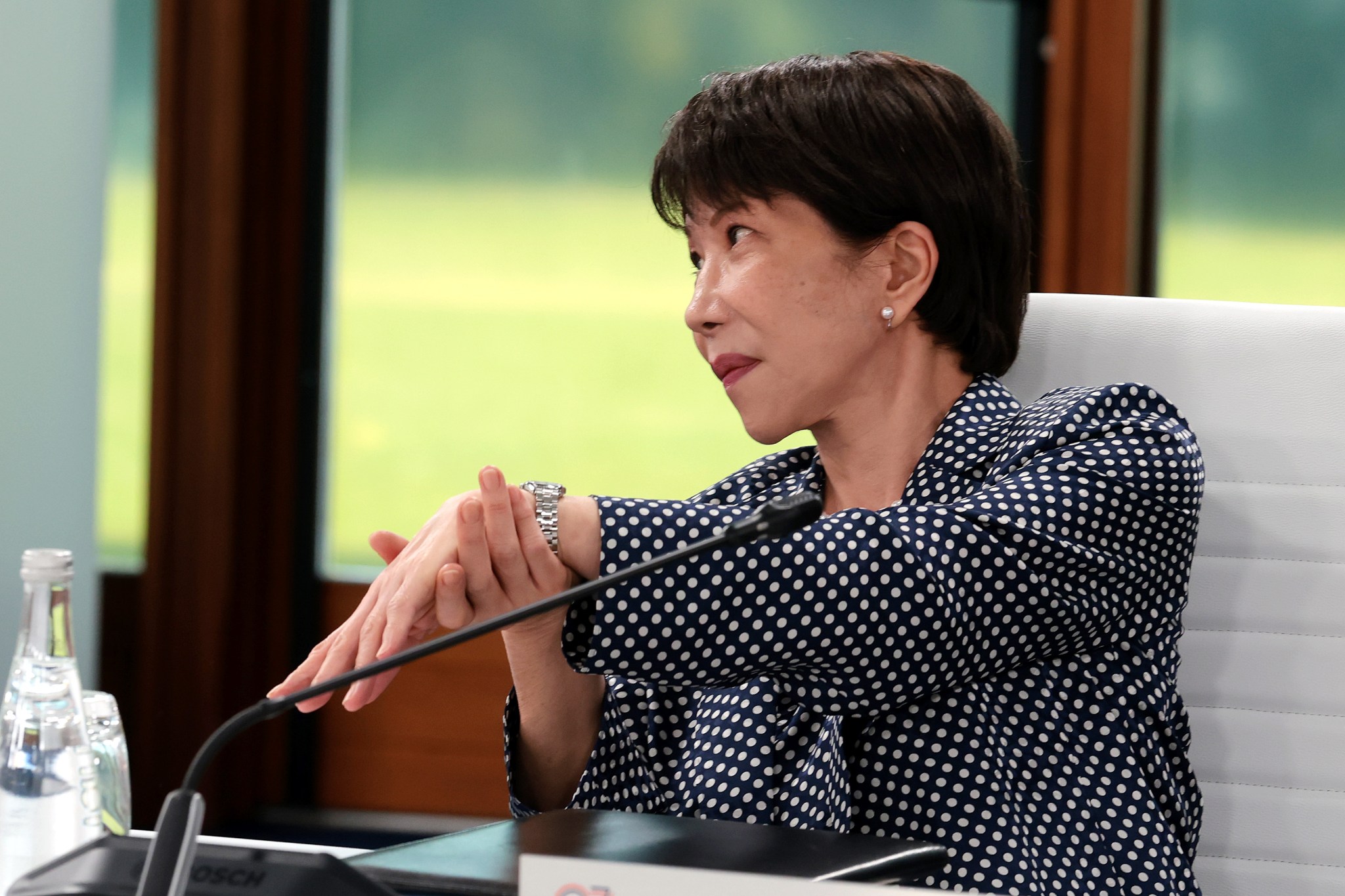
Japan’s yen has fallen to a 40-year low even as the Bank of Japan has lifted its policy rate to its highest level since 1995. The split has sharpened a debate over whether investors and policymakers are reading Japan’s monetary conditions through the wrong indicator.
In a Fortune commentary, economists Steve Hanke and John Greenwood argued that Japan’s recent experience is better explained by changes in broad money supply than by headline interest rates. They said the common view that near-zero rates signaled easy money in Japan misread years of weak money growth, slow activity and near deflation.
The Bank of Japan ended yield curve control in March 2024 under Governor Kazuo Ueda, who took office in April 2023, according to the commentary. Since then, the central bank has raised its policy rate five times, moving it from minus 0.1% to 1%, a level Fortune said was the highest since 1995.
Hanke and Greenwood said Ueda’s approach rests on the idea that wage gains, higher energy costs and more expensive imports can keep inflation near the Bank of Japan’s 2% target. They challenged that view, arguing that broad money growth offers a clearer signal of future nominal spending and inflation.
Money growth at the center of the argument
The economists pointed to Japan’s record from 2000 through the start of the Covid-19 pandemic. Over that period, they said, broad money, measured by M2, grew by an average of 2.6% a year, while nominal GDP averaged only 0.3% growth.
That nominal GDP figure included average real GDP growth of 0.8% a year and a GDP deflator of minus 0.5% a year, according to their analysis. They also said money holdings rose 2.3% annually during that period, despite large-scale quantitative and qualitative easing under former BOJ Governor Haruhiko Kuroda.
During the pandemic, Hanke and Greenwood said, the more powerful shift came from the BOJ’s fund provisioning program. Under that strategy, the central bank offered banks interest-free loans on the condition that they lend the money on to companies, which they said helped push broad money growth to a peak of 9.6%.
The commentary linked that surge in money growth to Japan’s exit from deflation, a stock market rise, a recovery in real GDP and inflation that reached 4%. The authors described those developments as consistent with a monetarist reading of policy.
Warning on inflation and bond yields
Hanke and Greenwood said those pandemic-era monetary conditions have faded. They wrote that Prime Minister Sanae Takaichi is increasing fiscal spending while money growth under the BOJ has slipped to 2.5%, close to the low pace seen before Covid.
On that basis, they argued Japan is more likely to return to weak nominal GDP growth and near-zero inflation than to sustained inflation driven by wages and import costs. They also said overall consumer price inflation is slowing.
The authors said Japanese bond yields are still reflecting the inflation increase that followed the pandemic-era jump in money growth. Their forecast is that yields and interest rates will eventually decline unless M2 growth rises to 5% or higher.
The commentary was published by Fortune and identified Hanke as a Johns Hopkins University professor of applied economics and Fortune senior contributing columnist. Greenwood was identified as a fellow at the Johns Hopkins Institute for Applied Economics, Global Health, and the Study of Business Enterprise.
This story draws on original reporting from Fortune.