
VivaTech founder says he declined Obama request before building Paris tech summit
Maurice Lévy says VivaTech grew from a Publicis anniversary idea into a 180,000-person Paris event with AI and sovereignty on the agenda.
By Sofia Marchetti · World Affairs Correspondent
3 min read
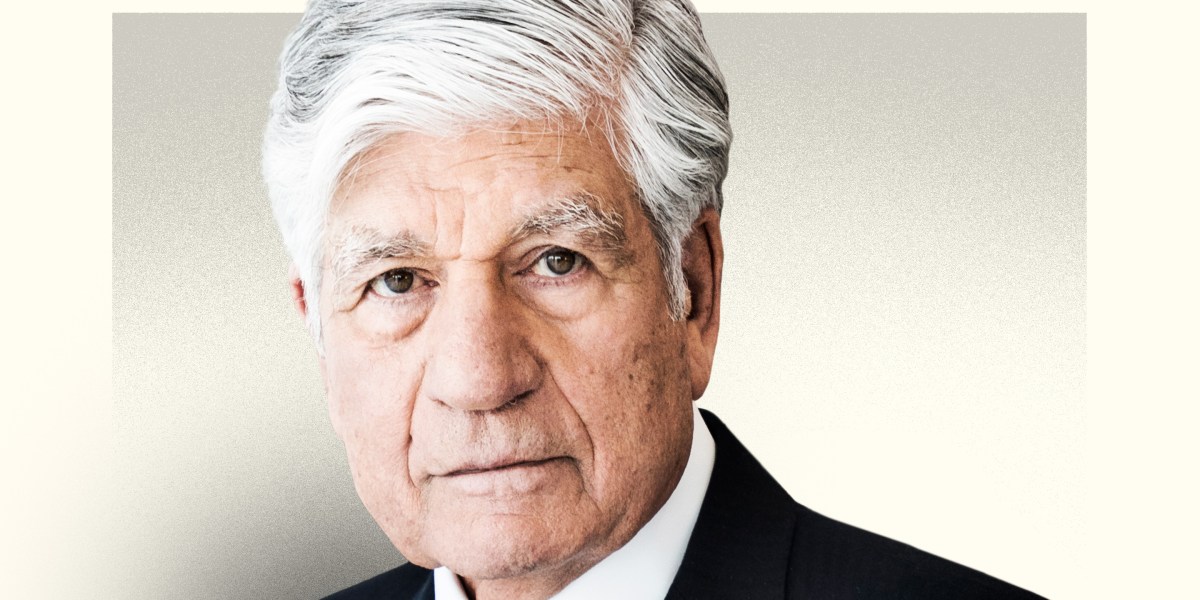
VivaTech is marking its 10th year in Paris with attendance expected to reach at least 180,000, up from 45,000 at its first edition in 2016, according to Fortune. The growth has made the event a prominent European answer to a tech debate often led by the U.S. and China.
Fortune reported that this year’s event will include a technology display on the Champs-Élysées, with robots shown along the avenue. The conference is scheduled for June at Hall 7 of the Porte de Versailles, where discussions are expected to cover artificial intelligence, digital sovereignty, ethics, sustainability, cybersecurity and defense.
Maurice Lévy, the longtime Publicis Groupe leader credited by Fortune with helping turn the advertising company into a global business, told the publication that the idea behind VivaTech dated back to the early 2000s. Lévy said he wanted Paris and France to be seen as places where entrepreneurs and new ideas could find support.
How a G8 tech summit led to a bigger idea
Fortune reported that Lévy got an early chance to test that ambition in 2011, when then-French President Nicolas Sarkozy asked him to convene technology leaders around that year’s G8 summit in France. Six weeks later, according to Fortune, participants included Eric Schmidt of Google, John Donahoe of eBay, Mark Zuckerberg of Facebook, Jeff Bezos of Amazon, Sheryl Sandberg of Facebook, Paul Jacobs of Qualcomm and Wikipedia founder Jimmy Wales.
The group prepared a report on internet regulation that was presented to G8 leaders including Barack Obama, Angela Merkel and David Cameron, Fortune reported. Lévy told Fortune that Obama later asked him to organize a similar event in the United States.
Lévy said he resisted because he believed a White House-led event would limit open discussion. He told Fortune that when Obama’s communications team followed up with a more controlled approach, he declined, arguing that technology leaders would only take part if they could speak freely.
Publicis’ own anniversary later revived the idea, according to Fortune. Lévy said he did not want a conventional 90th-anniversary tribute for the company and accepted a proposal to spotlight 90 startups instead.
Fortune reported that a competition drew 6,500 applications. Lévy then approached Les Echos, the French financial newspaper owned by LVMH, and LVMH chief Bernard Arnault, leading to the creation of a French technology conference.
AI and sovereignty dominate the agenda
Lévy told Fortune that the first VivaTech was organized without a fixed plan or budget, but drew nearly 45,000 visitors. He said the event has since attracted major figures from the tech industry, including attendees from China.
Fortune reported that last year’s event featured French President Emmanuel Macron on stage with Nvidia founder Jensen Huang. Other prominent participants cited by Fortune included Alibaba co-founder Joseph Tsai, Tetris CEO Maya Rogers and Meta chief AI scientist Yann LeCun.
For this year, Lévy told Fortune he sees AI adoption and digital sovereignty as key issues. Citing an MIT report, Fortune said only 5% of AI pilot programs deliver significant positive revenue results; Lévy argued that companies often underestimate the organizational change and employee training required to use AI effectively.
Lévy also told Fortune that Europe risks falling further behind the U.S. and China if it focuses too heavily on regulation before innovation. He argued that common global rules will be difficult to create and said Europe should move faster to reduce dependence on larger technology powers.
Although VivaTech is held in Paris, Lévy told Fortune the main conference operates in English because the global technology industry uses English as its common language. He said the Saturday program is conducted in French because it is aimed at the general public and families.
This story draws on original reporting from Fortune.