
Trump threats disrupt opening round of U.S.-Iran talks in Switzerland
Iranian state media said negotiations recessed after Trump warned Tehran over Lebanon, though an official told AP Iran remained engaged.
By Hana Yoshida · Markets Reporter
4 min read
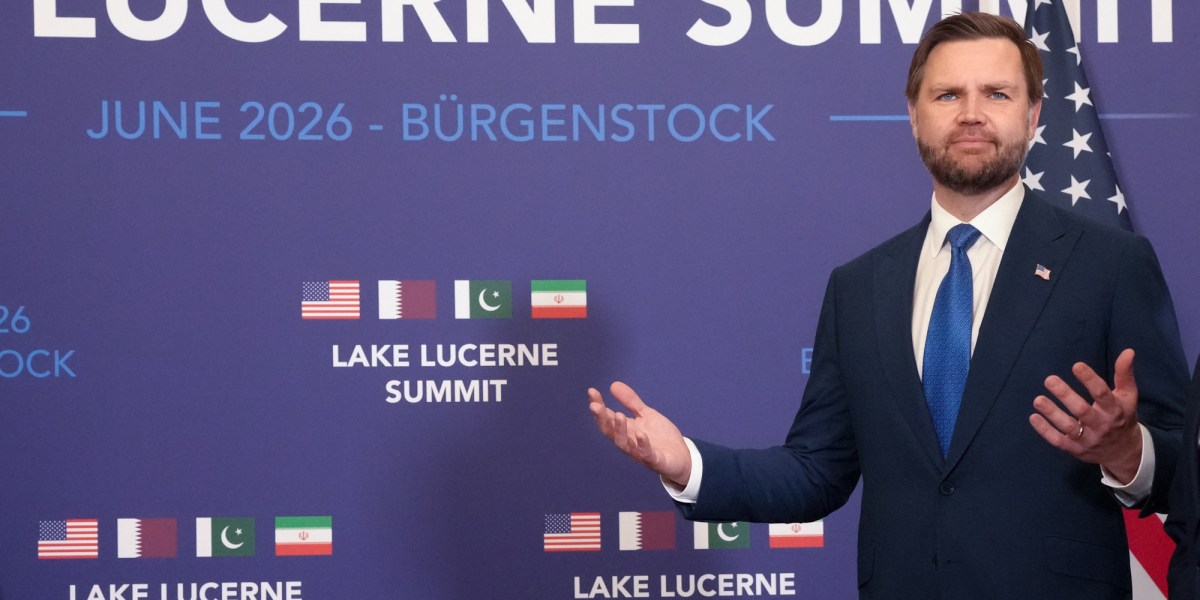
High-level U.S.-Iran negotiations in Switzerland hit turbulence Sunday after President Donald Trump threatened further strikes on Iran and warned its president over public comments. The talks matter because Washington and Tehran are trying to settle details of an interim deal aimed at ending a wider Middle East conflict, with oil markets, nuclear limits and the Strait of Hormuz at stake.
The Associated Press reported that Vice President JD Vance opened talks with Iranian officials at the Bürgenstock Resort in Obbürgen, Switzerland, alongside mediators from Pakistan and Qatar. Iranian state media said the first meeting with Vance, U.S. negotiators Steve Witkoff and Jared Kushner, Iranian lead negotiator Mohammad Bagher Qalibaf and Foreign Minister Abbas Araghchi lasted about 80 minutes.
Trump complicated the opening round with a social media post demanding that Iran stop what he called its “proxies” in Lebanon from causing trouble, the AP reported. He said the United States would hit Iran again if it did not comply, and said any new attack would be harder than the previous one.
Qalibaf responded on X that U.S. officials should be careful with their statements, according to the AP. He said Iran’s armed forces were ready to respond in a different way and contrasted U.S. talk with Iranian action.
Iranian state media said the negotiations had moved into a difficult stage and recessed after Trump’s message, which it described as insulting. State media said Iran’s delegation then met Qatari mediators and left the negotiating site.
An official familiar with the discussions later told the AP that Iran had not told mediators it planned to quit the talks and remained engaged. The official spoke anonymously because of the sensitivity of the negotiations.
Lebanon moves to the front of the agenda
The AP reported that Iran wants the talks to start with Lebanon, where Israel has been fighting Hezbollah, the Iranian-backed militant group. Iranian Foreign Ministry spokesperson Esmail Baghaei told the state news agency that Tehran first wants to address that conflict.
A Saturday ceasefire in Lebanon appeared to be holding, according to the AP. Israel’s military said it would lift movement limits for residents near the Lebanese border on Monday morning, while Prime Minister Benjamin Netanyahu has said Israeli forces will remain in southern Lebanon until threats to Israel are removed. Hezbollah has said it will not stop attacks unless Israel commits to withdrawing, the AP reported.
Nuclear terms and Hormuz remain unresolved
The negotiations are part of a 60-day effort to define the technical terms of the interim deal, according to the AP. Vance said as talks began that the parties had to determine how much they could accomplish together and whether relations in the Middle East could be changed permanently.
Washington wants Iran to stay in talks over its nuclear program, which U.S. officials fear could have military uses, a charge Tehran denies, the AP reported. The United States also wants Iran to keep the Strait of Hormuz open after Tehran claimed Saturday that it had closed the waterway. U.S. officials disputed that claim and said shipping continued Sunday.
The agreement signed by Trump and Iranian President Masoud Pezeshkian lets Iran sell oil freely and creates a path for Tehran to access billions of dollars in frozen assets, according to the AP. It also calls for Iran to dilute its stockpile of highly enriched uranium, which the AP said is believed to be buried beneath nuclear sites hit in U.S. strikes a year ago.
Pezeshkian said Sunday that Iran would not give up its right to enrich uranium, according to Iranian state media cited by the AP. Trump later told Fox News by phone that Pezeshkian should watch his words and threatened to take over Iran, according to comments relayed by a Fox correspondent.
The deal has drawn criticism from Republican hard-liners, who have compared it unfavorably with the Obama-era nuclear agreement, the AP reported. Oil futures fell almost 8% after the deal was announced, and markets were expected to watch the talks closely when trading reopened Sunday evening.
This story draws on original reporting from Fortune.