
Trump trade stocks slide as Iran war and tariffs unsettle investors
A Ned Davis Research index tied to Trump policy themes has fallen about 16% since May after a strong start to the year.
By Maya Lindqvist · Senior Technology Correspondent
4 min read
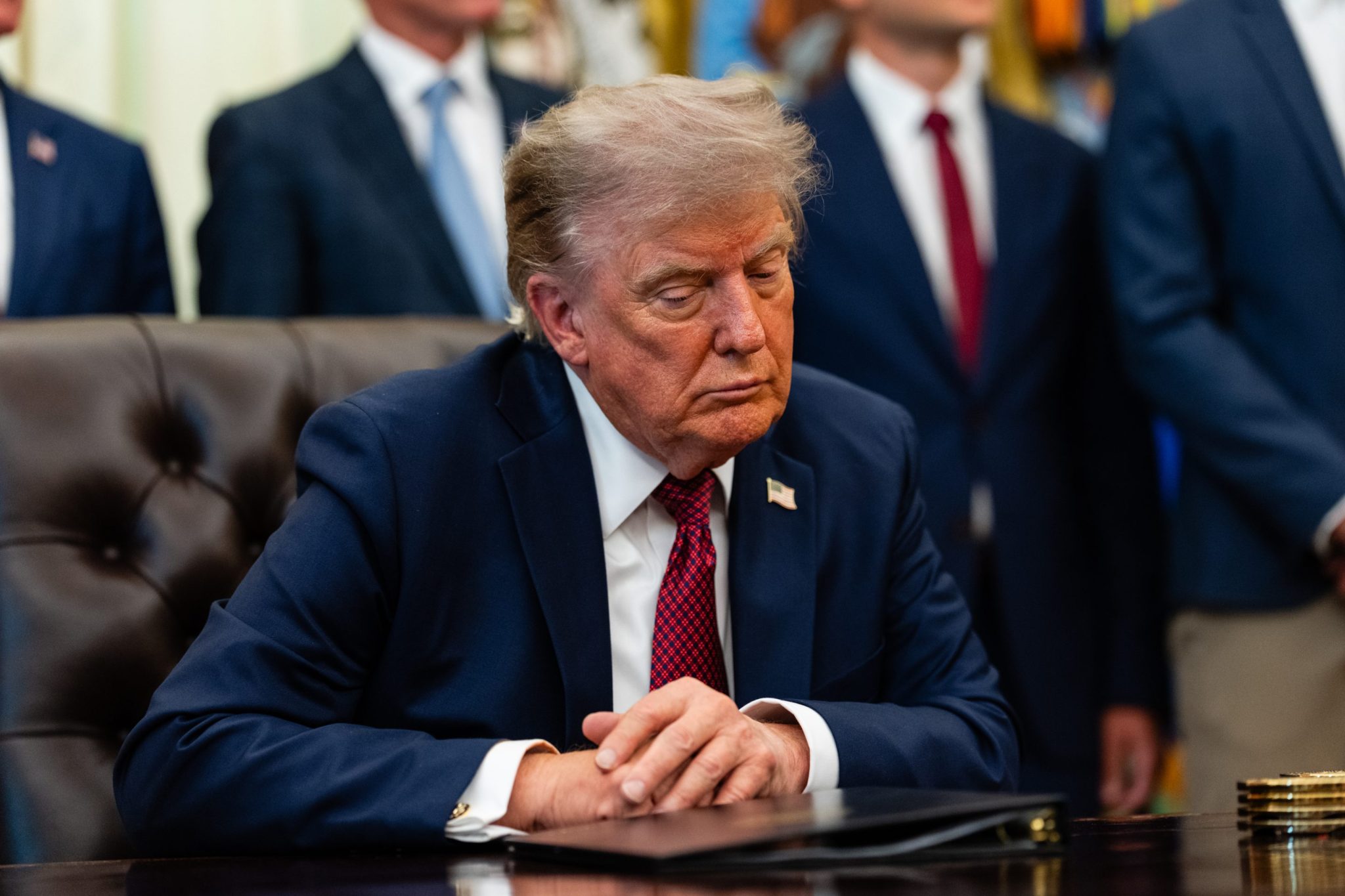
Trump trade stocks have turned from early winners into laggards as the Iran war, inflation worries and fresh tariff uncertainty pressure market bets tied to President Donald Trump’s agenda. Ned Davis Research said its Trump Trade Index has fallen about 16% since May after beating the S&P 500 early in the year.
The index tracks a dozen exchange-traded funds that Ned Davis Research said were expected to benefit from White House policies on homebuilding, defense spending and bringing manufacturing back to the US. Several funds in the group are now down for the year, according to the firm.
What is the Trump Trade?
The Trump Trade is a label investors use for assets expected to gain from Trump administration policies. In stocks, the theme has included funds tied to defense, industrials, energy, homebuilding, rare earths, uranium and reshoring.
Those bets worked early in 2026. Fortune reported that the VanEck Rare Earth and Strategic Metals ETF, the Global X Uranium ETF and the Global X Defense Tech ETF each gained at least 20% at points in the first quarter before giving up gains and turning negative.
Why are Trump trade stocks falling?
Ned Davis Research said the main hit has come from the US conflict with Iran, which has pushed up energy prices, inflation expectations, interest rates and the US dollar. Pat Tschosik, chief thematic strategist at Ned Davis Research, tied the setback to “the Iran war and inflation” and pointed to repeated supply shocks from tariffs, war and supply-chain disruptions.
Matt Gertken, chief geopolitical strategist at BCA Research Inc., said investors backing Trump’s economic program have faced several disappointments. He cited the Iran war’s drag on the economy, higher inflation that hurt manufacturing and housing investment, and the stronger performance of artificial intelligence investment themes compared with cyclical stocks.
“Investors who bet on AI and against traditional cyclical sectors outperformed, while those who saw Trump as a champion of US manufacturing, heavy industry and working-class consumption suffered,” Gertken said.
Fund flows also show investors pulling away from some Trump-linked trades. Fortune reported that the Truth Social God Bless America ETF, which trades under the ticker YALL and has large exposure to energy, industrials and financials, has seen outflows every month since the war began. The fund is down more than 4% this year, while the S&P 500 is up about 8%.
That ETF does not hold Trump Media & Technology Group Corp., the company behind Truth Social. Fortune reported that Trump Media has touched repeated record lows this year, rallied in July and remains down 35% year to date.
Some Trump-related funds have held up better. Hal Lambert, founder of Point Bridge Capital, said the Point Bridge America First ETF, which uses the ticker MAGA, fell less than the broader US market in March and remains higher for the year. Lambert said concern around energy prices has hurt reshoring themes in the near term, while the fund’s energy exposure has helped it roughly match the S&P 500.
Tariff uncertainty adds another problem
Investors are also struggling to assess White House policy moves that can change quickly. Michael O’Rourke, chief market strategist at JonesTrading Institutional Services, said investors are finding it hard to judge policies such as the Iran war and tariffs and are trying to tune them out.
The latest shift is the administration’s move to replace an expired temporary 10% global tariff with targeted actions under Section 338 of the Tariff Act of 1930. Trump also imposed 50% tariffs on a range of Canadian goods this week, including beer, wine, paper and hockey sticks, according to Fortune.
TD Cowen analyst Chris Krueger wrote in a July 20 note that other countries are expected to face additional Section 338 tariffs, with China and Europe likely next targets. Mark Malek, chief investment officer at Muriel Siebert, said pressing tariffs while oil prices and inflation are elevated raises risks for investors worried about corporate margins.
Lambert said he still expects Trump’s policies to produce stock-market winners over time. “It’s a long-term play,” he said. “You don’t build a manufacturing facility overnight.”
This story draws on original reporting from Fortune.