
Trump orders DOJ gasoline price inquiry as crude oil declines
The president accused oil companies of keeping pump prices too high while Treasury Secretary Scott Bessent warned about supply-chain risks.
By Daniel Okafor · Business Editor
3 min read
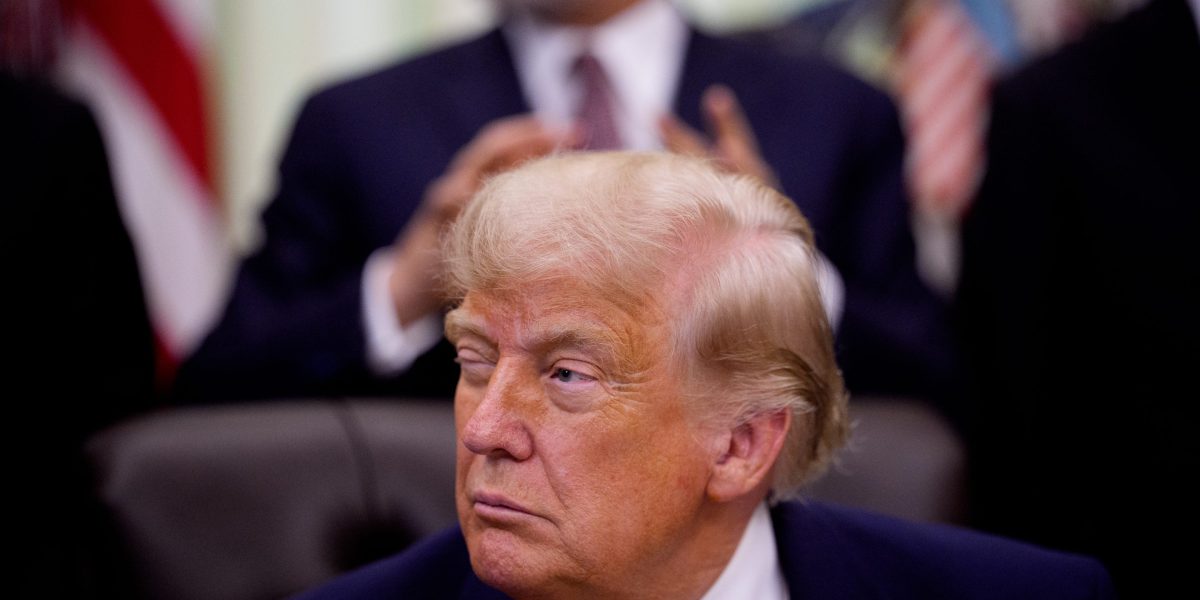
President Donald Trump said he has directed the Justice Department to examine why gasoline prices have not fallen as quickly as crude oil. The move puts new pressure on energy companies at a time when U.S. households remain sensitive to fuel costs.
In a Wednesday post on Truth Social, Trump said oil prices were falling sharply but that major oil companies had not cut pump prices in line with their lower crude costs. He accused consumers of being “gouged” and said gasoline prices should be dropping faster.
Trump did not identify any companies by name or describe the scope of the Justice Department review. The department had not been described as targeting specific firms in the information Trump released.
Fortune reported that crude oil prices had dropped from $104 a barrel to just under $76 at the time of publication, a decline of 27% over the past month. AAA data showed the national average for regular gasoline at $3.93 a gallon, below $4 for the first time since March 30.
AAA data also showed regular gasoline averaged $4.52 a gallon a month earlier, while diesel was $5.62. Diesel has since moved to just under $5 a gallon, according to the same data.
The fall in gasoline prices has lagged the decline in crude. Fortune calculated the month-over-month drop in regular gasoline at about 13%, compared with the 27% move in crude prices.
Oil prices do not reach pumps at once
Research cited in the Journal of International Money and Finance shows that changes in crude prices typically reach retail gasoline prices over time. Hakan Yilmazkuday wrote in 2021 that U.S. data showed oil price pass-through to retail gasoline at about 13% after one week, 37% after three months and 50% in the long run.
Supply questions also remain tied to the Middle East. Trump wrote overnight on Truth Social that Iran was “on the ‘ropes’” and ready to make concessions, but planned U.S.-Iran talks have been disrupted before.
Fortune reported that talks were halted Friday after violence between Israel and Hezbollah. The uncertainty has affected shipping through the Strait of Hormuz, a key route for oil moving out of the Gulf.
BBC analysis cited by Fortune found that less than one-third of ships that had previously crossed the Strait were currently traveling through it. That disruption has kept attention on the region even as oil prices have retreated.
Bessent warns on foreign chokepoints
Treasury Secretary Scott Bessent addressed related affordability and supply-chain risks in remarks to the Economic Club of New York on Tuesday. He said supply chains are one area where U.S. leadership is being tested.
Bessent said policymakers and businesses must look beyond the lowest-cost option and ask whether a supply chain can withstand a crisis or depends on a country that could use economic leverage. He said resilience does not require all production to be domestic, calling that unrealistic and unnecessary.
Bessent said the U.S. should identify weak points, reduce dangerous concentrations and build enough domestic capacity so Americans are not “at the mercy of a foreign chokepoint abroad.”
Paul Donovan of UBS told clients Wednesday that Trump faces a political challenge because gasoline prices remain above the pre-war level of $3 a gallon, which Donovan said many U.S. consumers are likely to remember as a fair price.
This story draws on original reporting from Fortune.