
Toyota, Honda and Hyundai tighten grip on US hybrid sales
Hybrids reached a record 15.4% of U.S. new-vehicle sales in early 2026, with three Asian automakers controlling most of the market.
By Maya Lindqvist · Senior Technology Correspondent
3 min read
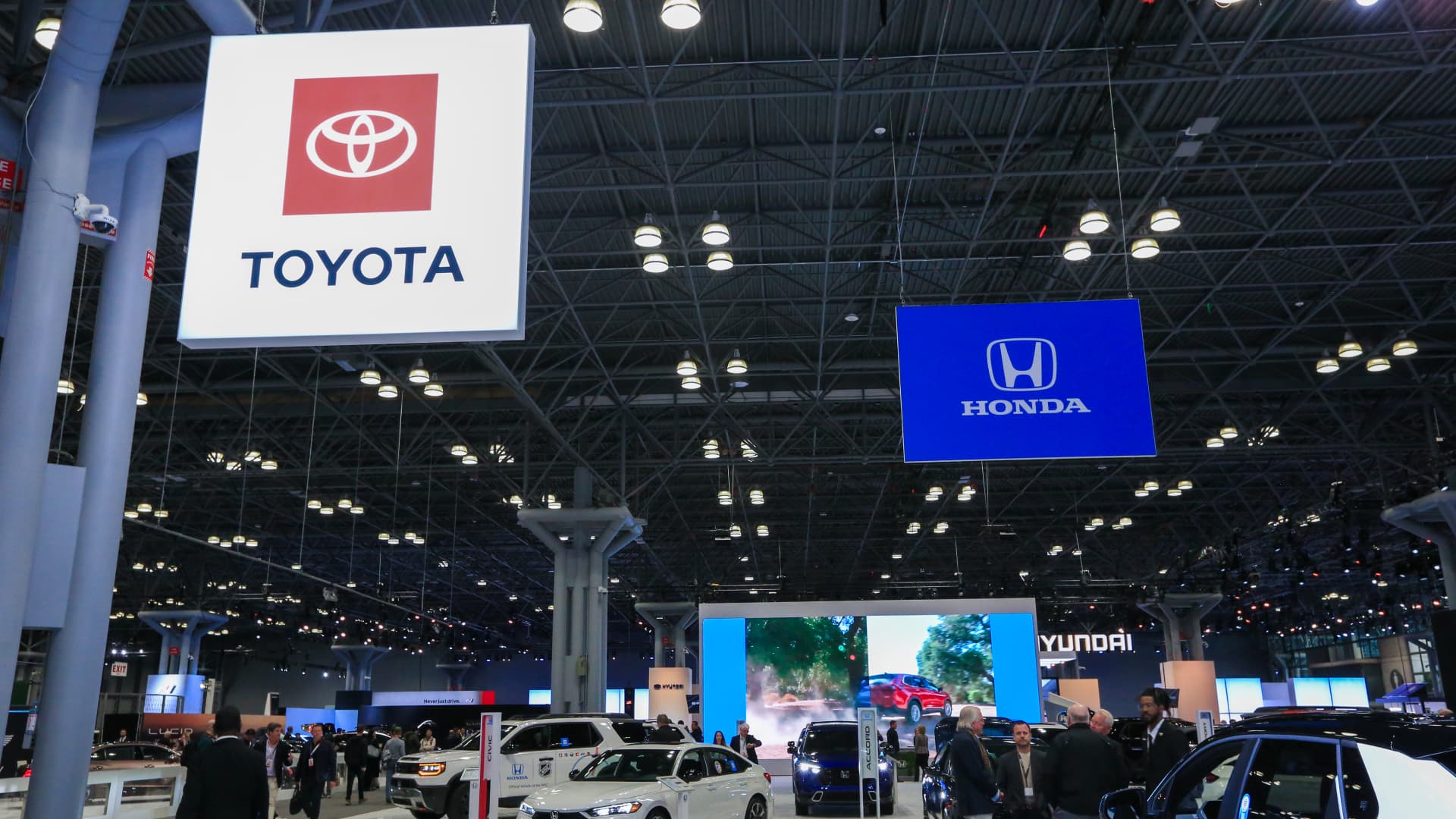
Toyota, Honda and Hyundai Motor Group dominate the U.S. hybrid vehicle market as buyers move toward cars that cut fuel use without requiring plug-in charging. The shift matters because hybrids are gaining share while battery-electric vehicles and internal-combustion models have lost ground, according to the Center for Automotive Research.
Hybrid sales in the first half of 2026 rose nearly 20% from a year earlier and reached a record 15.4% of the U.S. market, the Center for Automotive Research said. That share was almost three times the share held by fully electric vehicles, according to the group.
Elizabeth Krear, CEO of the Center for Automotive Research, told CNBC that hybrids were the only propulsion category gaining market share year to date. Baum & Associates said Toyota, Hyundai Motor Group and Honda together account for 86% of U.S. hybrid sales.
Early investments pay off
Toyota has the largest position. CNBC reported that Toyota and Lexus sold more than 600,000 hybrids in the first six months of 2026, giving Toyota about half of the U.S. hybrid market.
That strength has helped Toyota move closer to General Motors in overall U.S. sales, CNBC reported. GM has focused heavily on electric vehicles and currently offers one hybrid in the U.S., the Corvette E-Ray; the company told CNBC by email that hybrids have a place in its future product plans.
Hyundai Motor Group, which includes Hyundai, Genesis and Kia, has also expanded its hybrid offerings. Baum & Associates data cited by CNBC showed Hyundai Motor Group narrowly moved ahead of Honda in U.S. hybrid sales during the first half of 2026.
Honda remains the second-largest hybrid brand in the country behind Toyota, according to CNBC. American Honda said hybrids represent 31% of its U.S. sales, and the company set a U.S. hybrid sales record in the first half of 2026.
Why buyers are choosing hybrids
Analysts cited several forces behind the increase: elevated gasoline prices, more hybrid models and continued buyer concern about electric-vehicle range and charging access. Krear told CNBC that hybrids generally cost more upfront than comparable gasoline vehicles because their powertrains are more complex.
Those higher initial costs can be offset by fuel savings, Krear said. She estimated that hybrid buyers can save 30% to 50% on fuel and recover the added purchase cost in two to three years.
The market has changed sharply since the first U.S. hybrid launches. Honda brought the Insight sedan to the U.S. market in 1999, followed by Toyota’s Prius in 2000, CNBC reported. Krear said Toyota held about 75% of the hybrid market in the mid-2000s, when hybrids accounted for only about 2% of new-vehicle sales.
Toyota and Honda continued investing in hybrids even as Tesla and other automakers increased production of fully electric vehicles. CNBC reported that Toyota, in particular, faced criticism from activists and shareholders over its slower move into EVs.
The current market has made that strategy look better positioned. Krear told CNBC that Toyota’s approach centered on producing large numbers of efficient hybrids with smaller batteries, rather than smaller volumes of EVs using larger batteries.
Baum & Associates expects EVs to reach 9.5% U.S. market share in 2030 and hybrids to reach 25%. Honda is preparing a new hybrid system designed to work better in larger vehicles, CNBC reported, as competition in the segment grows.
This story draws on original reporting from CNBC.