
Theodore Gillibrand raises $30 million for derivatives exchange
The 22-year-old son of Sen. Kirsten Gillibrand plans a CFTC-regulated platform for perpetual futures tied to stocks and indexes.
By Hana Yoshida · Markets Reporter
3 min read
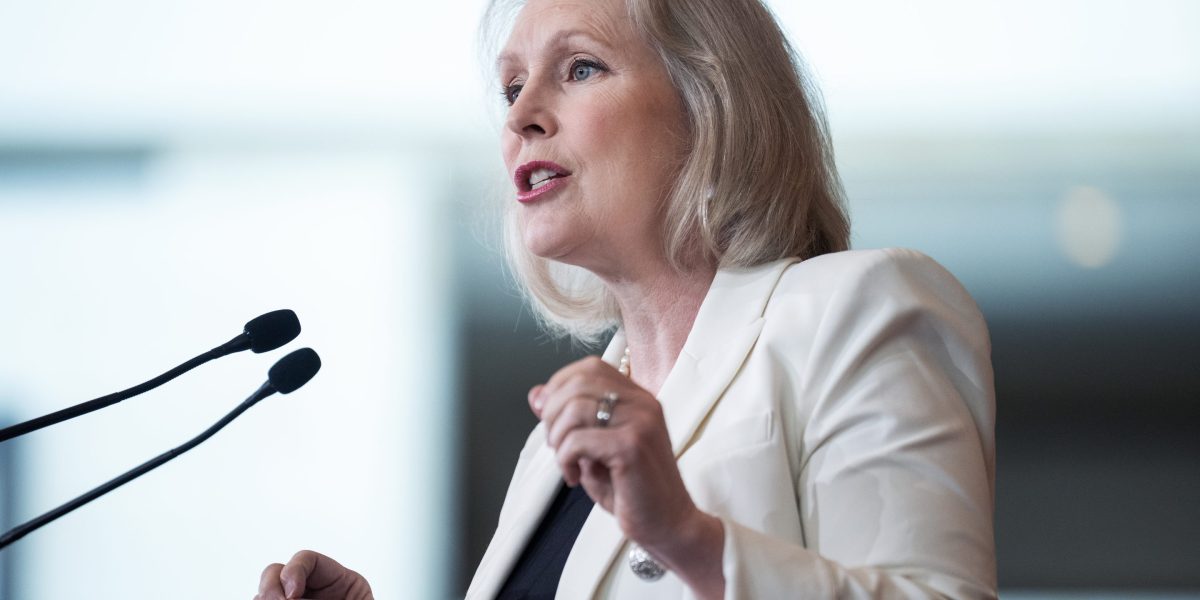
Theodore Gillibrand, the 22-year-old son of Sen. Kirsten Gillibrand, has raised $30 million to start a derivatives exchange, Fortune reported. The plan puts a member of a prominent pro-crypto political family behind a bid to bring a crypto-popular trading product into regulated U.S. markets.
Fortune reported that the financing for American Perpetuals Exchange Corporation, or APEC, was led by Lux Capital, citing two people familiar with the private deal. Those people told Fortune the round valued the startup at $300 million.
A Lux Capital spokesperson confirmed to Fortune that the firm led the fundraising. Theodore Gillibrand also confirmed details of the round in a statement to Fortune, saying the future for these markets should be in a regulated American company rather than offshore or unregulated foreign venues.
APEC targets perpetual futures
APEC plans to offer perpetual futures, Fortune reported. These contracts let traders speculate on asset prices without owning the underlying asset, and unlike standard futures, they do not expire on a fixed date.
The startup intends to seek a license from the Commodity Futures Trading Commission, according to a presentation filed with the Securities and Exchange Commission. The filing says APEC wants to list perpetual futures tied to equities and stock indexes, rather than cryptocurrencies.
Perpetual futures have been a common product on digital-asset exchanges, Fortune reported. The publication cited Hyperliquid, a decentralized exchange that began with a focus on perpetuals, as one of crypto’s most profitable protocols, and noted that other perpetuals-focused startups have drawn venture backing.
Fortune reported that traders also used perpetual futures on venues such as Hyperliquid to trade oil-index exposure during the U.S. war with Iran, when traditional markets were closed. The product’s round-the-clock trading model has helped drive interest outside crypto-native markets, according to Fortune’s account.
Regulators have begun allowing U.S. listings
U.S. regulators have already allowed at least one domestic perpetual futures product. Fortune reported that Kalshi became the first U.S. company to add perpetual futures for traders in May after the CFTC approved its listing of Bitcoin contracts.
CFTC Chairman Mike Selig wrote on X in May that the agency’s action allowed a “true bitcoin perpetual contract” on a CFTC-registered exchange and created a path for a liquid part of crypto markets to operate inside the U.S. regulatory framework.
Sen. Kirsten Gillibrand, a New York Democrat, has been an ally of crypto legislation, Fortune reported. She was among the lawmakers who first introduced the Genius Act, a stablecoin regulatory bill that President Donald Trump signed into law in July, according to Fortune.
Theodore Gillibrand graduated from Stanford University on Sunday, Fortune reported. His LinkedIn profile says he previously worked as a fellow at venture firm Paradigm and as an intern at Andreessen Horowitz.
This story draws on original reporting from Fortune.