
Sanders proposes public AI fund with $1,000 annual payments
The bill would require large AI firms to give the government a 50% stake and use dividends to send yearly checks to Americans.
By Maya Lindqvist · Senior Technology Correspondent
3 min read
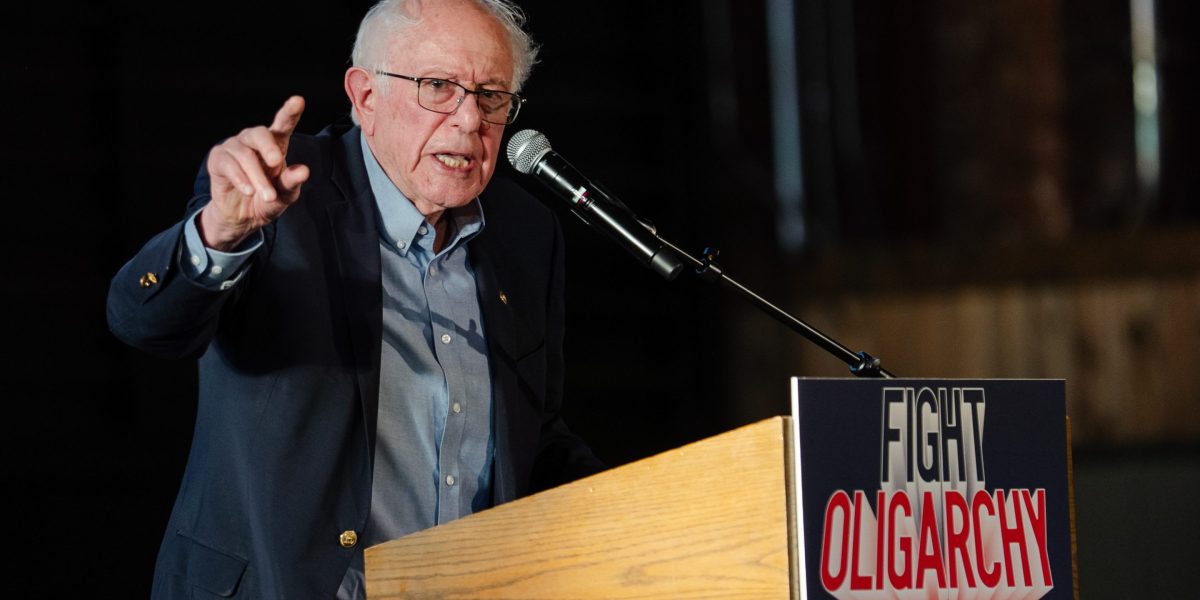
Sen. Bernie Sanders introduced a bill Thursday that would put the U.S. government in control of half of major artificial intelligence companies and use the proceeds to pay Americans. The plan matters because it would give the public a direct financial stake in a fast-growing industry that Sanders says could reshape jobs, privacy and daily life.
Sanders told Fortune and other reporters that AI and robotics will affect people across the country, citing predictions that the technology could cause broad job losses, weaken privacy rights and harm children’s mental health. He said the public should share in AI’s gains because the systems are trained on the work and knowledge of many people.
The proposal, called the American AI Sovereign Wealth Fund Act, would apply to AI companies with more than $200 million in annual sales, according to Fortune. Those companies would be subject to 50% government ownership under the bill.
A sovereign wealth fund is a state-owned investment fund that holds public assets. Fortune reported that the bill cites 67 countries with such funds, including Norway, China and the United Arab Emirates, and notes that several U.S. states, including Texas and New Mexico, have used similar funds, often to support education.
How the payments would work
Sanders estimated that the fund would be worth $7 trillion at current valuations, Fortune reported. His plan would use an expected 5% dividend from AI companies to send $1,000 each year to every American.
The bill would create a seven-member independent commission to represent the public’s interest in AI companies, according to Fortune. Members would be nominated by the president and confirmed by the Senate.
Sanders said the goal is to make AI benefit ordinary people rather than only wealthy technology executives. He also said he does not oppose the technology itself, telling reporters that AI could do useful things.
The proposal includes a provision for companies that operate both AI and non-AI businesses. Fortune reported that those firms would have to separate the AI business so the public stake would apply only to that part of the company.
Profit questions and political odds
A major question for the plan is whether AI companies would generate the profits needed to fund annual checks. Fortune noted that some of the most valuable AI companies, including OpenAI and Anthropic, are not profitable.
Asked what would happen if the companies continued to post no profit, Sanders told reporters that the public would not lose money because the government would receive stock rather than buy it. He said the government would be “getting it,” not purchasing it.
Fortune reported that Sanders’ bill currently has no official co-sponsors. Sanders said he has talked with other senators about the legislation but did not identify specific supporters, and he said he had not discussed the plan with the White House.
The idea of a public stake in AI companies has drawn attention beyond Sanders. Fortune reported that OpenAI CEO Sam Altman met with Sanders earlier this month after the senator began promoting public ownership of AI. According to Fortune, Altman agreed that the public should have equity in AI companies but did not support a 50% stake.
President Donald Trump has also proposed a direct government equity stake in AI companies, Fortune reported, though the White House has not detailed how much ownership it wants or how it would use the stake. Semafor reported that Commerce Secretary Howard Lutnick supports a sovereign wealth fund approach, while Treasury Secretary Scott favors using company equity to fund Trump Accounts.
This story draws on original reporting from Fortune.