
New York toll zone cut ambulance travel times, study finds
A new working paper says congestion pricing reduced EMS travel times in Manhattan’s toll zone by about a minute after the program began.
By Daniel Okafor · Business Editor
3 min read
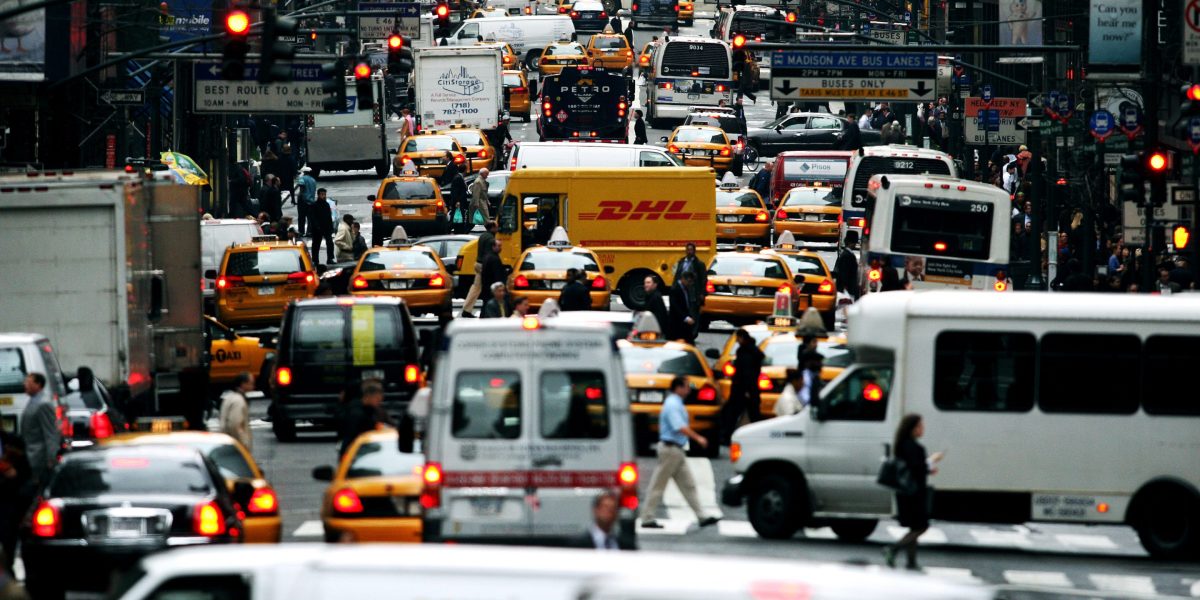
New York City’s congestion pricing program appears to have made ambulance trips faster inside Manhattan’s toll zone, according to a new National Bureau of Economic Research working paper. The finding adds emergency medical service delays to the list of public costs and benefits in a tolling debate often centered on traffic and driver fees.
The paper, released this month by six economists including Brad Humphreys of West Virginia University, examined about 1.6 million EMS incidents across the city before narrowing its main analysis to Manhattan calls near 60th Street, the boundary of the congestion relief zone.
The researchers found that total EMS travel time inside the zone fell by 63 to 70 seconds after the toll began on Jan. 5, 2025. That amounted to a decline of roughly 5% to 6%, according to the paper.
Most of the gain came after pickup
The study separated ambulance travel into two parts. Time spent getting to the scene fell by only 7 to 9 seconds, while the trip from the scene to the hospital fell by 54 to 59 seconds, the paper found.
Humphreys told Fortune the research design compared ambulance runs just north and south of 60th Street because calls on both sides should be similar apart from exposure to the toll zone. That boundary approach avoided relying only on a citywide before-and-after comparison.
The health stakes are potentially high, though the paper did not directly measure patient outcomes. Fortune cited a 2013 study by economist Elizabeth Wilde that found each added minute of EMS response time increased the risk of 90-day mortality by about one percentage point, or an 8% to 17% relative increase depending on the time period studied. Wilde’s research covered response time broadly, not hospital transport time specifically.
Humphreys told Fortune that later research should measure the long-term health and economic effects of faster hospital trips more directly.
Traffic fell, while biking and walking rose
The paper also found no evidence that congestion pricing shifted EMS delays to areas outside the toll zone, according to Humphreys. He told Fortune the results did not show slower EMT calls north of 60th Street or elsewhere.
Street-camera data used in the study pointed to broader street changes near the boundary. The researchers analyzed images taken every 15 minutes by New York City cameras using machine learning, and found pedestrian counts rose about 14% and bicycle counts rose nearly 20%.
The same camera data showed passenger vehicles down 21% and trucks down 18%, according to the working paper. Fortune reported that those findings aligned with broader Metropolitan Transportation Authority data showing fewer vehicles and faster travel times since tolling began.
Humphreys told Fortune the increase in bicycling may reflect safer riding conditions in the congestion zone. The paper also cited earlier research finding accident reductions after congestion pricing in London, Stockholm and Milan.
A separate FDNY policy complicated the analysis
The study had to account for a March 2025 Fire Department policy change requiring ambulances to take patients to the nearest hospital rather than a preferred facility. Humphreys told Fortune that the rule could affect transport times independently of congestion pricing.
That issue mattered because a standard before-and-after comparison picked up the FDNY directive and showed transport times increasing after March 2025, according to Fortune. The boundary-based method was intended to reduce the effect of such citywide changes.
Humphreys also told Fortune that the toll debate often leaves out wider effects such as air pollution, street wear and noise. The governor’s office has said foot traffic increased from 2024 and sales tax receipts rose 6% around the program’s first anniversary, according to Fortune.
This story draws on original reporting from Fortune.