
Nasdaq chip slump puts correction threshold in sight
Chip stocks sold off as South Korea’s Kospi sank, even as analysts told Fortune memory demand remains tight and AI spending fears look broad.
By Maya Lindqvist · Senior Technology Correspondent
3 min read
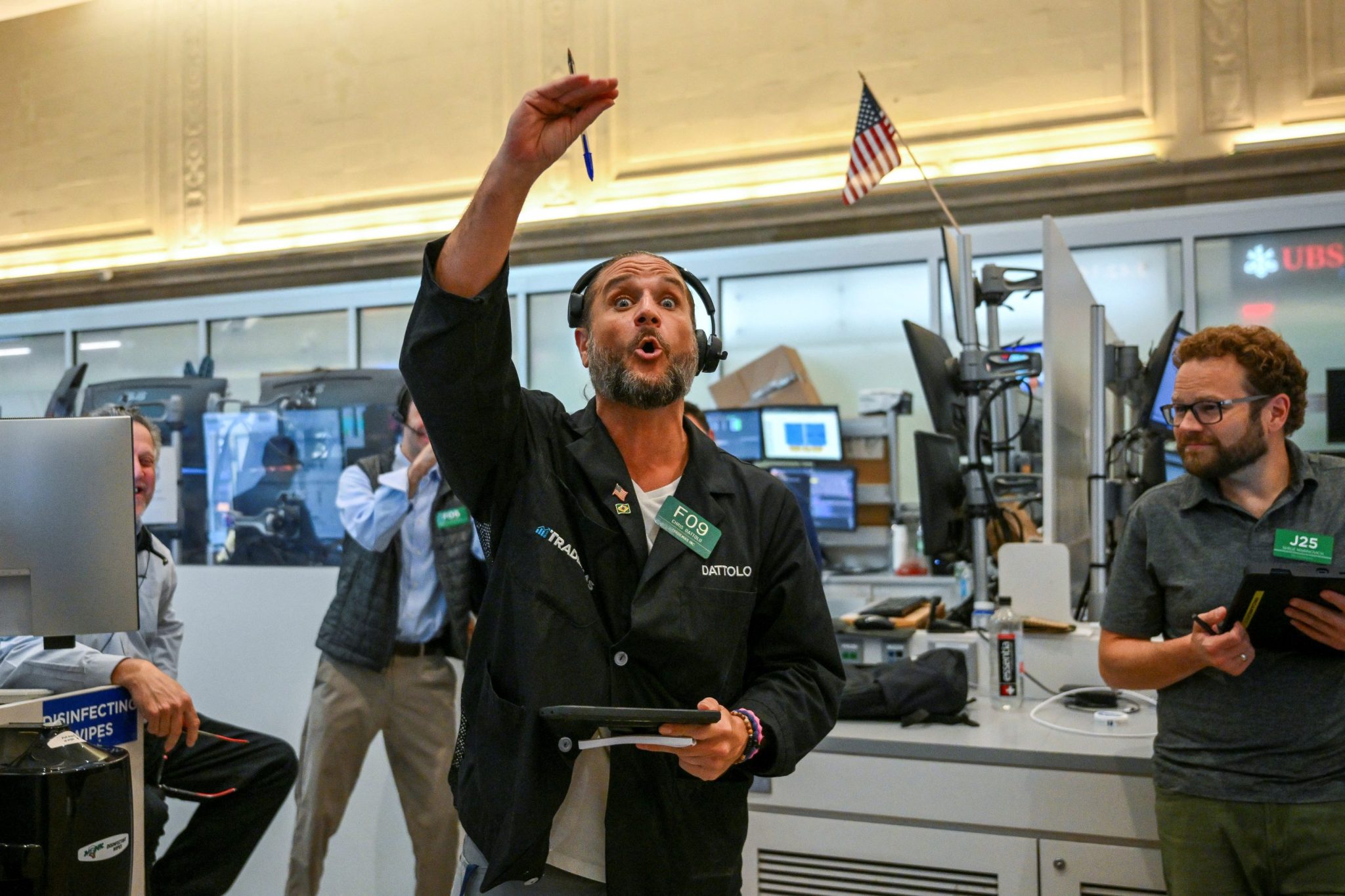
The Nasdaq chip slump deepened Tuesday as selling in Asian semiconductor-linked shares spilled into U.S. markets, putting the Nasdaq-100 close to a correction. Fortune reported that South Korea’s Kospi finished almost 11% lower, while the Philadelphia Semiconductor Index fell as much as 6% during its fourth straight losing session.
The move left the Nasdaq-100 9.7% below its record high, just shy of the 10% drop commonly described as a correction. Fortune reported that South Korea’s market hit its eighth circuit breaker of 2026, one of its worst sessions of the year.
The selloff came despite signs that memory-chip supply remains tight. Fortune reported that DRAM contract prices for the third quarter are being settled 20% to 30% higher this month, while Google and Meta have agreed to five-year contracts covering both prices and volumes.
Gil Luria, a technology analyst at D.A. Davidson, told Fortune that investors are showing broad anxiety about artificial-intelligence spending and that the selling appears to be hitting the sector indiscriminately.
Why are chip stocks falling?
Fortune reported three worries behind the pressure: the market debut of Chinese memory maker CXMT, news that a Chinese state-linked company has started mass production of immersion deep ultraviolet lithography machines, and concern that large cloud companies may be spending too much on AI infrastructure.
CXMT jumped 466% in Shanghai after raising $8.6 billion, according to Fortune. The DUV report also drew attention because lithography equipment is central to chip manufacturing, where machines print circuit patterns onto silicon wafers.
Matt Bryson, who covers semiconductors at Wedbush, told Fortune that China has had access to DUV technology for years, so domestic production of that equipment does not by itself change what Chinese chipmakers can build. Bryson said the more important limitation is extreme ultraviolet lithography, or EUV, which China still lacks.
DUV can make advanced memory chips, but doing so can require more production steps and higher costs. Fortune reported that ASML is the only company that makes EUV machines, and export controls keep that equipment out of China.
Bryson also told Fortune that CXMT may have trouble selling broadly outside China because of possible protectionist barriers, questions about intellectual property and potential infringement suits from Western memory companies. For now, Fortune reported, CXMT’s chips are mostly going into Chinese PCs and handsets.
What is the AI spending concern?
The harder question for investors is whether the biggest cloud companies can earn enough from AI to justify their planned capital spending. Fortune reported that Alphabet’s stock fell even after the company posted the largest quarterly profit in corporate history and cloud revenue rose 82%.
Investors focused instead on Alphabet’s spending plans, which Fortune said rose to as much as $205 billion this year from $91 billion in 2025, with the company warning that 2027 spending would be higher. Moody’s expects the six largest hyperscalers to spend about $785 billion this year and nearly $1 trillion in 2027, while saying the eventual return is unclear, Fortune reported.
Luria told Fortune that Nvidia’s reported guarantee tied to customer financing may be misunderstood. He described it as a financial tool meant to lower customers’ borrowing costs rather than an obligation Nvidia expects to fund.
Wells Fargo analyst Ohsung Kwon wrote in a Tuesday note cited by Fortune that investors may now be shifting from a trade that favored semiconductor shares over hyperscalers to a broader test of AI returns. Kwon said semiconductors and hyperscalers should move together if the market is focused on whether AI capital spending will eventually be cut.
Kwon also said traders may be overreacting, according to Fortune. He noted that semiconductor shares are pricing forward earnings growth of 28%, compared with current growth near 70%, and said a week of earnings from Microsoft, Meta, Apple and Amazon, along with the Federal Reserve’s rate decision, would be critical for equities.
This story draws on original reporting from Fortune.