
Messi Test AI jobs framework uses World Cup final to map safer work
A Fortune commentary says Spain’s World Cup win shows why some human skills remain harder for AI to replace.
By Maya Lindqvist · Senior Technology Correspondent
3 min read
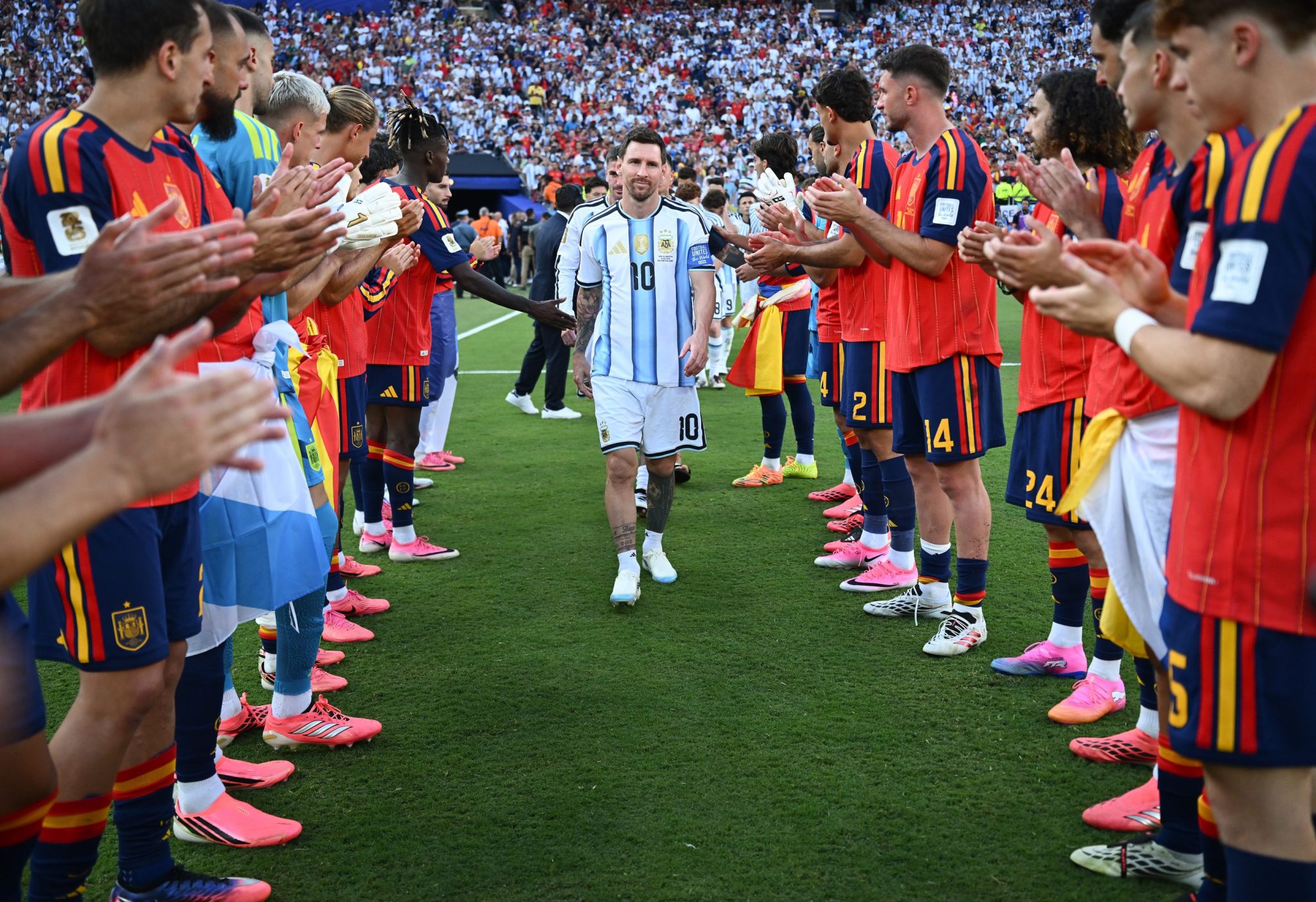
Spain’s 1-0 win over Argentina in the 2026 World Cup final has become the basis for a new argument about the Messi Test AI jobs question: which kinds of work remain harder for artificial intelligence to take over. In a Fortune commentary, Digital Planet at Tufts University’s Fletcher School said the match showed that human judgment, coordination and trust still matter even in events saturated with technology.
According to the commentary, Spanish substitute Ferran Torres scored 37 seconds into the second period of extra time on July 19, beating Argentina goalkeeper Emiliano Martinez and ending Lionel Messi’s run at the tournament. The author used the final to test findings from Digital Planet’s American AI Jobs Risk Index, which examines 784 occupations across 530 metro areas.
The piece noted that the tournament already relied heavily on automated systems. FIFA’s semi-automated offside technology uses stadium cameras to track up to 29 points on each player’s body 50 times per second, while a sensor in the ball reports its location 500 times per second, according to FIFA material cited by Fortune. The commentary also said algorithms priced tickets, AI cut highlights and biometric scans handled stadium entry.
What is the Messi Test for AI jobs?
The Messi Test is the commentary’s label for judging which human tasks are harder for AI to replace. It focuses less on whether a job is physical or desk-based and more on whether the work depends on tacit knowledge, open-ended decision-making, human presence, trusted oversight and coordinated systems.
The Fortune commentary argued that Messi illustrates several of those traits. Citing research on soccer scanning and decision-making, it said Messi creates chances by reading space and movement in ways that are difficult to turn into fixed instructions, even though he often covers ground at a walking pace.
The author also pointed to soccer’s open-ended nature. Unlike a closed game such as Go, a soccer match has changing opponents, shifting space and no single correct move, the commentary said. The same logic can apply to negotiations or other work where conditions keep changing.
Human presence was another category. Fortune cited Messi’s commercial pull and noted that OpenAI used him as its first global sports ambassador for a ChatGPT campaign, arguing that audiences and brands still value the real person rather than an AI reconstruction of past performance.
The final category was trust. FIFA calls its offside system semi-automated because a person must still confirm the alert before an on-field decision follows, the commentary said. That makes the human validator an important role as AI systems produce more recommendations.
How did Spain change the argument?
The commentary said Spain’s victory added a fifth lesson: a coordinated human system can beat an individual superstar. Citing ESPN’s analysis, Fortune said Messi finished the final with no touches in Spain’s penalty area and one blocked shot.
Rodri, Spain’s midfield captain and the tournament’s Golden Ball winner, was used as the example of that system. FIFA statistics cited by Fortune said he completed 101 of 105 passes in the final, won 80% of his duels, and led the tournament in both completed passes and ground covered.
The author said the lesson for employers is to invest in organizations, junior talent and trust roles rather than assuming AI can replace entry-level workers without long-term cost. The commentary pointed to Lamine Yamal’s development at Barcelona’s La Masia academy as an example of why companies still need pipelines for future talent.
Digital Planet’s broader conclusion, as described in Fortune, is that AI risk does not split cleanly between physical and cognitive work. The safer line runs through task attributes: judgment, adaptation, presence, trust and human coordination.
This story draws on original reporting from Fortune.