
Low-cost glasses show productivity gains for garment workers
Factory eye screenings in Bangladesh are expanding after research linked reading glasses to fewer sewing errors and higher output.
By Maya Lindqvist · Senior Technology Correspondent
3 min read
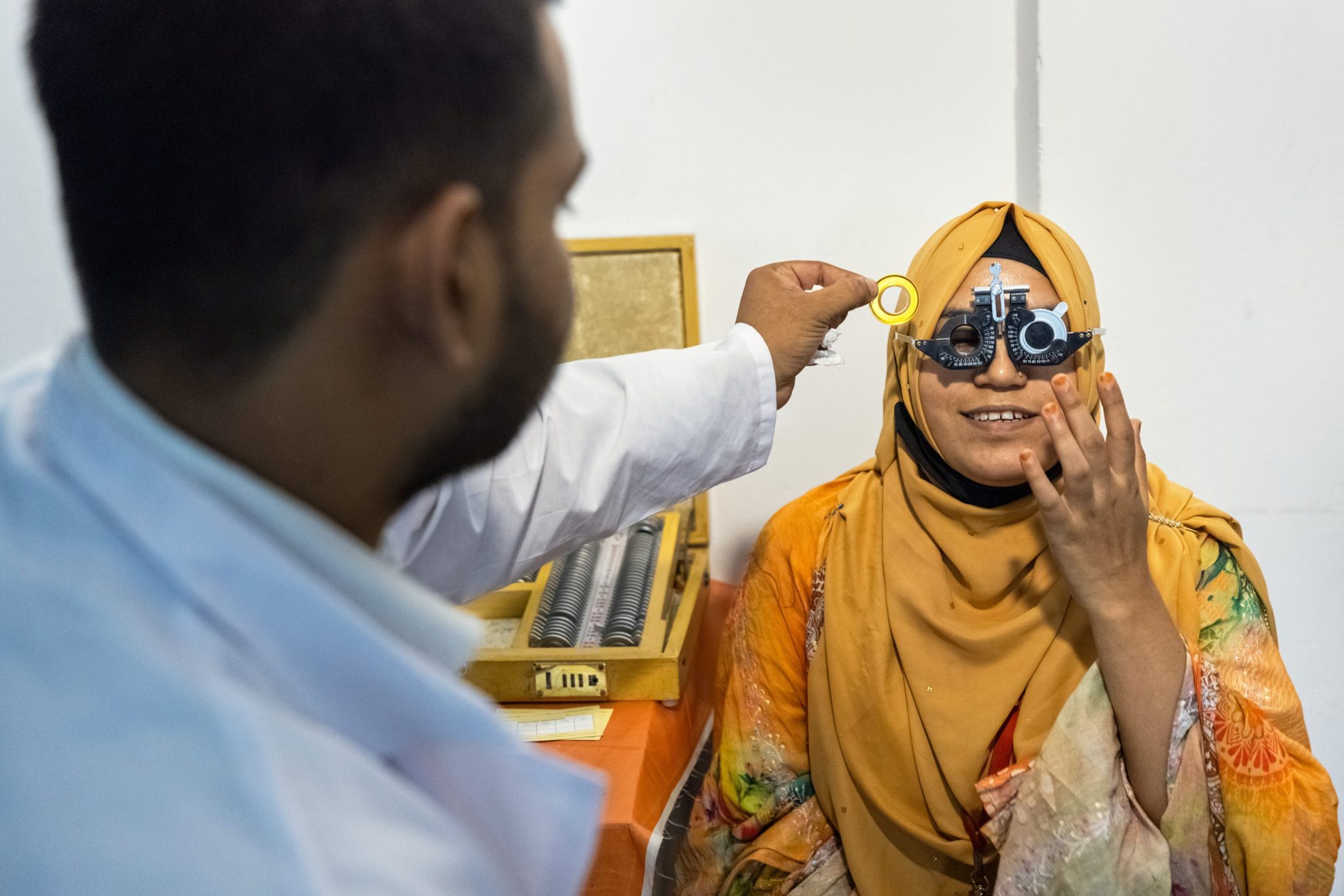
Some garment factories in Bangladesh are giving workers low-cost reading glasses after managers and researchers found that clearer vision can improve sewing speed, quality and safety. The effort matters for a sector that Fortune reported employs about 4 million people and accounts for roughly 11% of Bangladesh’s gross domestic product.
Ruma Aktar, a sewing machine operator in Bangladesh, said reading glasses changed both her workday and her health. She said the glasses help her thread needles more quickly and have reduced headaches and eye strain.
Her job requires speed and precision, with workers expected to produce thousands of garments a day, according to Fortune. Small errors can lead to rejected items or extra work, and Aktar said she now makes fewer alterations than she did before receiving glasses.
Bangladesh has the world’s second-largest garment industry after China, Fortune reported. VisionSpring, a nonprofit social enterprise that supplies affordable glasses in lower-income countries, estimates that about one-third of Bangladeshi garment workers need glasses but do not have them.
Factories screen workers on site
VisionSpring has worked with the Bangladesh Garment Manufacturers and Exporters Association, a group representing factory owners, to provide glasses costing less than $10 a pair to some workers. Ella Gudwin, VisionSpring’s chief executive, said workers who can see more clearly are better able to hit production and quality targets.
Gudwin said better vision can reduce errors such as missed stitches, uneven hems and buttons placed incorrectly. That means less rework for workers and factories, she said.
Fahima Akhter, a director at Bangladeshi garment company Masco Group, said managers did not initially understand how widespread the problem was because workers rarely raised concerns. She said Masco Group has screened about 5,000 employees, and about 30% received glasses.
Akhter said the company plans to expand screenings to the rest of its workforce, which totals more than 20,000 employees. She described the program as an investment rather than a cost, saying better vision can support productivity, workplace safety and company profit.
Research points to broader gains
A randomized controlled trial in India, co-authored by Gudwin and published in April in the British Journal of Ophthalmology, found that sewing machine operators who received reading glasses raised productivity by 6% while making fewer mistakes. The study found that each $1 spent on screenings and glasses produced $3.37 in productivity gains over 12 weeks.
The same study estimated that similar programs across the global textile and garment industry could add the equivalent of $27 billion in annual output. Gudwin said vision correction has been overlooked in part because glasses have often been treated as a luxury rather than a basic work tool.
Gudwin said many factory workers begin to develop age-related short-sightedness in their late 30s and early 40s, but delay getting help because they believe glasses will be expensive. She said factory-based screenings remove that barrier by bringing eye care directly to workers.
Akhter said Bangladesh’s garment sector should make vision screening a standard workplace benefit. “Having a clear vision is not a luxury, it is a necessity now,” she said.
This story draws on original reporting from Fortune.