
Knicks title run becomes a leadership case study after 53-year wait
Melissa Dawn Simkins says New York’s 2026 NBA title offers lessons on resilience, culture and long-term preparation.
By Hana Yoshida · Markets Reporter
3 min read
The New York Knicks’ first NBA championship in 53 years has become a leadership lesson for executives, according to Melissa Dawn Simkins, founder of Athleadership. In a Fortune commentary published June 22, Simkins argued that the Knicks’ run shows how long-term preparation, trust and resilience can decide high-pressure moments.
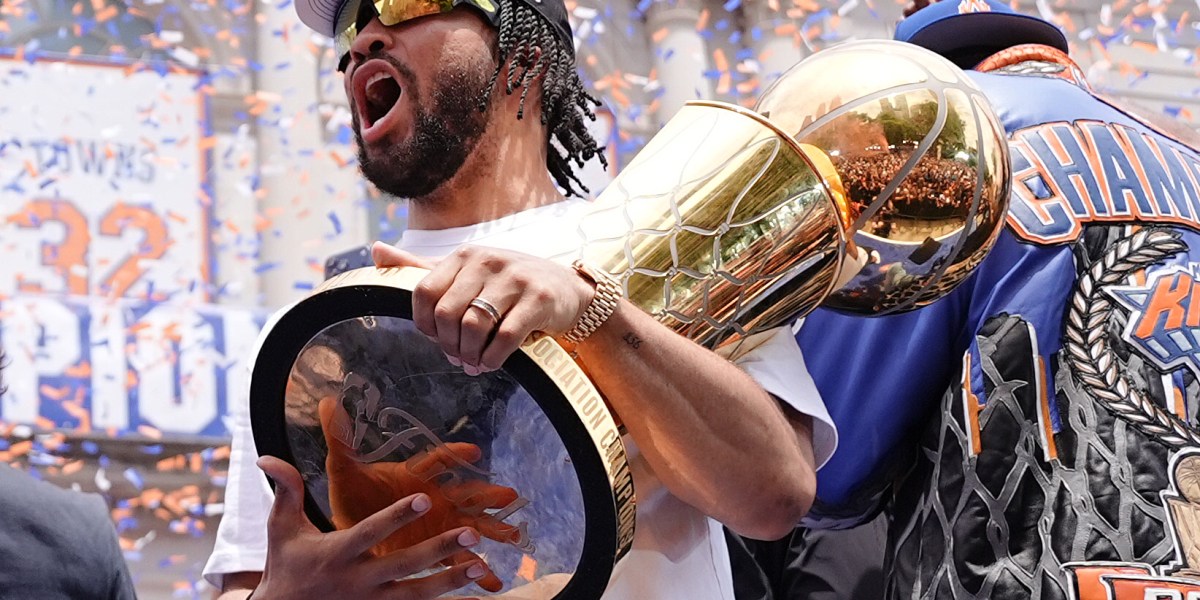
The Knicks beat the San Antonio Spurs in five games to win the 2026 NBA Finals, according to Fortune. A June 18 ticker-tape parade and victory rally in New York celebrated the title, with Jalen Brunson pictured holding the Larry O’Brien Championship Trophy.
Simkins, who advises organizations on leadership under pressure, wrote that the title should be seen as more than a sports comeback story. She said the Knicks’ championship reflected years of failed rebuilds, losing seasons, leadership changes and roster adjustments before the result arrived.
A long build, not a quick win
Simkins contrasted the Knicks’ slow climb with a business culture she said often rewards fast results, including rapid startup valuations, viral fame and quarterly performance pressure. Her view was that leaders often underestimate the cost of transformation before results appear.
For executives, Simkins said the lesson is to resist trading long-term development for short-term praise. She argued that durable success is more likely to come from sustained work than from a single breakthrough season.
Resilience as repeated practice
Simkins also pointed to several Knicks figures as examples of resilience built through setbacks. She wrote that Brunson had been questioned because of his size, then led New York to the title, won NBA Finals MVP and scored 45 points in the deciding game.
She said OG Anunoby had dealt with severe injury problems during his career, including appendicitis during an earlier Finals run, before making the go-ahead shot in Game 4. Simkins also cited Karl-Anthony Towns, who lost his mother and multiple family members to COVID-19, and coach Mike Brown, who had gone through multiple public dismissals before coaching the Knicks to the championship.
Her broader argument was that pressure exposes existing habits rather than creating performance on demand. Simkins described resilience as a discipline developed through adversity, recovery and repetition.
Culture and preparation
Simkins said the Knicks’ roster showed the value of culture, not only talent. She cited the “Villanova core” of Brunson, Josh Hart and Mikal Bridges, who had previously been college teammates and NCAA champions, as a base of trust and accountability after reuniting in New York.
She linked that point to business research, saying McKinsey has found that companies with strong organizational health outperform peers over time, while Gallup studies have connected highly engaged teams with better profitability, productivity and retention. Simkins used those findings to argue that culture can operate as a financial asset.
Simkins also singled out Brunson’s team-friendly contract extension as a leadership choice that helped the organization keep roster flexibility. She wrote that the decision favored collective success over maximum immediate personal gain.
Her conclusion was that the Knicks’ title showed the value of conditioning before outcomes. In her view, the championship was the public result of less visible habits, relationships and preparation built over years.
This story draws on original reporting from Fortune.