
Data center resistance expands beyond host communities
A Milltown Partners survey found most Americans who oppose data centers do not report living near one, complicating tech firms’ AI buildout plans.
By Sofia Marchetti · World Affairs Correspondent
3 min read
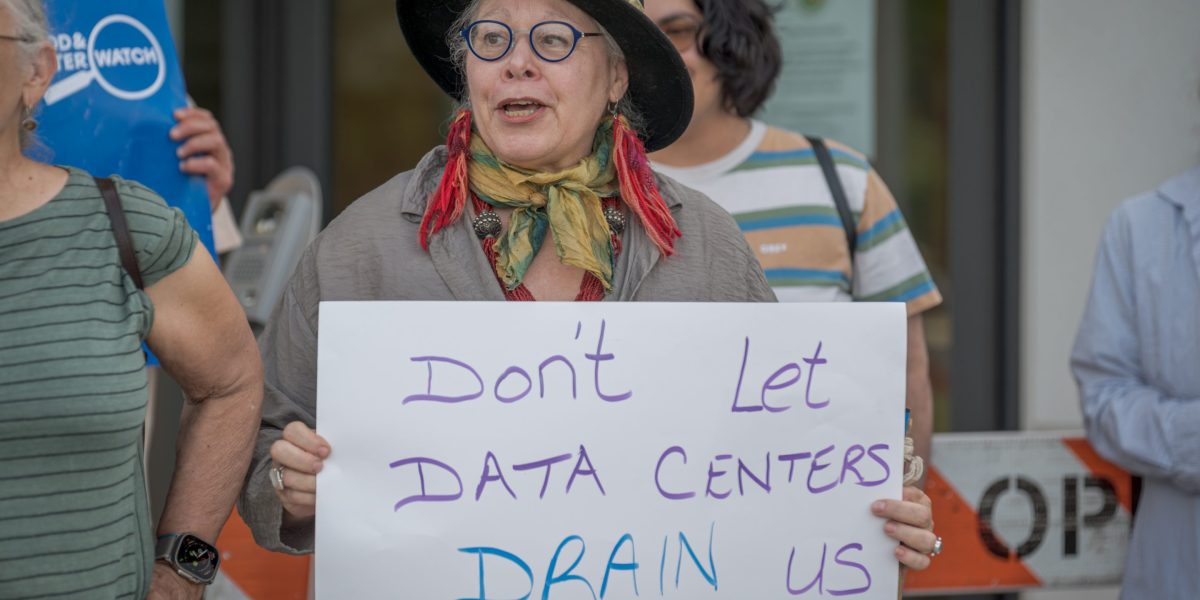
Opposition to data centers has spread well beyond communities where the facilities are being built, according to new polling from Milltown Partners. The finding matters for AI companies because local outreach may not address a broader public backlash tied to energy costs, water use and concerns about who benefits from AI.
Milltown Partners, a global advisory firm, said Monday that only 8% of Americans who oppose data centers say they know they live near one. The firm said its report was based on a survey of 6,872 registered voters nationwide.
The industry is under pressure to expand computing capacity for artificial intelligence. Bloomberg has reported that the largest U.S. technology companies have set aside a record $725 billion in capital spending this year, with most of that money directed toward data centers.
Public resistance has already affected projects. The Data Center Watch Initiative, a monitoring group, said opposition delayed or stopped at least 75 U.S. data center projects in the first quarter of 2026, representing a combined $130 billion.
Miquel Vila, lead analyst at Data Center Watch, told Fortune that more people now oppose data centers even without one nearby because they view the facilities as a symbol of AI. Vila said those opponents see blocking data centers as a way to slow AI development.
Cost worries lead the concerns
Milltown Partners found that about half of Americans are worried about the local environmental effects of data centers. The firm said affordability concerns were more common among voters who object to new construction.
According to Milltown Partners, 67% of voters cited higher power bills as a reason to oppose data center construction. The survey also found 59% expressed concern that AI-related economic gains would mainly benefit corporations rather than households.
Those concerns have become a political issue, according to Fortune. The publication reported that figures including Sen. Bernie Sanders and President Donald Trump have supported some form of sovereign wealth fund intended to share AI-related gains with Americans.
Local governments have also moved against new projects. Interconnected Capital said local officials had proposed more than 120 moratoriums on data center development across 38 states as of this month.
Tech companies answer with public campaigns
Several technology companies have tried to counter public concern. Fortune reported that Meta spent more than $6 million late last year on an advertising campaign in eight states and Washington, D.C., focused on the local economic benefits of data centers.
OpenAI and Microsoft have said they would cover large energy costs tied to their data centers, according to Axios. Nvidia, Amazon and Google have also described plans or technologies aimed at reducing water use linked to data center operations, according to company materials cited by Fortune.
Other polling suggests proximity is not the main driver of public opinion. Gallup reported last month that more than 70% of Americans were strongly or somewhat opposed to a data center being built near them, with worries about water, energy use and electricity prices among the leading reasons.
Pew Research Center said in April that about 38% of Americans live within five miles of at least one data center. Pew said data centers are often clustered in states such as Virginia and Texas, where policy conditions and resources have supported development.
Pew also found that living near a data center had little effect on views of the facilities. According to Pew, opinions about data centers’ effects on environmental quality, energy costs and jobs were broadly similar regardless of whether respondents lived close to one.
This story draws on original reporting from Fortune.