
Independent bookstores grow as readers seek local gathering places
The American Booksellers Association says membership is at its highest level since the late 1990s, though costs and competition remain concerns.
By Sofia Marchetti · World Affairs Correspondent
3 min read
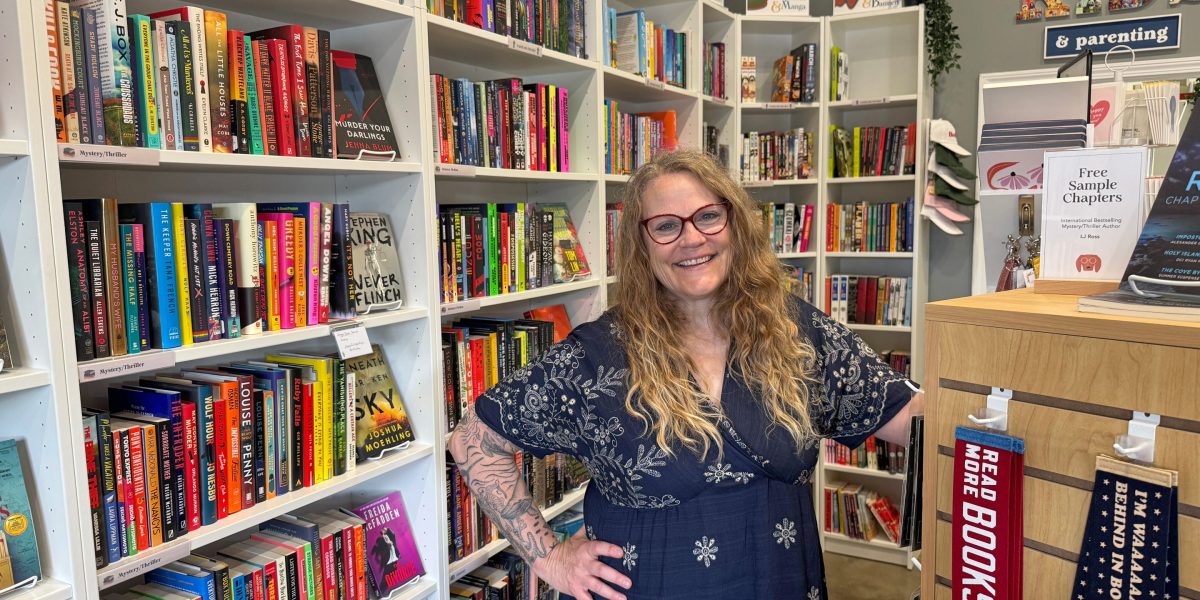
Independent bookstore membership is rising sharply, according to the American Booksellers Association, a sign that local shops are finding demand beyond book sales. The growth matters because many owners are positioning stores as neighborhood gathering places at a time when readers are seeking more in-person connection.
The ABA said its membership increased by more than 500 in the past year, reaching 3,417 members across 3,783 locations. The group said that is nearly three times its level a decade ago and the highest count since the late 1990s.
Allison Hill, the ABA’s chief executive, told The Associated Press that many people still assume independent bookstores are vanishing because they remember a closing nearby or have heard about store failures. Hill said the current picture is healthier than that common perception, though she also described the business as “precarious.”
Growth across store formats
The Associated Press reported that the latest wave includes a range of models, from general-interest stores to mobile and pop-up booksellers. Examples cited by AP include Hey Books! in San Diego, the Wandering Quills Bookshop in Westerville, Ohio, and Banyan Books in St. Petersburg, Florida.
The expansion also reflects strong interest in romance, fantasy and romantasy titles, according to AP. Stores built around those audiences include the Spicy Librarian in Denver and Flutter Romance Bookstore in Austin, Texas.
Hill told AP that many people entering the trade see bookselling as a values-driven choice rather than a quick route to wealth. She said some are younger owners with a mission, some are retirees starting a new chapter, and others are midcareer workers looking for different work.
A store as a community space
In Wentzville, Missouri, Kelley Hartnett opened Double Dog Bookshop in 2025 after years of wanting to run a bookstore, AP reported. Hartnett, a marketing consultant and copywriter, began with a converted cargo trailer and two Australian Cattle Dog mixes before opening a downtown storefront.
Hartnett told AP that Double Dog is about “50% books and 50% community.” She said she hopes to move into a larger space where customers can gather more easily and spend time together.
Hartnett said people are looking for face-to-face connection after heavy use of the internet, virtual meetings and algorithm-driven platforms. Her husband had raised concerns about competing with Amazon, AP reported, but she opened the business anyway.
Barnes & Noble returns as a concern
Independent owners also are watching Barnes & Noble’s renewed expansion, according to AP. The chain dominated bookselling in the 1980s and 1990s, later lost ground to Amazon, and then struggled before Elliott Management Corp. bought it in 2019.
Under CEO James Daunt, Barnes & Noble has added more than 100 stores over the past two years, AP reported. In Chicago, the owner of Volume Books blamed a new Barnes & Noble for her store’s closure, while Hill said a small sales decline can decide a store’s year when margins are thin.
Daunt told AP he is not trying to take sales from independent stores and said he does not view the market as fixed. He pointed to his own background as founder of Daunt Books in London.
Near Chicago, The Book Loft Oak Park owners Heather Nelson and Sophie Schauer Eldred told AP they are uneasy about a Barnes & Noble opening nearby but hope the stores can help each other. Schauer Eldred said they hope shoppers drawn by the chain will also stop into their store.
This story draws on original reporting from Fortune.