
Palmer Luckey says U.S. universities are losing engineering edge to China
The Anduril founder argued that China is producing more hands-on technical talent while the U.S. still has an edge in backing unconventional founders.
By Daniel Okafor · Business Editor
3 min read
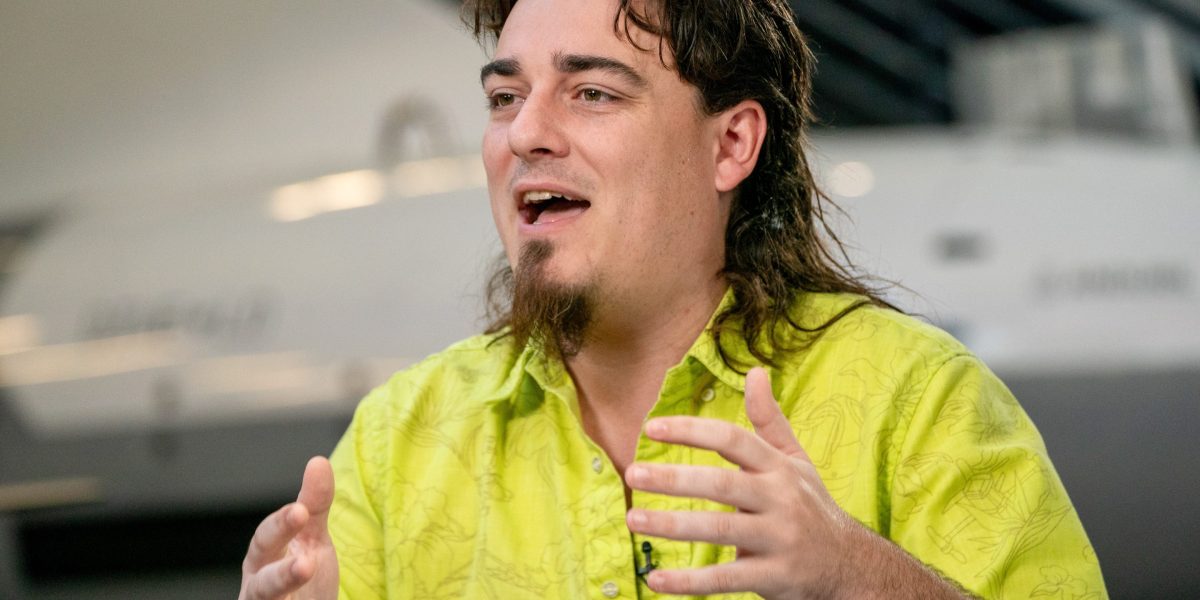
Anduril founder Palmer Luckey is warning that the U.S. education system is weakening America’s ability to compete with China in engineering and manufacturing. In a conversation with the Hoover Institution, Luckey said American universities are producing graduates with fewer practical building skills at a time when competition in artificial intelligence and advanced manufacturing is intensifying.
Luckey, 33, said U.S. companies helped push colleges toward curricula that do not prepare engineers to make products. “Basically, we’re not teaching engineers how to be engineers anymore,” he told the Hoover Institution.
He argued that China has built a deeper pool of specialists in fields such as batteries, metallurgy and optics. Luckey said the U.S. has moved toward training high-level designers who prepare work for manufacturing teams abroad, while Chinese engineers often solve the harder production problems.
Luckey points to Apple’s supply chain
Luckey used Apple as an example of the shift in technical capacity. He said Apple once had to solve more of its own manufacturing problems, but that much of the difficult engineering work now happens in China.
Fortune reported that Apple designs products in Cupertino, California, and relies heavily on manufacturing partners in China. Luckey said that dependence reflects a broader transfer of manufacturing know-how and engineering practice outside the U.S.
Even so, Luckey said the U.S. retains an advantage in producing entrepreneurs who pursue unusual ideas. He described China’s education system as one that creates many disciplined technical workers but fewer founder-type risk takers.
Luckey tied that point to his own career. According to Forbes, he is worth $5 billion. He was homeschooled in California, built virtual reality headset prototypes, enrolled at California State University, Long Beach as a journalism major and left school at 19 to work on Oculus.
He told the Hoover Institution that Peter Thiel gave him $1 million to start Oculus when he was a 19-year-old with no degree, a minimum-wage job and a 19-foot camper trailer. Luckey said that kind of backing would not happen in China.
Facebook bought Oculus in 2014 in a $2 billion deal when Luckey was 21, Fortune reported. Three years later, he started Anduril, the defense technology company that Fortune said is now valued at $61 billion.
Other executives have raised similar concerns
Luckey’s comments fit into a broader debate among business leaders about China’s gains in science, education and applied technology. Pfizer CEO Albert Bourla said at a Council on Foreign Relations event that research in China moves at “three times the speed” and “half the cost.”
Bourla cited the Nature Index, which tracks institutional research output, and said U.S. and European schools dominated the top 10 in 2020. He said Chinese institutions now hold nine of those spots and predicted China could surpass the U.S. by the end of the decade if the current pace continues.
Forbes, citing China’s Ministry of Education data, reported that China eliminated or suspended about 12,200 undergraduate degree programs from 2021 to 2025, especially in humanities, foreign languages and some management fields. It added about 10,200 programs, largely in areas tied to industrial priorities such as AI, robotics and semiconductor engineering.
Fortune also reported that Chinese primary and secondary schools are adding AI instruction during the academic year. Walmart chief people officer Donna Morris previously told Fortune that Chinese children are learning tools such as DeepSeek, and said that approach signals a national focus on building technical capability.
This story draws on original reporting from Fortune.