
Home data centers draw startup push as AI strains the grid
Span and Heata are testing residential compute systems meant to cut grid strain, bills and waste heat as AI data center demand rises.
By Maya Lindqvist · Senior Technology Correspondent
3 min read
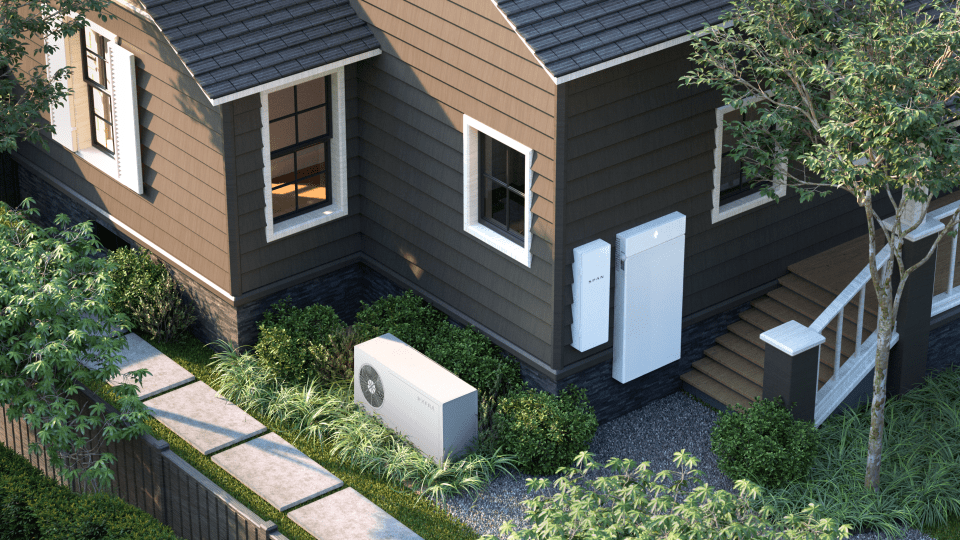
Startups are pitching home data centers as a way to add AI computing capacity without building another warehouse-sized facility, Fortune reported. The idea matters because data center growth has become a flashpoint for communities worried about power bills, water use and noise.
California-based Span, working with Nvidia, has begun testing cabinet-sized data center units called XFRA at homes and small businesses in Northern California, according to Fortune. The company says the units attach to the outside of buildings and run without fans, a design meant to avoid the noise complaints that have followed some large data center projects.
Span chief revenue officer Ryan Harris told Fortune the company expects XFRA to produce about one to two megawatts of compute later this year. He said Span plans to scale nationally to more than 1 gigawatt of annual capacity starting next year.
PulteGroup, one of the largest U.S. homebuilders, is testing Span’s system, Fortune reported. Nvidia is supplying liquid-cooled RTX PRO 6000 Blackwell Server Edition GPUs for the units.
How do home data centers work?
Span’s model uses spare electrical capacity in homes and small commercial buildings to form a distributed compute network, according to Fortune. The company says that network can serve hyperscalers and AI companies while reducing pressure on the grid rather than replacing conventional data centers.
Fortune reported that Span charges hosts a flat monthly fee of about $150 and, in exchange, effectively covers their electricity and internet bills. The company says it can install the residential nodes six times faster than centralized 100-megawatt data centers and at about one-fifth of the construction cost.
A separate company, U.K.-based Heata, places servers in homes to process cloud workloads and captures the heat from computer chips for domestic hot water, Fortune reported. The company uses thermal conductors to move heat from processors into water cylinders.
Heata has installed units in about 100 homes and says it has saved about 1 gigawatt-hour of energy, according to Fortune. A Heata spokesperson told Fortune the company has generated 8 million liters of hot water and saved households about $55,000 on energy bills.
Why are data centers under pressure?
Large AI data centers have faced growing opposition as companies race to add computing capacity. McKinsey projected in April 2025 that AI infrastructure could involve $7 trillion in capital spending by 2030, Fortune reported.
Goldman Sachs research cited by Fortune said data centers could raise electric bills by 6% over the next year. Water use has also become a concern: the Houston Advanced Research Center projected data centers could consume as much as 399 billion gallons of water in Texas alone by 2030, according to Fortune.
Utah State University physics professor Robert Davies told Fortune that home-based systems may help some households but should be judged against their full costs. In a preliminary analysis, he estimated that only 30% to 40% of homes may be suitable for mini data centers because of installation limits, internet reliability and homeowner willingness.
Davies also estimated that only 2% to 3% of homes could realistically be heated through waste-heat systems, in part because heating demand is seasonal in many places. He warned that efficiency gains can encourage greater overall consumption, citing Jevons paradox.
A Heata spokesperson told Fortune the company is substituting server heat for heating that homes already need, rather than only making computing more efficient. Davies said he remains concerned that demand for compute could exceed the ability to reuse waste heat and lead to more data center construction.
This story draws on original reporting from Fortune.