
FIFA private investment plan draws backlash from European soccer interests
FIFA’s plan to bring investors into a new commercial arm has sparked UEFA criticism and claims it could shift soccer’s power balance.
By Sofia Marchetti · World Affairs Correspondent
3 min read
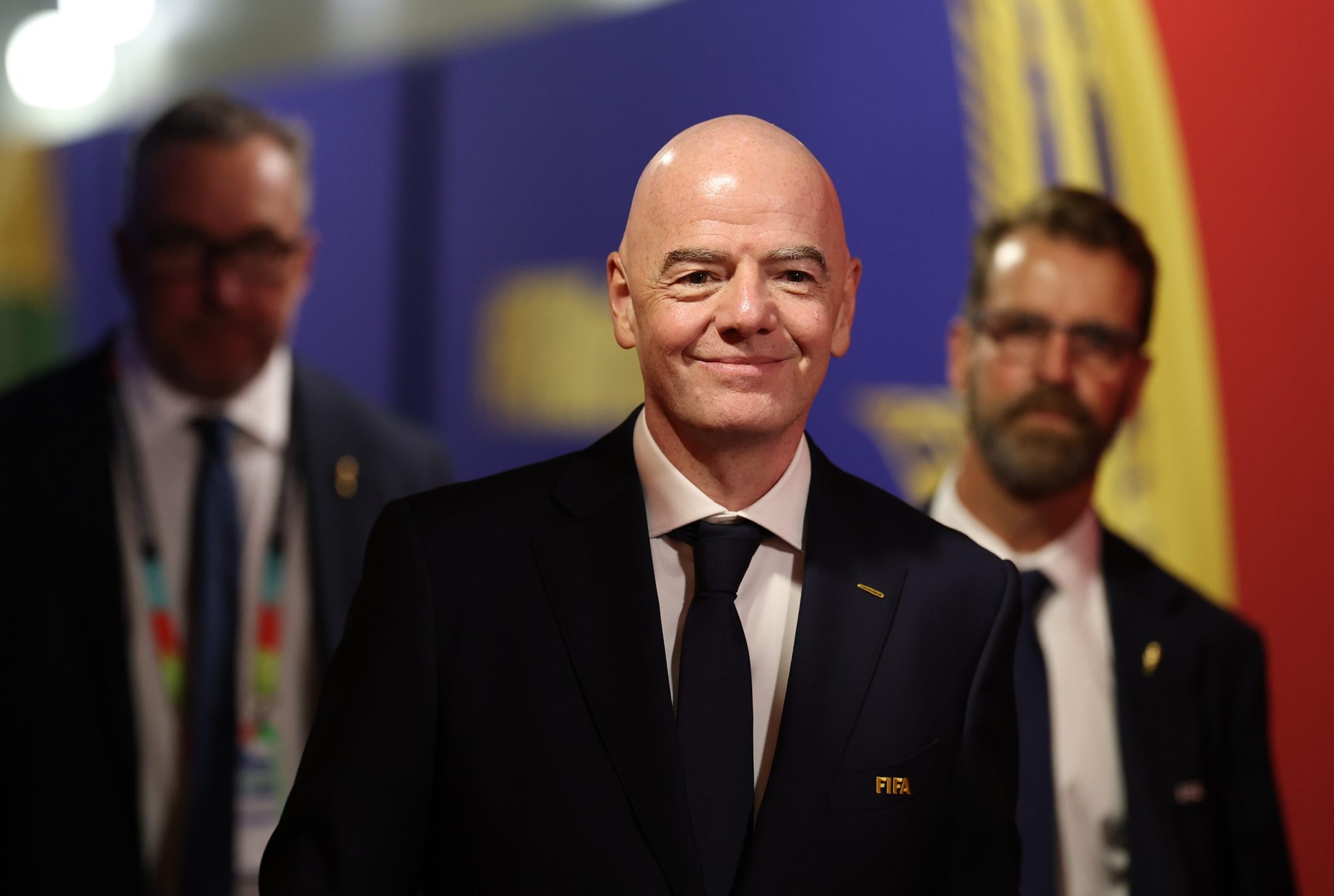
FIFA private investment talks have triggered a sharp response from European soccer figures after reports that the World Cup organizer is considering selling a minority stake in a new commercial business. The dispute matters because the proposal would put billions of dollars behind FIFA’s revenue operations while intensifying a long-running fight over who controls the sport’s money and influence.
Fortune reported that Joshua Kushner’s Thrive Capital would lead an investor group prepared to put as much as $4.2 billion into the proposed structure. The deal would value FIFA’s commercial rights at $20 billion, according to a person Fortune described as directly involved in the talks.
The same person told Fortune that Apollo Sports Capital has also been in discussions to join the group. Apollo declined to comment to Fortune, while Thrive also declined comment.
What is FIFA Forward Enterprise?
FIFA Forward Enterprise, or FFE, would be a commercial subsidiary covering areas such as ticketing, sponsorship and broadcast rights, according to Fortune and The Times of London, which first reported details of the plan. FIFA has said any outside investors would hold only a minority stake in FFE, not in FIFA itself, and would have no operational role.
The Times reported that FIFA President Gianni Infantino would become commissioner of the new entity. FIFA and UEFA did not respond to Fortune’s requests for comment before publication.
The proposal quickly drew criticism from European soccer. The UEFA Europa League said in a statement that no one owns football, a line that captured wider concerns that private capital could gain influence over the sport’s global commercial engine.
A person involved with the investor side gave Fortune a different explanation for the reaction, saying UEFA was resisting a shift away from a Europe-centered power structure toward a more global model. The person also argued that the deal would strengthen FIFA’s ability to fund soccer development worldwide.
Fortune reported that FIFA has told investors in private meetings it expects revenue to rise 7% annually from 2027 through 2030. The organization’s projections include 10% annualized growth in marketing revenue and a 4% yearly decline in ticketing revenue, according to the person with direct knowledge of the talks.
A pitch deck slide viewed by Fortune said FIFA member associations now receive $8 million a year in investment. Under the proposed arrangement, that amount would rise to $20 million next year, with projections of $22 million per association by 2031 and $24 million by 2035. FIFA repeated those figures in a public release, according to Fortune.
FIFA’s 211 member associations are the national governing bodies for the sport, including the U.S. Soccer Federation, France’s Fédération Française de Football and England’s Football Association. The relationship between FIFA and UEFA has often been strained as both bodies seek greater political and economic leverage in soccer.
The investor group’s lineup adds to the scrutiny. Fortune reported that Thrive would invest through Thrive Eternal, its permanent holding company, which also owns a stake in the San Francisco Giants. Apollo Sports Capital is part of Apollo, the private equity firm with more than $1 trillion in assets under management, and Fortune reported it has been in talks to provide a $1.1 billion loan to Germany’s Bundesliga.
The backlash follows the 2026 World Cup in the U.S., Canada and Mexico. Fortune reported that the tournament and the July 19 final between Argentina and Spain set viewership records in the U.S. and worldwide, while FIFA also faced criticism over commercialization, including mandatory hydration breaks that created advertising windows for broadcasters.
This story draws on original reporting from Fortune.