
Chinese robot import ban targets new US approvals over security risks
The FCC barred new Chinese humanoid robots, robot dogs and power inverters, citing cybersecurity risks to critical infrastructure.
By Lucas Ferreira · Science & Environment Writer
3 min read
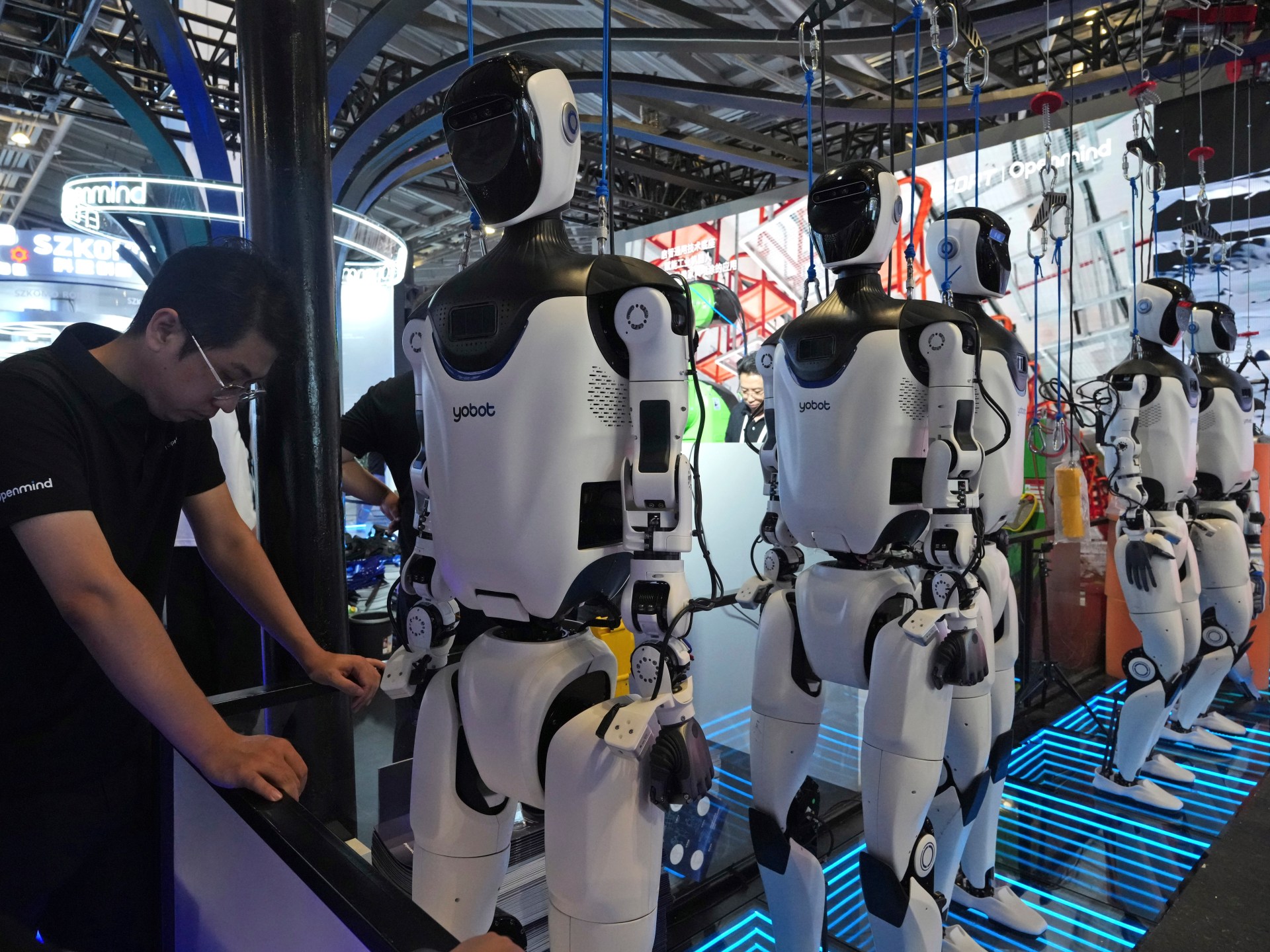
The Chinese robot import ban announced by the Federal Communications Commission blocks new US approvals for Chinese-made humanoid robots, robot dogs and power inverters. The FCC said Tuesday the equipment could threaten cybersecurity and critical infrastructure, according to AFP and Reuters.
The restrictions took effect immediately and add the products to the FCC’s list of equipment barred on national security grounds. AFP and Reuters reported that the order applies only to models that have not yet been cleared for sale in the United States.
Why did the US ban Chinese robots?
The FCC said the products could expose the United States to supply-chain and cybersecurity risks if foreign actors were able to compromise or control them. The agency said the concern is sharper for equipment used around critical infrastructure, energy systems, factories, warehouses and research sites.
“These devices could create supply chain vulnerabilities that could disrupt US economic and national security,” the FCC said, according to AFP and Reuters.
Power inverters were included because they connect solar panels, batteries and other power sources to the electricity grid and to data-centre equipment. Humanoid robots and four-legged robot dogs are increasingly used in industrial and research settings, AFP and Reuters reported.
Which companies could be affected?
The restrictions are expected to affect Unitree, a Chinese robotics company that has worked with Nvidia on robots using the US chipmaker’s technology, according to AFP and Reuters. The Pentagon recently placed Unitree on a list of companies it says are linked to China’s military; Beijing has denied those allegations.
The FCC action also covers new Chinese-made power inverters. AFP and Reuters identified Huawei and Sungrow as leading Chinese suppliers in that market.
The order does not apply to products already approved for sale in the United States, AFP and Reuters reported. The FCC can revoke existing approvals in some cases.
How did China respond?
China’s embassy in Washington criticized the move and urged the United States to stop targeting Chinese companies. The embassy said Beijing “urges the United States to heed the objective and rational voices of the business communities in both countries” and “stop smearing Chinese companies and threatening them with sanctions,” according to AFP and Reuters.
The embassy also said China’s government would “take all necessary measures in response to any action that causes material harm to its interests.”
The decision fits a broader US effort to reduce dependence on Chinese technology in sectors tied to artificial intelligence, energy and data centres, AFP and Reuters reported. It also comes as President Donald Trump’s administration presses companies to expand advanced manufacturing inside the United States.
Several US-based companies are developing or assembling humanoid robots domestically, including Tesla, Figure AI, Agility Robotics and Boston Dynamics, according to AFP and Reuters. Tesla has said it plans to raise production of its Optimus robot, while Figure AI and Agility Robotics already run US facilities that make robots for industrial use.
The new limits add another point of friction between Washington and Beijing, which are already disputing access to advanced chips, artificial intelligence, trade and strategic technology supply chains, AFP and Reuters reported.
This story draws on original reporting from Al Jazeera.