
Federal student loan defaults climb to $233.3 billion
An Associated Press analysis found about 9.5 million federal borrowers are in default after pandemic-era protections expired.
By Maya Lindqvist · Senior Technology Correspondent
3 min read
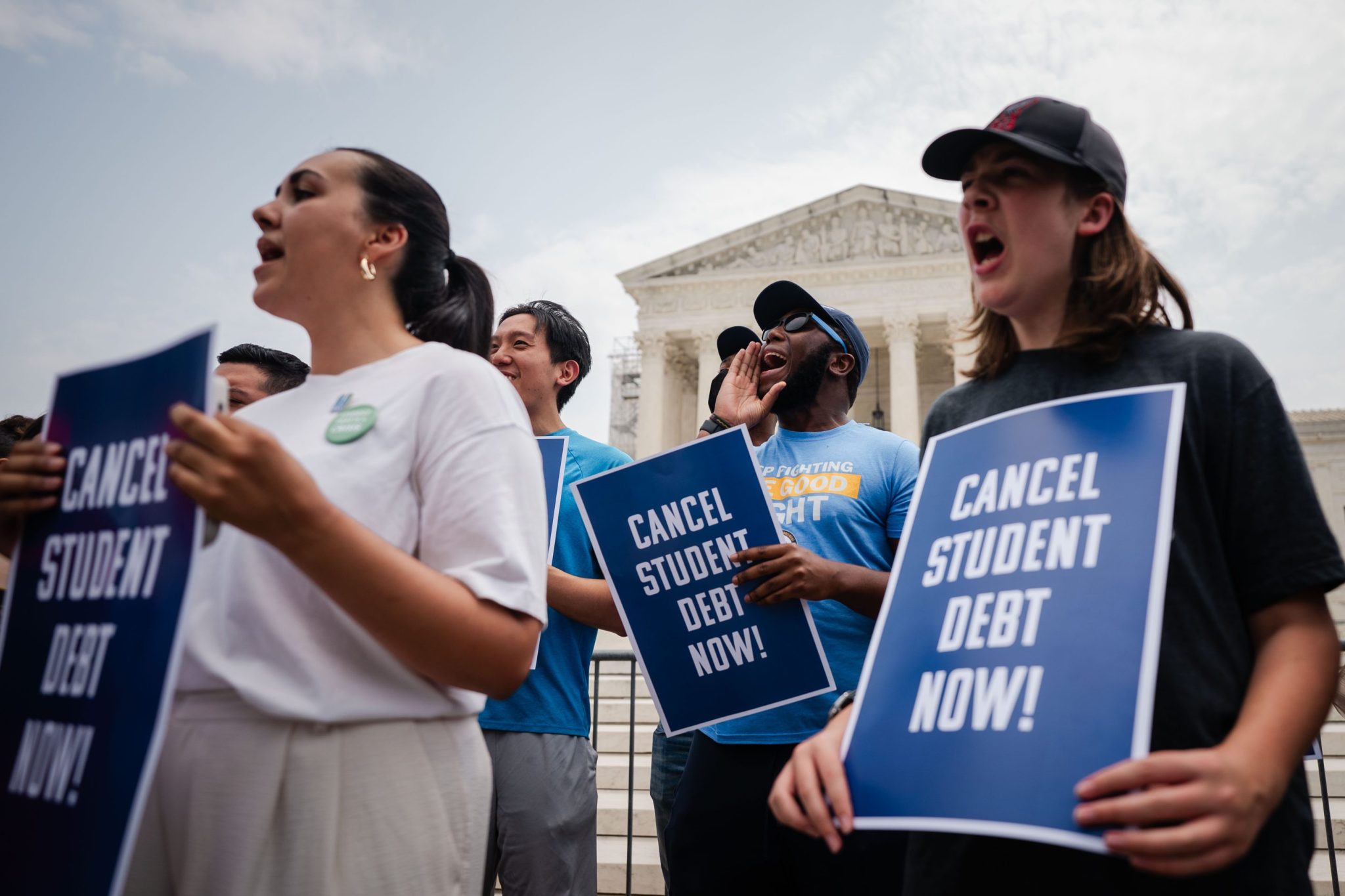
Federal student loan defaults have reached a record level, with about $233.3 billion in federally backed debt now in default, according to an Associated Press analysis of federal data. The increase matters for borrowers because default can expose them to penalties beyond damaged credit, including possible wage or Social Security garnishment.
About 9.5 million people, or 1 in 5 federal student loan borrowers, are now in default, the AP reported, citing data from the Office of Federal Student Aid. Default generally means a borrower is more than nine months behind on payments.
The increase followed the end of pandemic-era protections that kept federal student loans from moving into default. The U.S. Education Department let borrowers pause payments during the COVID-19 emergency, and although bills resumed in 2023, the Biden administration added a one-year grace period that ended in fall 2024.
Borrowers began entering default again in June 2025, nine months after that protection ended, according to the AP. Since then, the number of borrowers in default has risen from 5.3 million to roughly 9.5 million, while total federally backed student debt stands at $1.7 trillion.
Advocates told the AP that many borrowers are falling behind as household costs rise. Aissa Canchola Bañez, policy director for the advocacy group Protect Borrowers, said people are struggling to cover basic expenses while student loan bills add pressure.
Policy changes could add pressure
The Trump administration has not resumed involuntary collections such as garnishing wages or Social Security payments, the AP reported. Borrowers can face credit damage before default if they are only a few months late, but default opens the door to stronger collection tools.
The AP also reported that more defaults may follow after the Trump administration ended Saving on a Valuable Education, or SAVE, an income-driven repayment plan created under the Biden administration. Millions of borrowers who had used SAVE are expected to face higher monthly payments.
New borrowers now choose between one standard repayment plan and one income-driven option, rather than several alternatives, according to the AP. The Education Department has described the overhaul as an effort to simplify what it called a fragmented and confusing repayment system.
Southern states show high default rates
Many of the states with the highest concentrations of borrowers in default are in the South, the AP analysis found. Mississippi had the highest state default rate, at 28.3%.
Other states near the top included Louisiana, Alabama, West Virginia, Oklahoma, Georgia, South Carolina and Texas, according to the AP. Alaska, Arizona, Ohio, Indiana, Michigan, New Mexico and Nevada also ranked among the 15 states with the highest default rates.
Puerto Rico had a 30.9% default rate, higher than any state, the AP reported. Of the 15 states with the highest rates, New Mexico was the only one that President Donald Trump did not win in 2024.
Bañez told the AP that the geography challenges common assumptions about who is struggling with student debt. She said many borrowers behind on payments are working-class people who cannot keep up with loan bills along with other costs.
For-profit college borrowers lag further behind
Borrowers who attended for-profit colleges are having more trouble repaying than those from other schools, according to Federal Student Aid data cited by the AP. Thirty-three percent of those borrowers were at least 90 days behind on payments, more than twice the rate for borrowers who attended public schools.
Among schools in the top quarter for nonpayment rates, 76% were for-profit institutions, the AP reported. Federal Student Aid has said a high nonpayment rate signals a serious risk of a high default rate.
Career Education Colleges and Universities, an association representing private trade schools and career colleges, has created a task force to contact students about repayment, according to the AP. Jason Altmire, the group’s head, said the pandemic and confusion over the Biden administration’s unsuccessful loan forgiveness effort contributed to the problem, and said the issue will be discussed at the association’s summer convention.
This story draws on original reporting from Fortune.