
Dalio warns Hormuz crisis could test dollar’s global role
The Bridgewater founder compared the Iran conflict to Britain’s 1956 Suez crisis, pointing to debt, alliances and reserve-currency confidence.
By Sofia Marchetti · World Affairs Correspondent
4 min read
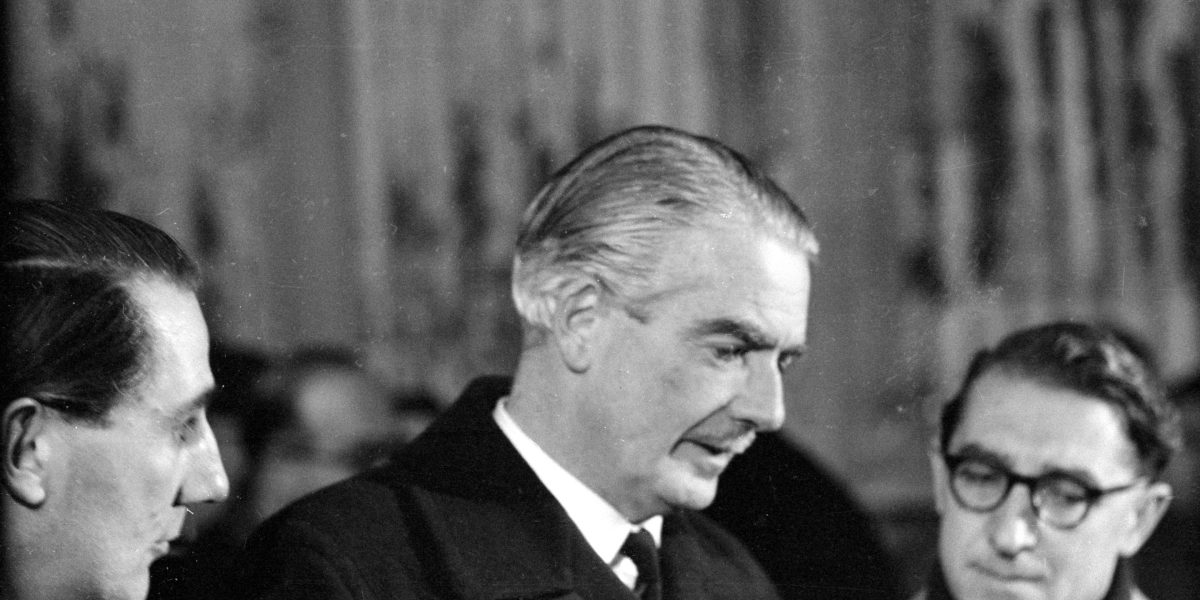
Ray Dalio has cast the U.S. confrontation with Iran and the Strait of Hormuz as a potential modern version of Britain’s 1956 Suez crisis, Fortune reported. His warning matters because he links military power, creditor confidence and the dollar’s reserve-currency status in a period of rising U.S. debt.
Dalio, the founder of Bridgewater Associates and a Fortune contributor, wrote in March that observers should watch whether allies and creditors lose confidence, whether the U.S. loses reserve-currency standing, whether debt assets are sold and whether the dollar weakens, especially against gold, according to Fortune.
Fortune said Dalio drew on his research into the rise and decline of reserve-currency powers across 500 years. He compared the Hormuz standoff with the Suez Crisis, when Britain and France, acting with Israel, invaded Egypt after President Gamal Abdel Nasser nationalized the Suez Canal.
The 1956 operation succeeded militarily at first, according to Fortune, with Anglo-French forces taking control of the canal’s northern section. The campaign then collapsed under U.S. financial pressure as Washington threatened to block emergency IMF support while the pound faced market pressure.
British Prime Minister Anthony Eden withdrew from Egypt within weeks, Fortune reported. Bridgewater’s research, as described by Fortune, treats the episode as part of a pattern in which allies, lenders and currency markets reassess a power that has reached strategic limits.
Fortune noted that Britain remained prosperous after Suez but no longer held the same imperial position. Within four years, Ghana, Malaya, Nigeria and Cyprus had gained independence from Britain, and within a decade Prime Minister Harold Macmillan had delivered his “winds of change” speech.
Dalio applied that framework to the 2026 Iran conflict, according to Fortune. He argued that Iran’s leadership saw the fight as existential, while U.S. voters and politicians had more immediate concerns, including gasoline prices and midterm elections.
In April, Dalio wrote on Substack that the world was in the early stages of a war that would not end soon, Fortune reported. He described the Iran conflict as part of a broader shift in global power in which military and financial struggles are tied together.
Fortune reported that the U.S. and Israel began bombing Iran in late February, striking nuclear sites, missile facilities and military installations. The campaign damaged Iran and its economy, but Fortune said the regime remained in place and its nuclear program was not verifiably dismantled.
By late June, U.S. negotiators were in Qatar seeking a memorandum of understanding to reopen the Strait of Hormuz in exchange for phased economic relief, according to Fortune. The outlet described that outcome as short of the decisive result sought by the campaign’s supporters.
Other analysts also made the Suez comparison, Fortune reported, including Fawaz Gerges of the London School of Economics, New Yorker writer Ishaan Tharoor and analyst James Dorsey. Fortune said an Asharq Al-Awsat opinion piece called the analogy tempting but misleading, partly because Britain in 1956 was forced back by a creditor, a role only China could plausibly play with the U.S. today.
Fortune also tied Dalio’s concern to the dollar’s role in the oil system. The outlet said a secret 1974 U.S.-Saudi arrangement had Riyadh price oil in dollars and recycle oil proceeds into U.S. Treasury bonds in return for American security support, helping entrench the so-called petrodollar system.
Fortune reported that the Strait of Hormuz is a vulnerable point for that system. It also said U.S. federal debt crossed $39 trillion on March 18, 2026, after credit downgrades by S&P in 2011, Fitch in 2023 and Moody’s in May 2025.
The dollar’s share of global foreign-exchange reserves had fallen to 56.9%, Fortune reported, down from 72% in 2001 and the lowest level since 1995. Fortune added that the dollar remains dominant and that crises have historically sent investors toward dollars rather than away from them.
Dalio’s argument, as presented by Fortune, is not that U.S. decline is guaranteed. It is that debt, war, alliances and currency confidence are now being tested together.
This story draws on original reporting from Fortune.