
Culp’s GE breakup leaves three companies worth $689 billion
GE’s split into aerospace, health care and power businesses capped a sharp recovery under CEO Larry Culp, Fortune reported.
By Maya Lindqvist · Senior Technology Correspondent
3 min read
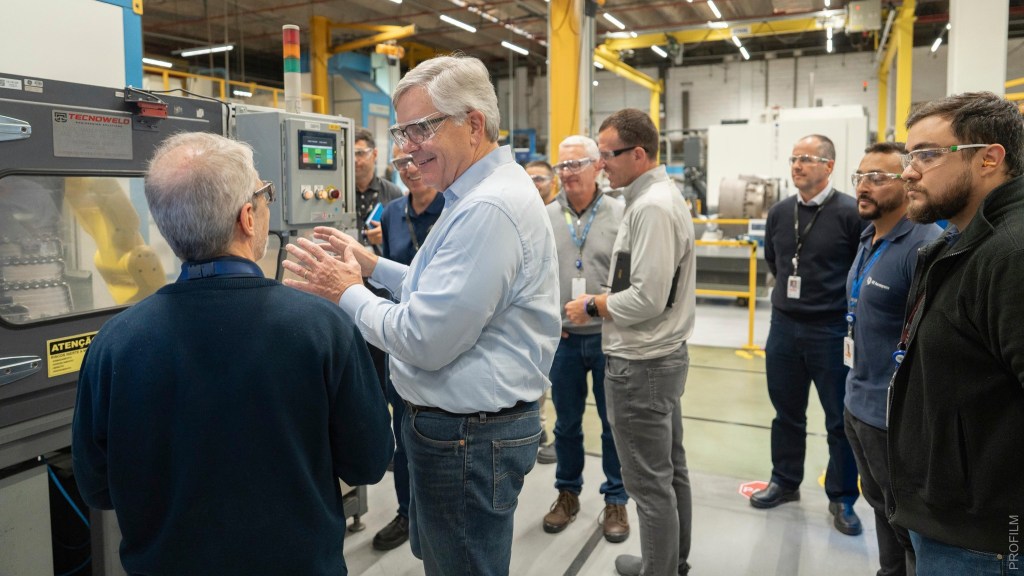
Larry Culp’s restructuring of General Electric has left three separately traded companies with a combined market value of $689 billion, Fortune reported. The change is significant because GE’s market capitalization was $96 billion when Culp became chief executive in 2018, after falling more than 80% from its September 2000 peak.
Fortune reported that Culp first cut debt and changed how GE ran its operations, then split the company into GE HealthCare, GE Vernova and GE Aerospace. GE HealthCare was spun off in early 2023, while GE Vernova and GE Aerospace separated in April 2024.
According to Fortune, the three companies together would rank among the most valuable industrial groups in the United States, behind Tesla, and 16th among U.S. companies overall. Fortune calculated that the three have delivered roughly 30% annualized returns since Culp took over, about twice the S&P 500’s return over the same period.
GE Vernova’s stock has risen more than 600% as an independent company, Fortune reported, while GE Aerospace has gained more than 160%. GE HealthCare, the smallest of the three, has gained 16% as a standalone company and remains profitable, according to Fortune.
From conglomerate to focused businesses
Fortune described GE in 2018 as a company under strain from a sprawling structure, heavy capital needs and debt linked in part to GE Capital after the financial crisis. The company also had bet heavily on power-generation equipment, a move Fortune said suffered as energy demand disappointed and wind and solar took share.
Culp joined GE’s board in April 2018 after previously running Danaher, where Fortune said he increased revenue from $3.9 billion to $20 billion over 13 years as CEO. GE’s board later replaced John Flannery with Culp, making him the first outside CEO in the company’s history, Fortune reported.
Former Amgen CEO Kevin Sharer told Fortune he did not know of a turnaround that matched GE’s. Nelson Peltz, CEO of Trian Fund Management, told Fortune he had expected GE to file for Chapter 11 before Culp took over; Trian had held a large GE position, and Peltz’s then-partner Ed Garden served as a dissident director pushing for management change.
Lean manufacturing at the center
Fortune reported that Culp applied methods he had used at Danaher, including the Toyota Production System and kaizen sessions that bring employees together to find and fix production bottlenecks. At GE, he broke the power business into about eight units with their own financial accountability and spread a more decentralized model through the company, according to Fortune.
Culp also cut large central staffs, Fortune reported. He told Fortune he did not remember the exact number, but said he removed about three-quarters of excess positions, including many roles inside business units with their own headquarters and bureaucracies. Fortune also reported that he closed GE’s Crotonville executive training campus in New York.
At GE Aerospace’s plant in Lynn, Massachusetts, Fortune described daily operating meetings that track workstation performance and identify problems by color-coded metrics. Culp told Fortune he wanted managers to surface failures rather than present only good news, calling the old approach “success theater.”
Aerospace now drives the story
GE Aerospace, which Culp now leads, has a $211 billion backlog, equal to about four years of sales, Fortune reported. The company makes commercial and military engines and earns much of its revenue from servicing engines and selling spare parts after installation.
Fortune reported that GE Aerospace revenue rose 19% last year to $45.9 billion, while profit climbed 33% to $8.7 billion and operating margin reached 21.4%. Scott Mikus, an analyst at Melius Research, told Fortune the key constraint is whether suppliers can meet demand because new capacity takes time to build.
Culp is also backing RISE, an open-fan engine program intended to improve fuel efficiency and durability, Fortune reported. Jason Adams of T. Rowe Price told Fortune that Culp’s test will be persuading airlines that the design is a major advance, which could pressure aircraft makers to adopt it.
This story draws on original reporting from Fortune.