
Colleges brace for budget strain as smaller student cohort arrives
A post-recession drop in births is starting to weigh on college enrollment, forcing budget cuts and putting small private schools under pressure.
By Daniel Okafor · Business Editor
3 min read
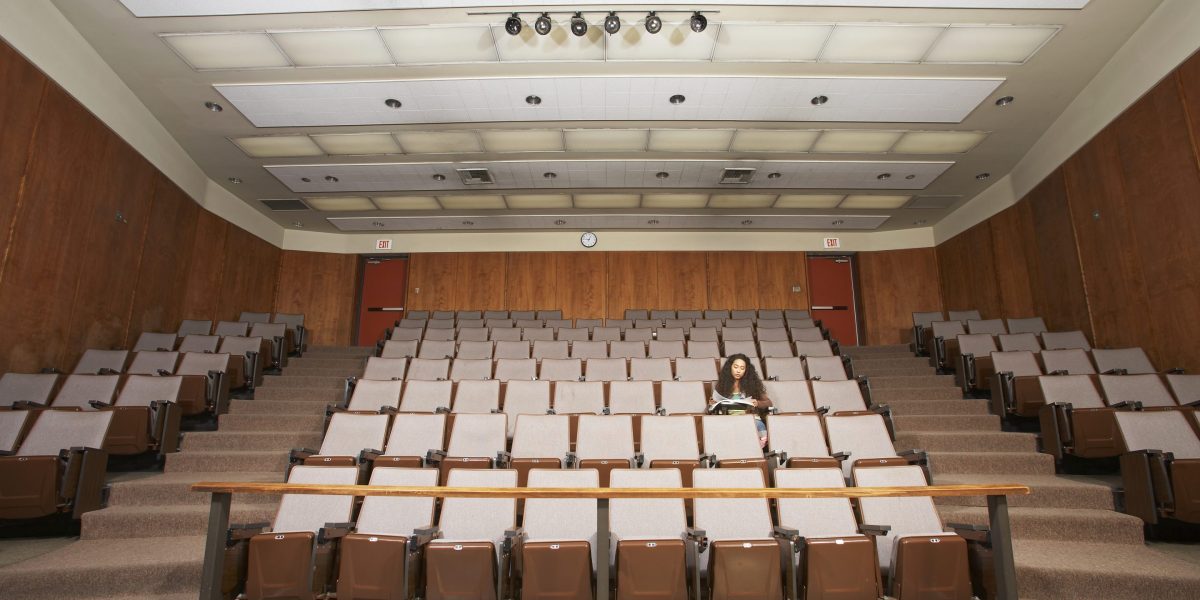
A smaller generation of college-age Americans is now reaching U.S. campuses, and university leaders say the shift is already showing up in budgets. Researchers say the pressure is sharpest at tuition-dependent private colleges that have limited financial cushions.
Syracuse University Chancellor J. Michael Haynie told faculty and staff last week that the school had fallen short of its undergraduate enrollment goal for the next fiscal year. Haynie wrote that “enrollment volatility” had become widespread and unpredictable, and said the shortfall would create a budget deficit at Syracuse.
National Student Clearinghouse Research Center data show total U.S. postsecondary enrollment rose 1% in fall 2025, down from a 4% gain a year earlier. The center said private four-year institutions recorded a 1.6% enrollment decline.
Demographics hit campus budgets
Researchers have warned for years that lower birth rates after the Great Recession would reduce the number of traditional college-age students. The National Center for Education Statistics said undergraduate enrollment fell 15% between 2010 and 2021.
RC Strategy, an advisory firm, estimated that a 17% decline in births after 2007 will mean 576,000 fewer college-age Americans from 2025 through 2029. Pew Research Center has also tracked the long-running decline in U.S. fertility measures.
Several public universities have already described budget stress tied to enrollment. The University of Vermont announced a planned $12 million deficit after reporting a 15% drop in freshman undergraduate enrollment, according to VTDigger. WyoFile reported that the University of Wyoming faces a $15 million shortfall tied to enrollment declines, inflation and weaker investment results.
At the University of Oregon, President Karl Scholz told staff the school would make $30 million in budget cuts, mainly because of weaker out-of-state enrollment. Scholz said the deficit could grow to about $65 million in coming years if current trends continue.
Small colleges face the greatest risk
Hampshire College said in April it would close after the fall semester, citing enrollment problems, according to The New York Times. The Federal Reserve Bank of Boston reported that 32 four-year colleges in New England have closed or merged in the past decade, with more than one-third of those closures occurring since 2020.
A Federal Reserve paper found that about 60 colleges are closing each year, with closures concentrated among small private institutions. The same research projected that annual closures would more than double in a worst-case scenario in which enrollment drops 15% from 2025 to 2029.
Sandy Baum, a senior fellow at the Urban Institute who studies higher education finance, told Fortune that elite institutions are not the main concern. Baum said schools enrolling only a few hundred students will struggle to operate, and that many tuition-dependent institutions lack large endowments.
Universities have also leaned on out-of-state and international students, who often pay higher tuition. Brookings Institution research found that the share of non-local students at public flagship universities rose an average of 55% from 2002 to 2022.
That strategy is showing strain, according to enrollment data. The National Student Clearinghouse Research Center said undergraduate international enrollment rose 3.2% last fall, less than half the prior year’s pace, while graduate international enrollment fell nearly 6%. NAFSA, an education nonprofit, reported that foreign student enrollment at U.S. universities dropped 20% year over year last spring.
Some schools are responding by targeting different students or changing class-size goals. The University of Arizona said it is reducing class sizes as part of a strategy focused on academic performance and graduation rates, while the Council for Adult and Experiential Learning found in a survey that 41.7 million Americans ages 25 to 64 intend to enroll in some type of higher education within two years.
This story draws on original reporting from Fortune.