
Clair Health raises $11 million for wrist-worn hormone tracker
The Stanford-founded startup says its wearable can infer menstrual-cycle phases without blood draws or skin-piercing sensors.
By Maya Lindqvist · Senior Technology Correspondent
3 min read
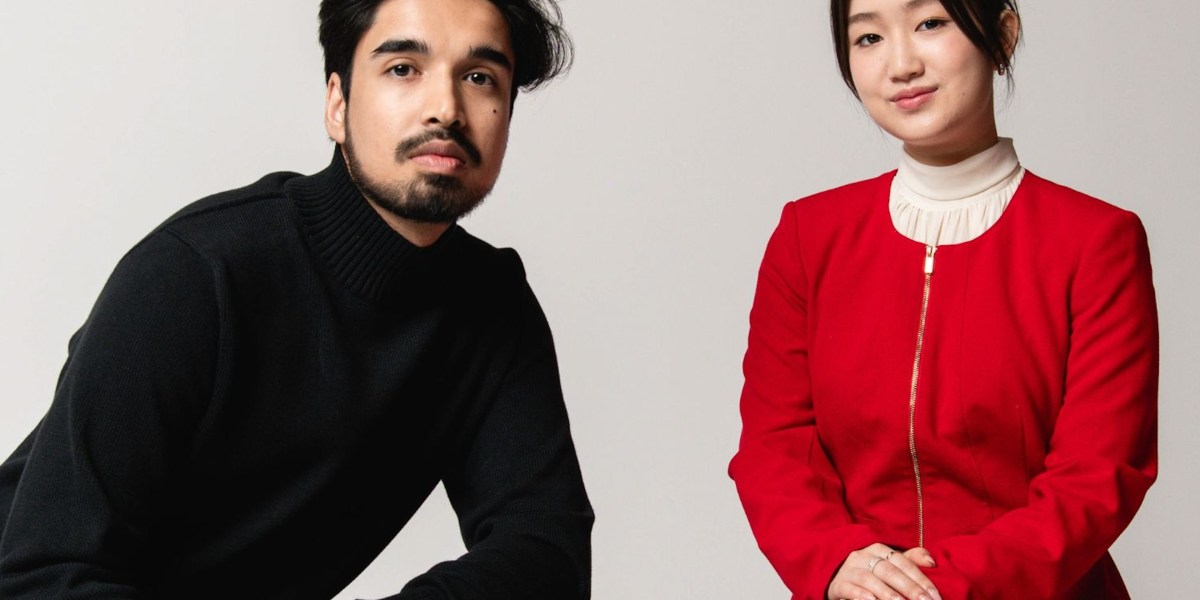
Clair Health has raised $11 million in seed funding to build a wrist-worn hormone monitor aimed at women’s health, Fortune reported. The round gives the young startup capital to push a wellness launch this year while it works toward a later FDA review.
Fortune reported that Jenny Duan, 21, closed the financing in the same week she graduated from Stanford University with a bachelor’s degree in symbolic systems. Duan co-founded Clair Health with Abhinav Agarwal.
Khosla Ventures led the seed round, according to Fortune. The investor group also included a16z Speedrun, Brydge Club, Treehub, Cartan Capital, AGI House, Insiders VC and Anne Wojcicki.
How the device is supposed to work
Clair says it is developing a continuous, non-invasive hormone monitor for women. Fortune reported that the company’s wristband uses 10 biosensors, including biomagnetic sensors that Clair says are not in rival consumer wearables.
The device does not use blood draws or needles, according to Fortune. Instead, Clair says it reads signals such as skin temperature, heart-rate variability and electrodermal activity, then uses artificial intelligence models to estimate a woman’s position in her hormonal cycle.
Duan told Fortune that common hormone tests now rely on lab blood work or at-home urine tests, and said urine tests measure how the body processes hormones rather than measuring hormones directly.
According to Fortune, Clair’s AI identified a user’s menstrual-cycle phase 94% of the time when compared with daily urine samples. Fortune said that benchmark is comparable to at-home ovulation strips, rather than clinical blood analysis, and reported that independent third-party studies, including one through Stanford, are underway.
A crowded women’s health wearables market
Fortune reported that other wearables companies have already moved into women’s health features. Whoop launched women’s hormonal insights in 2025 and added a women-focused blood testing panel this spring, while Oura introduced an AI model for women’s health in February 2026.
FDA records cited by Fortune show Natural Cycles powers FDA-cleared birth control using Oura’s temperature sensor. Clair’s pitch, according to Fortune, is that its hardware was designed from the start around hormones rather than added to an existing wearable platform.
Clair’s sensor system is intended to model the hypothalamic-pituitary-ovarian axis, the hormonal feedback loop tied to female physiology, Fortune reported. The company has provisional patents on that sensor configuration, according to Fortune.
Duan told Fortune that hardware alone offers a limited competitive barrier, and said the company’s machine-learning and biophysical modeling approach is central to its strategy.
Launch plans and next steps
Clair plans to release the product as a wellness device in November and seek FDA clearance later, Fortune reported. The company already has a 25,000-person waitlist, sold out its presale and has received more than 100 letters of intent from fertility clinics, according to Fortune.
Fortune reported that Clair’s longer-term plans include monitoring for perimenopause, helping calibrate hormone replacement therapy and developing diagnostics for conditions such as PCOS and endometriosis.
The company is working toward HIPAA compliance and plans to use zero-knowledge encryption and on-device computing for users who do not want health information stored in the cloud, according to Fortune. Duan told Fortune she expects Clair to seek more funding in about a year.
Grand View Research projects the global femtech market will grow from $39 billion in 2024 to $97 billion by 2030. Dr. Alex Morgan, a partner at Khosla Ventures, told Fortune that the company is targeting a large underserved market of women seeking health and wellness insights designed for them.
This story draws on original reporting from Fortune.